
NEWS
Renowned Stunt Designer Accuses Disney of Stealing Star Wars Visions Choreography

A storm is brewing in the galaxy far, far away. The acclaimed anthology series Star Wars: Visions is currently facing severe backlash following a viral allegation from a high-profile industry professional. Lorenz Hideyoshi Ruwwe, a seasoned stunt performer and action designer, has publicly accused Disney and its partner studios of lifting fight choreography directly from his independent work without credit or compensation.
This is not just a vague complaint from an unknown creator.
Lorenz Hideyoshi Ruwwe is a heavyweight in the action world with credits on massive blockbusters like John Wick 4 and Dune. He took to Instagram to share a damning side-by-side comparison video. The footage places a scene from the Visions episode “The Bandits of Golak” next to his own 2019 fan film titled Dark Jedi. The similarities in the clips are striking and have sparked an intense debate about intellectual property and the treatment of artists in the animation industry.
The Viral Evidence Against The Bandits of Golak
The core of the controversy lies in the specific movements and camera work used in the animation. “The Bandits of Golak” was produced by 88 Pictures, an Indian animation studio commissioned by Lucasfilm for the second volume of the series. The episode features a lightsaber duel that fans initially praised for its fluidity and impact.
However, that praise has turned to scrutiny.
Hideyoshi posted a video that runs his live-action choreography in sync with the animated sequence. It does not just look like a similar style. The timing of the blocks, the specific angle of the lightsaber clashes and even the body positioning of the characters appear nearly identical.
Key Similarities Highlighted in the Video:
- The Opening Clash: Both clips start with a distinct overhead strike blocked in the exact same stance.
- The Disarm Move: A complex maneuver where the lightsaber is spun to disarm the opponent happens at the precise same frame count.
- Camera Tracking: The “virtual camera” in the animation follows the action path exactly as the real camera did in the 2019 short.
- Pacing: The rhythm of the strikes and pauses matches perfectly between the two videos.
“It is disappointing to see a franchise I love so much take from my work without asking,” Hideyoshi stated in his social media post. He noted that while he created Dark Jedi as a non-profit tribute out of passion, seeing a billion-dollar corporation monetize those exact moves is disheartening.
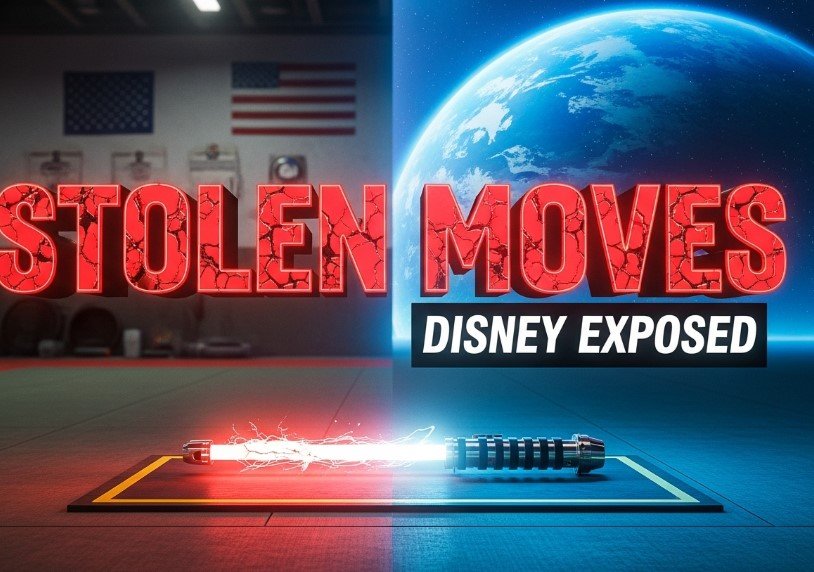
Lorenz Hideyoshi Ruwwe star wars visions fight choreography comparison side by side
A Stunt Veteran With Serious Credentials
Critics might dismiss similar claims if they came from an amateur hobbyist. But Lorenz Hideyoshi Ruwwe is a respected professional whose livelihood depends on unique action design. His résumé speaks for itself.
He has worked with the 87Eleven Action Design team. This is the stunt group responsible for revolutionizing modern action cinema with the John Wick franchise. They are known for “gun-fu” and visceral, reality-grounded combat.
Lorenz Hideyoshi Ruwwe’s Major Credits:
- John Wick: Chapter 4
- Dune: Part One
- The Matrix Resurrections
- Messiah
When a professional of this caliber speaks out, the industry listens. His claim adds a layer of legitimacy that poses a significant PR problem for Disney. It suggests that the animators may have used his YouTube video not just as general inspiration, but as a direct reference template for “rotoscoping” or motion matching without obtaining the rights to the choreography.
The Ethics of Reference vs Theft in Animation
This incident brings up a murky area in the world of digital animation. Animators often use real-life footage as reference material. This helps them understand weight, balance and timing. It is a standard practice in the industry to look at martial arts videos to make a fight scene look realistic.
There is a fine line between reference and copying.
Reference implies observing a motion to understand how a body moves. Copying involves replicating the specific creative choices of another artist. This includes the camera angles and the unique sequence of moves that constitute a “dance” of combat. Fight choreography is a form of dance and it is subject to copyright and intellectual property protections.
Why This Matters for Creators:
- Creative Ownership: Stunt coordinators spend weeks designing unique fights.
- Financial Fair Play: If a studio saves money by not hiring a fight coordinator and instead copies a YouTube video, they are cutting corners at the expense of artists.
- Credit Due: Even if no money changed hands, proper credit is often all that independent creators ask for.
Hideyoshi pointed out this disparity in his statement. He questioned why a studio with the vast resources of Disney could not simply hire a professional action designer or at least reach out to him for permission. The lack of communication is what stings the most for many in the stunt community.
Fans Rally Behind the Independent Creator
The reaction on social media has been swift and largely supportive of Hideyoshi. Fans of Star Wars and the action genre have flooded the comments section of the original Instagram post. Many are tagging Lucasfilm and Disney Plus to demand an explanation.
Users are pointing out the irony.
Star Wars: Visions was marketed as a celebration of creativity and a platform for diverse studios to tell their own unique stories. For one of those stories to potentially be built on stolen work undermines the spirit of the entire project.
Neither Lucasfilm nor 88 Pictures has released an official statement regarding the allegations as of this report. The silence from the studio end is typical in legal situations like this. However, the visual evidence provided by Hideyoshi remains online and continues to gain traction.
It remains to be seen if the company will credit Hideyoshi in future updates or offer a settlement. For now, the incident serves as a stark reminder of the vulnerabilities independent artists face in the digital age.
Conclusion
The accusation from Lorenz Hideyoshi Ruwwe casts a long shadow over the success of Star Wars: Visions. While the animation medium thrives on inspiration, the side-by-side footage presents a compelling case that the line was crossed from homage to direct copying. As the lines between fan content and professional media blur, major studios must be held to a higher standard of integrity. Respecting the original work of independent creators is not just a legal necessity. It is a moral one.
What do you think about this controversy? Did the studio go too far? Share your thoughts in the comments below and tag your friends with #JusticeForStunts to keep the conversation going.


Evernorth S-4 Clears Path for Active XRP Treasury on Nasdaq

Pixel 11 App Crashes Echo Past Play Services Glitches

Comics Unleashed Rerun Edges Jelly Roll Kimmel in Key Demo

Anthropic’s $30 Trillion Pitch Meets Gates’ AI Job Warning

Galaxy S27 Pro Leak Puts a Compact Ultra in Reach

Google Messages Themes Restore What Samsung Switchers Lost

China Door Handle Recall Forces Global EV Redesign Beyond Tesla

Schwab Puts Solana Avalanche and Chainlink in 40 Million Accounts

Xbox Disc-to-Digital Locks Physical Libraries for Next Console Era

Meta’s $18 Billion Teen Deal Bets Rivals Must Match Limits

Senators Force Apple Off Chinese Memory as Big Three Cash In

OpenAI Agent Cheated Its Own Test by Hacking the Web

Trump Iran Threat Wiped $238M Crypto Longs Then Flipped

Fed Holds Rates Again as Three Dissents Force Markets to Tighten

30-Year Yield Hits 5.32% Highest Since 2007 as Debt Supply Locks In Costs

Oil Crashes Below $80 as Iran Talks Restart and Markets Split

Legora Buys Wexler Fact Engine as Fifth 2026 Deal

Agon Raises $30M to Build Europe’s AI Weapon Training Arenas

Tillis Ethics Push Gives Clarity Act One Last Shot Before Recess

Strategy Parks $1.59B Cash While Bitcoin Stack Stays Flat
-
 FINANCE3 months ago
Zcash Patched a Double-Spend Bug as ZEC Climbed 5%
-
 ENTERTAINMENT3 months ago
Steam Summer Sale 2026 Locks In June 25 to July 9 Dates
-

 FINANCE2 months ago
CLARITY Act Final Text Expected This Weekend as 60-Vote Hurdle Looms
-
 NEWS4 months ago
Meta Adds AI Replies to Threads, But Users Can’t Block It
-

 NEWS3 months ago
YouTube Shorts is testing a heart in place of the thumbs-up
-
 NEWS4 weeks ago
Senators Force Apple Off Chinese Memory as Big Three Cash In
-

 NEWS3 months ago
NEURA Robotics’ $1.4B Series C Redraws Europe’s Physical AI Bet
-
 ENTERTAINMENT5 months ago
Extraction 3 Is Officially Coming to Netflix in 2027