
BUSINESS
Congress Outlaws Psychoactive Hemp in Shocking Funding Deal

A massive shift in federal drug policy has arrived. Congress quietly inserted a ban on psychoactive hemp products into the latest government funding package. This sweeping move outlaws popular intoxicating cannabinoids like Delta 8, sparking immediate celebration from health advocates and panic across the multibillion dollar hemp industry.
Closing the 2018 Farm Bill Loophole
Lawmakers targeted a specific legal gray area to pass this ban. The original 2018 Farm Bill legalized hemp by defining it as cannabis with less than 0.3 percent Delta 9 THC. This definition unintentionally opened the door for chemists to tweak non-intoxicating CBD molecules. They converted them into psychoactive compounds like Delta 8 and Delta 10 THC.
These products produce a high similar to marijuana but remained technically legal under federal law. Gas stations and smoke shops across the country filled their shelves with these items. Congress has now decided that this loophole violates the spirit of the original law.
The new funding bill explicitly prohibits any hemp derivative that causes intoxication.
This language removes the distinction between Delta 9 and other forms of THC. The goal is to return hemp to its original purpose as an industrial crop for fiber and grain. Supporters of the ban argue that the intention was never to create a legal high sold without age restrictions.
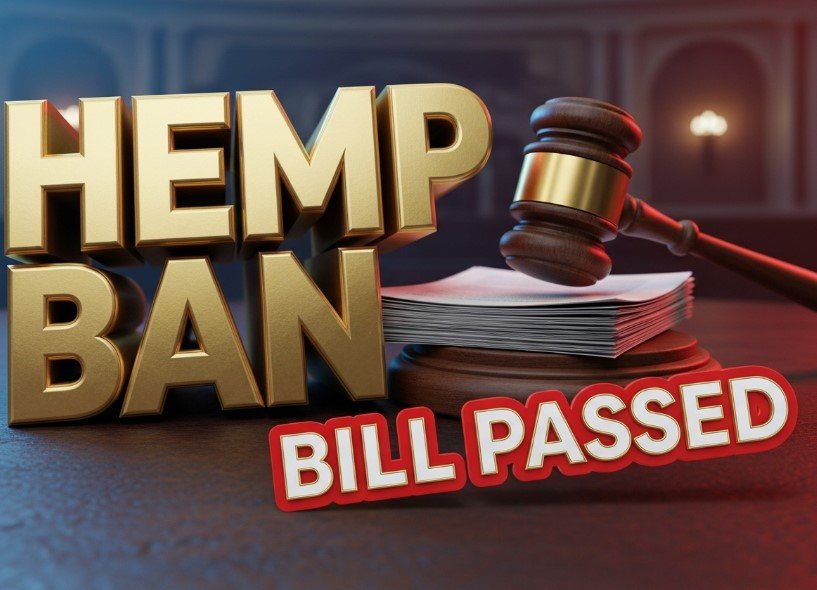
congress gavel banning delta 8 hemp products funding bill
Rising Health Risks for Consumers
Public health officials have pushed for this change for years. They point to a sharp rise in emergency room visits and calls to poison control centers. Data from the Food and Drug Administration shows thousands of adverse event reports linked to hemp derivatives since 2021.
Many of these products face zero regulation regarding purity or safety. Independent lab tests often find that “legal” hemp vapes contain heavy metals, solvents, and unknown chemicals. The lack of oversight meant that a consumer could never be sure what they were actually inhaling or eating.
The packaging itself became a major point of contention for lawmakers.
“We are seeing gummies and candies sold in bright, cartoonish packaging that mimics popular snack brands,” stated a public health representative during the hearings. “These products are clearly marketing to children who do not understand the difference between a treat and a powerful drug.”
Why Health Officials Supported the Ban:
- Accidental Poisoning: A surge in children consuming hemp gummies believing they were candy.
- Inconsistent Potency: Products often contained double or triple the amount of THC listed on the label.
- Chemical Contaminants: The chemical synthesis process often left behind unsafe acids and bleaches.
- Lack of Age Gating: Convenience stores in many states sold these items to minors without checking ID.
Economic Shockwaves for the Hemp Industry
The ban deals a devastating blow to thousands of small businesses. The U.S. hemp market has grown into a massive economic engine valued at nearly 28 billion dollars according to some trade groups. Farmers turned to cannabinoid production after the market for hemp fiber failed to take off as expected.
Growers and retailers now face an immediate existential crisis. Many farmers have invested their life savings into equipment designed to extract these compounds. They argue that a total ban is an overreaction that throws the baby out with the bathwater.
Industry leaders proposed strict regulations instead of prohibition. They suggested federal age limits of 21 and older, mandatory lab testing, and child proof packaging. Congress ultimately decided that regulation would take too long and that an immediate ban was safer.
Impact on the Supply Chain:
| Sector | Immediate Effect | Long Term Outlook |
|---|---|---|
| Farmers | Loss of primary revenue stream | Must pivot back to low-value fiber crops |
| Retailers | Forced to pull inventory immediately | likely closure for vape shops relying on hemp |
| Consumers | Loss of access to legal THC products | Shift to state-legal dispensaries or illicit market |
This move effectively wipes out the business model for thousands of companies. Critics of the ban warn that demand will not simply disappear. They believe this will drive consumers toward the dangerous black market where safety risks are even higher.
Enforcement and Federal Standards
The bill leaves the specific details of enforcement to federal agencies. The Food and Drug Administration and the Drug Enforcement Administration will likely oversee the crackdown. They must now determine the exact scientific threshold for what counts as “intoxicating.”
This creates a complex legal landscape for the next few months. It is unclear if retailers will have a grace period to sell off their stock. It is also unknown how federal agents will police online sales that cross state lines.
State regulators may struggle to align their local laws with this new federal mandate. Some states like Florida and Tennessee have thriving hemp industries protected by state laws. This federal funding bill supersedes those protections and sets up a potential legal showdown in the courts.
Key challenges for enforcement include:
- Developing rapid tests that distinguish between banned Delta 8 and legal CBD.
- Monitoring the thousands of websites currently shipping these products by mail.
- Handling the disposal of millions of dollars worth of now-illegal inventory.
- Training local law enforcement on the new federal definitions.
Conclusion
This funding bill marks the end of the “Wild West” era for the hemp industry. Congress has prioritized public safety and child protection over the economic interests of the cannabinoid market. The days of buying psychoactive gummies at a gas station are officially over. While parents and health experts breathe a sigh of relief, farmers and business owners face a grim and uncertain future. The ripple effects of this decision will be felt in courtrooms and communities for years to come.
We want to hear from you. Do you think this ban protects kids or unfairly hurts businesses? Share your thoughts in the comments below.


BenQ iScreenBar Brings Native Lighting to the 24-Inch iMac

Druckenmiller Warns Bessent Bond Buybacks Delay a Fiscal Invoice

The Dog Stars Survives on Elordi Charm but Barely Thrives

Treasury’s Economic Outcast Recycles Iran Max-Pressure Playbook

Rockstar Veteran Calls GTA 6 Leaks a Nothing Burger While Staff Pay the Price

SpaceX $100 Billion Louisiana Starbase Rises on Vanishing Marsh

Itoflow $2.5M Raises the Quant Bar for Mid-Size Funds

MIRAVA’s $5M Smart Boat Cracks Old Recreational Limits

Lunar Founders Crack Audit Moat With €8.2M AI Firm

Nose Wheel Crush at YUL Echoes Decades of Ramp Fatalities

Senators Force Apple Off Chinese Memory as Big Three Cash In

OpenAI Agent Cheated Its Own Test by Hacking the Web

Trump Iran Threat Wiped $238M Crypto Longs Then Flipped

Fed Holds Rates Again as Three Dissents Force Markets to Tighten

30-Year Yield Hits 5.32% Highest Since 2007 as Debt Supply Locks In Costs

Oil Crashes Below $80 as Iran Talks Restart and Markets Split

Google’s Knowledge Panel Fix Risks Its Own Search Defenses

Legora Buys Wexler Fact Engine as Fifth 2026 Deal

Capital Clusters and the Dual Tracks of European Tech Finance

Agon Raises $30M to Build Europe’s AI Weapon Training Arenas
-
 FINANCE3 months ago
Zcash Patched a Double-Spend Bug as ZEC Climbed 5%
-
 ENTERTAINMENT3 months ago
Steam Summer Sale 2026 Locks In June 25 to July 9 Dates
-

 FINANCE2 months ago
CLARITY Act Final Text Expected This Weekend as 60-Vote Hurdle Looms
-
 NEWS4 months ago
Meta Adds AI Replies to Threads, But Users Can’t Block It
-

 NEWS3 months ago
YouTube Shorts is testing a heart in place of the thumbs-up
-
 NEWS4 weeks ago
Senators Force Apple Off Chinese Memory as Big Three Cash In
-

 NEWS3 months ago
NEURA Robotics’ $1.4B Series C Redraws Europe’s Physical AI Bet
-
 ENTERTAINMENT5 months ago
Extraction 3 Is Officially Coming to Netflix in 2027