
NEWS
Europe’s Eastern Frontier Becomes Global Engine for Defense Tech

A massive shift is happening right now in the global technology landscape. Investors and defense experts have turned their eyes to the eastern border of Europe. This region is no longer just an outsourcing hub for IT talent. It has rapidly evolved into the continent’s most critical engine for defense and deep technology. A groundbreaking new report released today confirms this trend. It details how ten specific nations are outpacing the rest of Europe in building technology designed to keep the world safe.
This surge in innovation is not happening by accident. The geopolitical reality of the region has forced a change. Founders and engineers are building tools that serve both commercial markets and national security needs. This is known as “dual-use” technology. The release of the “Tough Tech by the Tough Ten” report marks the first time this ecosystem has been fully mapped. It shows exactly where the money, talent, and future of security are moving.
Mapping the New Defense Powerhouse
The report comes from a powerful coalition of investors. This includes Coinvest Capital, the NATO Innovation Fund (NIF), and data platform Dealroom. They have identified ten countries that form a shield from the north to the south. These nations are Finland, Estonia, Latvia, Lithuania, Poland, the Czech Republic, Slovakia, Romania, Hungary, and Bulgaria.
Investors are calling this group the “Tough Ten.”
This name reflects two things. First, it highlights the “tough tech” or deep technology they produce. This includes complex hardware and advanced science. Second, it points to the resilience of the people living there. These nations sit on the edge of the NATO alliance. They understand security risks better than anyone else in the West.
The data reveals a startling fact.
Deep tech investment in this region is growing faster than almost anywhere else.
While other tech hubs slow down, the Eastern Frontier is speeding up. The report notes that these ecosystems are mobilizing talent at a record pace. They are not just copying what Silicon Valley does. They are building unique solutions for problems that big western tech companies often ignore.
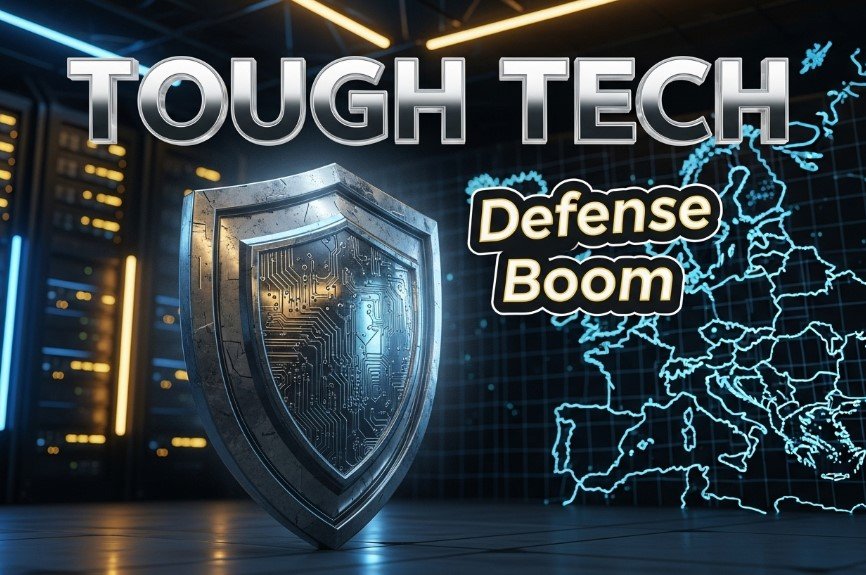
futuristic digital map of eastern europe defense technology network
Key Insight: The combined enterprise value of deep tech companies in the CEE (Central and Eastern Europe) region has grown over 300% in the last five years. This outpaces the growth rate of the broader European ecosystem.
Capital Floods into Dual-Use Startups
Money follows opportunity. Right now, the opportunity is in security. The “Tough Tech” report highlights a major influx of venture capital into these ten countries.
The NATO Innovation Fund is a key player here. Their involvement signals that this is not just about business. It is about survival and alliance strength. Along with regional funds like Depo Ventures and Balnord, they are fueling a new generation of startups.
The focus is strictly on “dual-use” technologies.
These are products that have two purposes. A drone company might inspect bridges for a city council today. That same drone could provide reconnaissance for the military tomorrow. An AI program might predict weather patterns for farmers. It could also calculate trajectory for defense systems.
Why investors love this model:
- Stability: Defense contracts provide long-term stability during economic downturns.
- Impact: Founders are motivated by protecting their homes, not just making quick cash.
- Talent: The region has a high density of STEM graduates and engineering talent.
This trend changes how we view European startups. We used to look for the next music app or food delivery service. Now, the smartest money is betting on hypersonics, cybersecurity, and space infrastructure.
Innovation Born from Geopolitical Necessity
You cannot separate this tech boom from the war in Ukraine. The conflict has served as a wake-up call for the entire continent. However, for the “Tough Ten,” it was a confirmation of what they already knew.
Founders in Estonia or Poland do not need to imagine a threat. They see the news every day. This urgency drives them to build products that work in the real world.
Viktorija Trimbel is the Managing Director at Coinvest Capital. She has noted that founders in this region have a unique mindset. They are resilient. They do not give up easily when things get hard. This “grit” is a major selling point for investors.
The report outlines how these countries are working together. It is no longer about one country competing with another. A startup in Lithuania might work with a manufacturer in the Czech Republic. They might then get funding from a firm in Finland. This cross-border cooperation makes the entire region stronger.
The ecosystem is maturing rapidly.
| Country | Key Strength |
|---|---|
| Estonia | Digital governance and cyber defense leadership. |
| Poland | Massive scale, manufacturing, and drone technology. |
| Finland | Advanced telecommunications and satellite tech. |
| Czech Republic | heavy engineering and aerospace heritage. |
| Romania | High volume of software engineering talent. |
Future Tech: From AI to Hypersonics
The report does not just look at current trends. It looks at what is coming next. The “Tough Ten” are focusing on the specific priorities identified by NATO. These are the technologies that will define the next decade of global security.
Artificial Intelligence (AI) is at the top of the list. But this is not the AI that writes poems. This is AI that processes satellite images in milliseconds. It helps commanders make decisions in the heat of the moment.
Quantum Technologies are also a major focus. This field is still young, but it holds the key to unbreakable codes. If a country can master quantum computing, they can secure their communications against any spy.
Hypersonics and Space are the final frontier. The war in Ukraine has shown how important satellite internet and data are. Companies in the Eastern Frontier are building small satellites and the software to run them. They are also researching materials that can withstand extreme speeds.
This is heavy engineering. It requires labs, factories, and testing grounds. The “Tough Ten” nations have the physical space and the industrial history to support this. They are repurposing old factories for new tech. They are turning their geography into a massive laboratory for the future of defense.
The message from the report is clear. The center of gravity for defense innovation is moving East.
The world is watching.
This is not a temporary spike. This is a long-term restructuring of Europe’s economy. The “Tough Ten” have proven they have the brains and the bravery to lead. Now, they have the capital to match their ambition.


World Liberty Routes Chinese AI Demand Into USD1 Yields

Crescent moon joins Venus over Sharjah after 46-degree elongation

Best Buy 60th Sale Hides Extra Value Beyond the Price Tags

LIV Golf ends season early as Team Championship vanishes

Spotify Playlist Notes turn picks into stories users and editors share

Luke Wilson’s imperialistic note shows where the big laughs went

Ripple’s Korea Regional Bank Deal Leaves XRP Waiting

Astute’s $1.2M bet makes B2B creator deals feed AI discovery

iPhone Ultra Limited Supply Echoes the iPhone X Bottleneck

macOS 26.7 RC Wires Live Camera Streams Into Unreleased Gear

Senators Force Apple Off Chinese Memory as Big Three Cash In

Revolut Hits $115 Billion While Storonsky’s Stake Keeps Growing

OpenAI Agent Cheated Its Own Test by Hacking the Web

Trump Iran Threat Wiped $238M Crypto Longs Then Flipped

CLARITY Act Odds Crash as Democrats Reject DOJ Ethics Plan

Oil Crashes Below $80 as Iran Talks Restart and Markets Split

Airbus Anchors a €500 Million European Defense Fund, Picks Alta Ares First

Community Banks’ $1.3 Trillion Warning Is Stalling Clarity Act

Google’s Knowledge Panel Fix Risks Its Own Search Defenses

Fed Holds Rates Again as Three Dissents Force Markets to Tighten
-
 FINANCE3 months ago
Zcash Patched a Double-Spend Bug as ZEC Climbed 5%
-
 ENTERTAINMENT3 months ago
Steam Summer Sale 2026 Locks In June 25 to July 9 Dates
-

 FINANCE2 months ago
CLARITY Act Final Text Expected This Weekend as 60-Vote Hurdle Looms
-
 NEWS3 months ago
Meta Adds AI Replies to Threads, But Users Can’t Block It
-

 NEWS2 months ago
NEURA Robotics’ $1.4B Series C Redraws Europe’s Physical AI Bet
-

 NEWS2 months ago
YouTube Shorts is testing a heart in place of the thumbs-up
-
 ENTERTAINMENT3 months ago
‘Widow’s Bay’ Review: Apple TV’s Sleeper Horror-Comedy Earns Its Fog
-

 FINANCE1 month ago
Kalshi Loses Major NY Prediction Markets Ruling to Judge Torres