
NEWS
China Unveils Silent Underwater Drones That Hunt in Packs

The ocean floor just became a much more dangerous place for global naval forces. China has officially pulled the curtain back on a new fleet of unmanned underwater vehicles that could render traditional sonar defenses obsolete. These drones do not just swim. They glide through the depths with a stealth profile that has defense analysts scrambling to update their threat assessments.
Silent running technology changes naval warfare rules
The most alarming aspect of this new technology is the noise level. Or rather the lack of it. Reports indicate these new drones operate below 90 decibels. To put that in perspective, the background noise of the ocean itself often hovers around that same level due to waves and marine life.
This means these vessels are effectively invisible to many passive sonar systems. They hide inside the natural soundscape of the sea.
Traditional submarines rely on silence for survival. But they are large and contain crew support systems that generate noise. These unmanned drones strip away those limitations. They are smaller and streamlined. They utilize advanced electric propulsion systems that eliminate the mechanical hum associated with older naval engines.
The engineering breakthrough goes beyond just the engine. The hull design reportedly allows for zero-radius turning. A standard submarine needs a wide berth to turn around. These drones can spin on a dime. This agility allows them to navigate tight underwater canyons or cluttered coastal waters where large American submarines simply cannot go.
This maneuverability makes them perfect for the shallow waters around the Taiwan Strait. It is a clear signal that the People’s Liberation Army Navy is focusing on coastal defense and area denial.
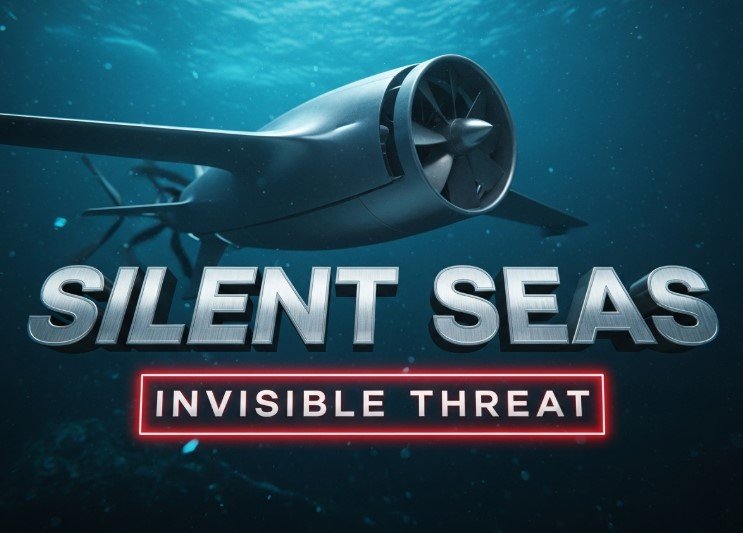
chinese unmanned underwater vehicle drone stealth ocean
Autonomous swarms and underwater attacks
The days of a single operator controlling a single drone are ending. The new strategy is about autonomy and coordination. These vessels are designed to talk to each other. They form an underwater “wolf pack” that can surround a target without human intervention.
Intelligence reports suggest these drones possess advanced AI capabilities. They can identify a target, assess the threat level, and decide on an attack pattern autonomously. This removes the delay caused by waiting for orders from a command center on land.
“The ability to traverse maritime environments expertly and autonomously decide to attack changes the speed of underwater combat entirely.”
The logistical tail for these drones is also shrinking. The South China Morning Post notes that these units have massive endurance. They do not need to surface often. Future iterations will reportedly dock at underwater charging stations. They could lie dormant on the sea floor for weeks. They wait for a signal or a passing enemy ship to wake them up.
This capability creates a permanent minefield of intelligent robots.
Integration with minelaying systems
The stealth drones are just one part of a larger puzzle. We must look at how they pair with other systems like the AJX002. This is an unmanned minelaying system.
When you combine a stealthy scout drone with an automated minelayer, you create a blockade that is hard to break. The scout finds the path. The minelayer seals it off.
Here is how the new naval ecosystem likely functions:
- Scout Units: Small, silent drones map the area and listen for enemy engines.
- Attack Units: Larger drones carrying torpedoes or kinetic weapons move into position.
- Support Units: Minelayers like the AJX002 drop explosives to funnel enemy ships into kill zones.
- Relay Nodes: Drones that float near the surface to burst-transmit data back to headquarters.
Jellyfish robots blend nature with surveillance
Hard metal shells are not the only threat hiding in the water. There is a softer side to this technology that is equally unsettling. Researchers at the School of Mechanical and Electrical Engineering of Northwestern Polytechnical University have taken a different approach.
They built a robot that looks and moves exactly like a jellyfish.
This is not a toy. It is a military-grade surveillance tool disguised as marine life. The device uses hydrogel electrode material. It is transparent and soft. It mimics the pulsing movement of a real jellyfish to propel itself.
This biological camouflage allows it to swim right past visual sensors and human divers.
A camera is fitted inside this soft body. It can observe underwater infrastructure like internet cables or oil pipelines without raising suspicion. If a security team sees a metallic drone, they shoot it. If they see a jellyfish, they ignore it.
This creates a massive gap in port security. A swarm of these “jellyfish” could infiltrate a naval base. They could attach sensors to the hulls of ships or simply map out the defenses for a future attack. The U.S. Navy currently has very few protocols for detecting threats that look like organic matter.
Global security concerns and the Taiwan connection
We cannot talk about Chinese naval expansion without talking about Taiwan. These technologies seem tailor-made for a blockade scenario.
If China decides to move on Taiwan, their biggest concern is the United States Navy intervening. American aircraft carriers are powerful. But they are also large targets. A swarm of silent, underwater drones makes operating a carrier group in the Pacific much riskier.
The goal is not necessarily to sink the US fleet. The goal is to make it too dangerous for them to enter the fight. This is known as Anti-Access/Area Denial (A2/AD).
Defense experts argue that this shifts the balance of power. The US has dominated under the waves for decades with superior nuclear submarines. But quantity has a quality all its own. China is building cheap, unmanned systems fast. The US builds expensive, manned systems slowly.
If a million-dollar drone destroys a billion-dollar submarine, the economics of war collapse. The Pentagon is watching these developments closely. They are rushing to develop their own counter-drone technologies. But for now, the silence coming from the deep is deafening.
Conclusion
The unveiling of these silent underwater drones and biomimetic robots marks a pivotal shift in maritime history. We are moving away from the era of massive battleships and into an age of invisible, autonomous warfare. The ocean is no longer a vast, empty buffer zone. It is becoming a crowded, high-tech chessboard where the pieces are hiding in plain sight. The nation that controls the underwater domain will likely control the future of global trade and security.
What do you think about the rise of AI-controlled weapons in our oceans? Does this make conflict more likely or does the fear of these weapons keep the peace? Share your thoughts in the comments below. If you are following this tech race, use the hashtag #SilentWarfare on X to join the conversation.


Immersive Maps Upgrade Erases Traffic Colors on Android Auto

XRPL 3.3.0 Nodes Hit 62 Percent as FixCleanup Nears 80 Percent Bar

L’Atitude 52°N Camera Beats Meta but Exact a Real Price

Strategy Parks $1.59B Cash While Bitcoin Stack Stays Flat

Pixel Watch 5 Battery Unlock Makes Health Guardian Trends Real

JCB Hydromax Hits 406 mph and Proves Digger Hydrogen Engines

Pixel 11 Pro Modem Swap Finally Cools the Daily Drive

OpenAI ChatGPT for Teens Locks In Study Mode After Safety Suits

Bessent’s Bond Buybacks Lift Bitcoin Past 80K More Than Yields

Pixel Camera 11 Dials Bring Convenient Control With a Catch

Senators Force Apple Off Chinese Memory as Big Three Cash In

OpenAI Agent Cheated Its Own Test by Hacking the Web

Trump Iran Threat Wiped $238M Crypto Longs Then Flipped

Fed Holds Rates Again as Three Dissents Force Markets to Tighten

30-Year Yield Hits 5.32% Highest Since 2007 as Debt Supply Locks In Costs

Oil Crashes Below $80 as Iran Talks Restart and Markets Split

Google’s Knowledge Panel Fix Risks Its Own Search Defenses

Legora Buys Wexler Fact Engine as Fifth 2026 Deal

Agon Raises $30M to Build Europe’s AI Weapon Training Arenas

Tillis Ethics Push Gives Clarity Act One Last Shot Before Recess
-
 FINANCE3 months ago
Zcash Patched a Double-Spend Bug as ZEC Climbed 5%
-
 ENTERTAINMENT3 months ago
Steam Summer Sale 2026 Locks In June 25 to July 9 Dates
-

 FINANCE2 months ago
CLARITY Act Final Text Expected This Weekend as 60-Vote Hurdle Looms
-
 NEWS3 months ago
Meta Adds AI Replies to Threads, But Users Can’t Block It
-

 NEWS3 months ago
YouTube Shorts is testing a heart in place of the thumbs-up
-
 NEWS4 weeks ago
Senators Force Apple Off Chinese Memory as Big Three Cash In
-

 NEWS3 months ago
NEURA Robotics’ $1.4B Series C Redraws Europe’s Physical AI Bet
-
 ENTERTAINMENT5 months ago
Extraction 3 Is Officially Coming to Netflix in 2027