
ENTERTAINMENT
Leno Sales Soar Avoiding Politics as Letterman Blasts Trump

The legendary rivalry between Jay Leno and David Letterman has officially entered a fascinating new chapter that goes far beyond television ratings. These two titans of late night TV are now displaying completely different strategies when it comes to handling the heated political climate of America. Jay Leno recently revealed that removing political jokes from his set caused his ticket sales to skyrocket.
David Letterman has taken the opposite route by doubling down on his political activism and harsh criticism of Donald Trump. It seems the war for the heart of American comedy is no longer about time slots but about ideology versus entertainment. The contrast offers a striking look at how entertainment figures navigate a polarized nation.
The Financial Power of Staying Neutral
Jay Leno has always been known as the hardest working man in show business. He continues to tour extensively across the country. During a recent appearance on the “Today” show, Leno shared a surprising statistic that defies current industry trends. He told anchor Hoda Kotb that he made a conscious decision to erase politics completely from his stand up routine.
The result was instant and profitable.
Leno reported a 20 to 30 percent jump in ticket sales immediately after dropping political content.
This move harkens back to the days of Johnny Carson. Carson famously swatted at both sides of the political aisle without ever alienating half his audience. Leno seems to have taken this philosophy a step further by removing the topic entirely.
He explained his reasoning clearly. Leno believes that people today are tired of being lectured. They want an escape. By providing a show that focuses purely on humor rather than headlines, he has tapped into a massive underserved market.
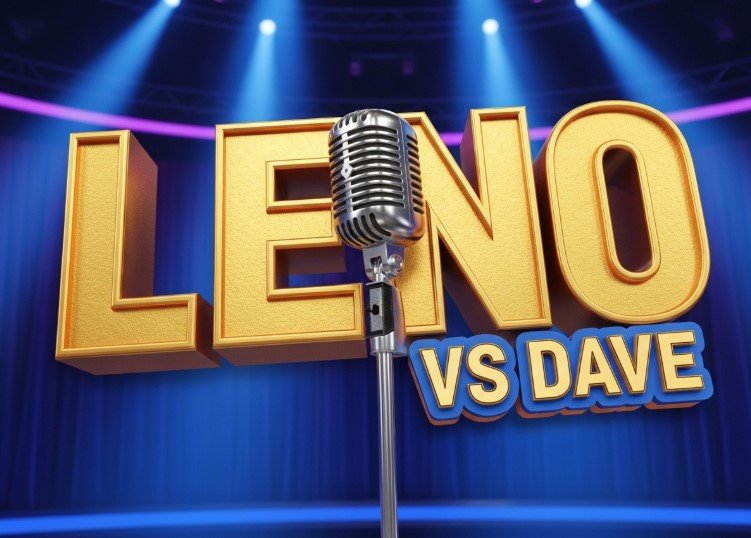
Jay Leno stand up microphone vs David Letterman glasses conflict
“I just took politics out of it, completely. I know ticket sales are up 20, 30 percent, just because nobody wants to be lectured.”
This data point suggests that there is a silent majority of comedy fans who miss the days when a joke was just a joke. Leno is capitalizing on this fatigue while his peers continue to fight in the political trenches.
Letterman Doubles Down on Political Activism
While Leno is courting the center, David Letterman is firmly planting his flag on the left. The former “Late Show” host has never been shy about his views since leaving his desk at CBS. However, his recent comments suggest he is becoming even more vocal.
Letterman recently came to the defense of fellow host Seth Meyers. This happened after Donald Trump criticized the “Late Night” host’s low ratings and content. Letterman did not just defend his colleague. He launched a blistering attack on the former President.
Letterman referred to Trump as a “dictator” and insisted he is not going anywhere.
He went further by comparing the Trump presidency to some of the worst tragedies in human history. This type of rhetoric is consistent with the “hipster sentiment” Letterman cultivated during his career. He was always the critical darling who appealed to the coastal elites and comedy purists.
His current approach aligns perfectly with the modern late night landscape. Hosts like Stephen Colbert and Jimmy Kimmel have followed in Letterman’s footsteps. They prioritize political commentary over broad appeal. Letterman is proving that even in retirement, he remains the spiritual godfather of the current era of politically charged comedy.
A History of Polar Opposites
To understand this current divide, we must look back at their history. The “Late Shift” war of the early 90s was not just about who got the job. It was a clash of personalities.
The fundamental differences between the two legends:
- Jay Leno: Represents the Heartland. He focuses on work ethic, broad jokes, and making everyone feel welcome. He wants to be liked by the most people possible.
- David Letterman: Represents the edgy cynicism of the city. He focuses on deconstructing the format, irony, and making the audience uncomfortable if it gets a laugh. He wants to be respected by the right people.
Leno won the ratings war for decades because he cast the widest net. Letterman won the awards and the adoration of critics because he took risks.
Today, we see these traits amplified. Leno is still chasing the audience by giving them what they want, which is a break from the news. Letterman is still chasing the cultural conversation by injecting his strong opinions into the mix.
It is a perfect continuation of their thirty year dynamic. They are still playing to two completely different Americas.
The Risks and Rewards of Each Strategy
There is a risk to Leno’s approach. By avoiding politics, he risks appearing out of touch or “safe” in an era that demands engagement. Critics might argue he is prioritizing profit over principle. However, the sales figures argue that he is providing a necessary service.
Letterman faces the opposite risk. By engaging so heavily in partisan attacks, he alienates half the potential audience. His comments about Trump being worse than historical atrocities draw accusations of “Trump Derangement Syndrome” from detractors.
Yet, this solidifies his legacy with his core fanbase. Letterman has transitioned from a comedian to a cultural commentator. His Netflix series “My Next Guest Needs No Introduction” allows him to explore these serious themes in depth.
The contrast is stark.
One man is selling tickets by promising you will forget about Washington for an hour. The other is making headlines by reminding you exactly how angry you should be about Washington.
We are seeing a real time case study in the economics of entertainment. Leno proves that neutrality is good for business. Letterman proves that polarization grabs attention.
Both men are winning in their own specific ways. But it is undeniable that Leno has found the more lucrative path in this specific moment.
Conclusion
The enduring saga of Jay Leno and David Letterman serves as a mirror for American society. We are divided between those who want to tune out the noise and those who want to turn up the volume. Leno has found renewed success by offering a neutral ground where laughter is the only agenda. Letterman continues to fight the ideological battles that defined his later years. As we look at the landscape of modern comedy, it is clear we need both. We need the passion of the activist and the comfort of the entertainer. But as ticket sales show, sometimes the public just wants to hear a joke.
What do you think about this divide? Do you prefer comedy that challenges your views or comedy that helps you escape them? If you are following the latest tour news, share your thoughts on social media using #LenoVsLetterman and let us know which side of the aisle you are laughing from.


Replit Opens Its London Office Inside an AI Crowd

Straight Circle Trailer Lands Without a U.S. Date

Anemo Labs Bets £700,000 on an AI Sense of Smell

Nintendo Prices the Zelda 40th Switch 2 at $519

Copilot Capital Buys the Autopilot Already Running 90 GW

Ground A Raises €9.1 Million for a Pallet Laser

Gibney’s Musk Film Opens in Venice Without Its Subject

Torvalds Blames AI for a Full-Fat Linux 7.3-rc2

Dexter Returns Sharper, Older, and Stuck Between Killers

Meta’s Muse Agent Can Spend Before the Privacy Lock

Walter’s TWG Insists No Fraud as Insurer Probes Force Cleanup

30-Year Yield Hits 5.32% Highest Since 2007 as Debt Supply Locks In Costs

PCE Stays at 3.7% as Gas and Tariffs Outrun Coming Revisions

Evernorth S-4 Clears Path for Active XRP Treasury on Nasdaq

Astute’s $1.2M bet makes B2B creator deals feed AI discovery

Strategy Parks $1.59B Cash While Bitcoin Stack Stays Flat

Instinct Hits $2.5 Billion as AI Agent Access Sparks Trust Fights

CLARITY Act Cloture Opens a Door Ethics Still Blocks

Oracle’s 2.8 GW Bloom Deal Exposes the AI Power Bypass

Space Mirror Demo Revives 1993 Russian Night-Light Test
-
 FINANCE3 months ago
Zcash Patched a Double-Spend Bug as ZEC Climbed 5%
-
 ENTERTAINMENT3 months ago
Steam Summer Sale 2026 Locks In June 25 to July 9 Dates
-

 FINANCE2 months ago
CLARITY Act Final Text Expected This Weekend as 60-Vote Hurdle Looms
-
 NEWS4 months ago
Meta Adds AI Replies to Threads, But Users Can’t Block It
-
 ENTERTAINMENT5 months ago
Extraction 3 Is Officially Coming to Netflix in 2027
-

 NEWS3 months ago
YouTube Shorts is testing a heart in place of the thumbs-up
-

 NEWS1 month ago
Senators Force Apple Off Chinese Memory as Big Three Cash In
-

 NEWS3 months ago
NEURA Robotics’ $1.4B Series C Redraws Europe’s Physical AI Bet