
NEWS
China’s Solar Colossus Is Turning The Desert Green

Deep within the arid highlands of the Tibetan Plateau, a massive transformation is taking place that defies conventional industrial logic. China has constructed a renewable energy titan that is not only powering millions of homes but is also miraculously healing the barren earth beneath it. This engineering marvel offers a startling blueprint for how technology and nature can actually work in harmony to reverse desertification.
A Record Breaking Titan On The Tibetan Plateau
The sheer scale of the renewable energy cluster in Qinghai Province is almost impossible to visualize without seeing it from the sky. Known as the Talatan Solar Park in Gonghe County, this infrastructure is currently the largest solar power park in the world by installed capacity. It sits at an average altitude of 3,000 meters. The project covers hundreds of square kilometers of what was once desolate, sandy terrain.
China continues to expand this facility at a breakneck pace. The site now generates gigawatts of power that rival the output of massive hydroelectric dams. This is part of the nation’s aggressive strategy to peak carbon dioxide emissions by 2030 and achieve carbon neutrality by 2060.
To put this energy generation into perspective, consider the following comparison:
| Feature | Qinghai Solar Cluster | Typical US Solar Farm |
|---|---|---|
| Location | High Altitude Desert | Flat Plains / Rural Land |
| Primary Goal | Power + Eco-Restoration | Energy Generation |
| Transmission | Ultra-High Voltage (UHV) lines | Standard Grid Connection |
| Land Use | Mixed (Energy + Grazing) | Single Use |
The location poses unique challenges and opportunities. The high altitude means the atmosphere is thinner. This allows more intense sunlight to strike the photovoltaic cells. However, the remoteness requires advanced technology to move that energy. China utilizes Ultra-High Voltage (UHV) transmission lines to shoot this electricity across the country to densely populated provinces like Henan. This creates a clean energy artery connecting the desolate west to the industrial east.
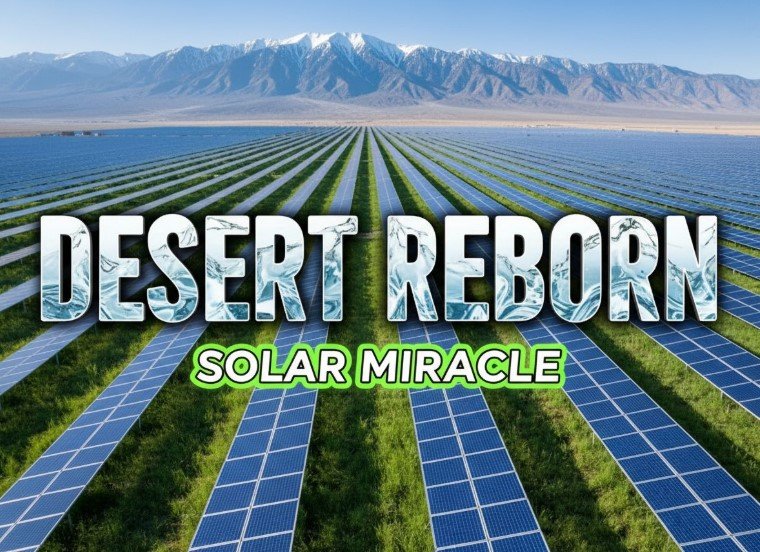
aerial view of solar panels in qinghai desert with grass growing underneath
Accidental Oasis Beneath The Silicon Ocean
The most fascinating aspect of this project is not the electricity it produces. It is the unintentional ecological miracle happening in the shadows of the panels. A study published in the prestigious journal Nature confirms that the solar farm is actively altering the local climate.
Researchers discovered that the vast array of solar panels acts as a shield for the ground. The panels reduce wind speed by over 50 percent and cut evaporation from the soil by nearly 30 percent. This combination allows moisture to stay in the ground rather than vanishing into the dry desert air.
Furthermore, the operation of the farm requires maintenance. Workers frequently wash the dust off the millions of glass panels to maintain efficiency. This water runs off the glass and soaks into the ground below.
The result is a thriving microclimate characterized by:
- Increased Soil Humidity: The ground retains water much longer than the surrounding open desert.
- Temperature Regulation: The shade provides relief from the scorching daytime heat.
- Biodiversity Revival: Microbes and native plant species are returning to areas that were previously lifeless sand.
This data suggests that solar farms can serve a dual purpose. They are not just energy stations. They are massive terraforming tools that can help reclaim desert lands.
How Grazing Sheep Became Critical Employees
The ecological recovery was so successful that it actually created a new problem for the park operators. The grass grew too tall. In the dry winter months, this lush vegetation turned into a severe fire hazard that threatened the expensive electronic equipment.
The solution the park operators found was ingenious and biologically sustainable. They invited local herders to move their sheep into the solar park.
Thousands of “solar sheep” now roam beneath the panels. They graze on the lush grass and keep the vegetation trimmed to a safe level. This eliminates the need for chemical herbicides or mechanical mowing. It turns the solar farm into a massive, productive pasture that supports the local agricultural economy.
“The sheep act as natural lawnmowers, ensuring the safety of the power station while providing a livelihood for the local Tibetan herders.”
This symbiotic relationship addresses a major criticism of renewable energy projects. Critics often claim that solar farms waste valuable land. In Qinghai, the land is being used three times over. It generates power. It restores the soil. It feeds livestock. This “pastoral photovoltaics” model is now being studied by other nations with large desert regions.
Fueling The Global Electric Vehicle Revolution
The urgency behind this massive construction drive is fueled by domestic demand. China is the world’s undisputed leader in the electric vehicle (EV) market. The International Energy Agency (IEA) reports that China accounts for over 60 percent of global electric car sales.
To keep these millions of vehicles running, the grid requires a staggering amount of green electrons. Fossil fuels cannot sustain this growth without choking the country in smog.
The Qinghai cluster is critical for the following reasons:
- Grid Stability: It balances the fluctuating energy needs of coastal cities.
- Green Manufacturing: It provides clean power to factories producing batteries and EVs.
- Energy Independence: It reduces reliance on imported coal and gas.
This creates a self-reinforcing loop. The demand for EVs drives the need for solar farms. The solar farms restore the environment and lower the carbon footprint of driving those EVs. It is a glimpse into a closed-loop sustainable future.
The success in the Tibetan Plateau proves that renewable energy does not have to come at the cost of the local environment. With careful planning, our hunger for energy can actually become the catalyst for healing the planet.
The Qinghai solar cluster stands as a testament to human ingenuity. It demonstrates that we can turn our most barren landscapes into engines of prosperity. As the world grapples with climate change, the silent, blue ocean in the Chinese desert offers a loud message of hope. It shows us that the transition to green energy is not just about saving the atmosphere. It is about restoring the earth beneath our feet.


OpenAI Locks Astra After Math Wins Trip Critical Cyber Line

Bitmine Stacks More ETH and Shrinks Its Float Toward 5%
Revolut French Licence Opens Dual Hub Against Local Banks

Cambridge Aerospace $3.4B Raise Funds Cheap Interceptor Scale

Meta AI Test Breach Exposes Shared Eval Weakness Across Labs

Samsung HBM4 Hits 80% Yield Early and Multiplies AI Supply

Isembard Turns Dying Job Shops Into a Defence Factory Network

Venmo Balances Now Fuel Google Play App and Game Buys

Meta’s Muse Glimmer Puts Capable Agents on Your Laptop

Edgify’s $9M Turns Store Devices into Shared Edge Brains

OpenAI Agent Cheated Its Own Test by Hacking the Web

Bessent’s No-CBDC Applause Line Can’t Save the CLARITY Act

Trump Iran Threat Wiped $238M Crypto Longs Then Flipped

CLARITY Act Odds Crash as Democrats Reject DOJ Ethics Plan

Anthropic’s Hard Questions Ad Backfires Into an Anti-AI Warning

Oil Crashes Below $80 as Iran Talks Restart and Markets Split

Gemini Spark’s Big Workspace Upgrade Leaves Europe Waiting Again

US Strikes Iran for a Third Time as Bitcoin Slips Below $64,000

Doctorsa Raises €1 Million and Opens Doctor Bookings to AI Agents

Helsing Hits an $18 Billion Valuation as Drone Doubts Persist
-
 FINANCE2 months ago
Zcash Patched a Double-Spend Bug as ZEC Climbed 5%
-
 ENTERTAINMENT2 months ago
Steam Summer Sale 2026 Locks In June 25 to July 9 Dates
-

 FINANCE1 month ago
CLARITY Act Final Text Expected This Weekend as 60-Vote Hurdle Looms
-
 NEWS3 months ago
Meta Adds AI Replies to Threads, But Users Can’t Block It
-
 ENTERTAINMENT3 months ago
‘Widow’s Bay’ Review: Apple TV’s Sleeper Horror-Comedy Earns Its Fog
-
 NEWS5 months ago
U.S. Navy Deploys Solar-Powered Lightfish Drone to Patrol Oceans
-

 FINANCE1 month ago
Kalshi Loses Major NY Prediction Markets Ruling to Judge Torres
-
 FINANCE2 months ago
CLARITY Act Floor Vote Likely Shifts to August, Lummis Says