
ENTERTAINMENT
Conan O’Brien Warns Comics Against Angry Trump Jokes at Oxford

The line between sharp satire and raw rage has blurred significantly in modern late-night television. Conan O’Brien recently stepped directly into this heated cultural debate during a candid and revealing appearance at the Oxford Union. The legendary host warned his peers that trading actual humor for pure anger is a dangerous trap that ultimately weakens the art of comedy.
This specific critique comes at a pivotal moment for the industry. O’Brien is preparing to host the Oscars on March 15, and his comments signal a potential shift in tone for the upcoming ceremony.
O’Brien Argues Comedy Must Beat Anger in Modern Satire
O’Brien used his platform at the prestigious Oxford Union to dissect the current state of political humor. He specifically targeted the lazy tendency among comedians to rely on outrage rather than craft.
The former Late Night host suggested that President Trump’s behavior is often too outrageous to effectively mock. However, his main critique focused on the comedian’s reaction to the political climate.
He argued that simple vulgarity and shouting are poor substitutes for well-crafted jokes.
“Some comics go the route of ‘I’m just gonna say F Trump all the time.’ That’s their comedy,” O’Brien explained to the audience.
He elaborated on why this approach fails the audience.
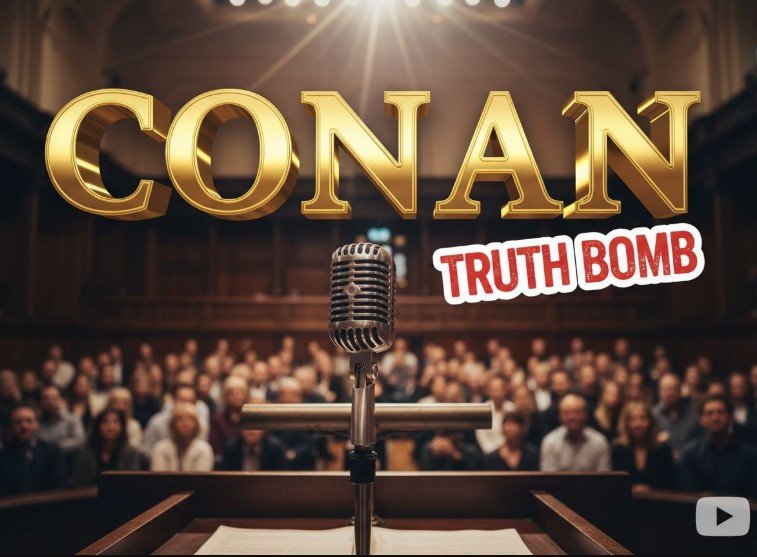
Conan O’Brien speaking at podium during Oxford Union event
“You’ve been co-opted. You’re so angry, you’ve been lulled into just saying F Trump, screw this guy. I think you’ve now put down your best weapon, which is being funny, and you’ve exchanged it for anger.”
O’Brien emphasized that comedians have a professional obligation to find the funny angle regardless of the national mood. He rejected the notion that times are “too serious” for jokes.
According to O’Brien, good art remains the perfect weapon against power.
Defending Peers While Critiquing the Late Night Industry Style
The speech took a complex turn when O’Brien addressed his specific contemporaries. While he condemned the “anger-first” approach, he carved out notable exceptions for Jimmy Kimmel and Stephen Colbert.
Critics have noted a significant contradiction in this stance.
Both Kimmel and Colbert have become the faces of the exact style of resistance comedy O’Brien seemed to be critiquing. Yet, O’Brien insisted during his speech that these two hosts do not fit his description of angry comics.
This defense has sparked debate among media analysts. Many observers point out that modern monologues often prioritize “clapter”—applause for political agreement—over genuine laughter.
O’Brien appears to be walking a fine line between professional courtesy and honest artistic criticism.
He attributed recent controversies surrounding these hosts to external pressures rather than their content. For instance, he suggested that recent broadcast disputes involving Kimmel were due to FCC pressure rather than affiliate pushback.
This narrative conflicts with reports suggesting that local affiliates rebelled against hyper-partisan content.
Rising Tensions and Financial Pressures Impacting Major Networks
The debate over comedy styles is not just artistic; it is becoming a major financial issue for networks. The television landscape is shifting rapidly as audiences fragment.
O’Brien touched upon the rumors surrounding the future of shows like The Late Show and Jimmy Kimmel Live!. He conceded that financial justifications for potential cancellations or budget cuts have merit.
However, the industry is seeing concrete signs of strain:
- Affiliate Revolts: Local stations are increasingly hesitant to air content that alienates half their viewership.
- Budget Contraction: High production costs, such as the reported $40 million annual price tag for Colbert’s show, are under scrutiny.
- Disney’s Stance: Reports indicate corporate leadership is advising hosts to moderate their tone to protect advertising revenue.
These factors suggest that the “anger” model of comedy may be losing its commercial viability.
The suspension rumors and contract renegotiations hint at a market correction. Networks are realizing that polarizing content limits growth in a streaming-first world.
Why Audience Reactions Are Shifting Away From Clapter
The term “Clapter” has entered the mainstream lexicon for a reason. It describes the phenomenon where audiences applaud a host’s moral stance rather than laughing at a punchline.
O’Brien’s return to the spotlight as the Oscars host suggests a hunger for a different approach.
His style has traditionally been more absurd and less partisan than his peers. By calling out the “lazy” approach to Trump jokes, he is positioning himself as a traditionalist.
Audiences are seemingly exhausted by the constant cycle of outrage.
The most effective satire reveals the truth without preaching to the choir.
If O’Brien executes this philosophy at the Oscars, it could mark a turning point. It would demonstrate that comedy can be biting and relevant without succumbing to the “Trump Derangement Syndrome” that critics argue has plagued late-night TV.
The ultimate test will be whether his peers listen to his warning.
We are witnessing a potential reset in American political comedy. Conan O’Brien has correctly identified that anger is a dull blade compared to the sharp edge of genuine wit. As we head into a new political era, the comedians who survive will be the ones who remember their primary job is to make us laugh, not just nod in agreement.


Tab S12 Ultra Keeps Its Notch While Silicon Leaps Quietly Ahead

Apple Ultra Lineup Could Rewrite Pro Pricing and AI Habits

Windows 11 26H2 Packs Big Reversals Into a 174 KB Switch

Indiana Kills Working Variable Speed Signs After Safety Wins

Bill Maher Weight Jokes Hit Ariana After Her Break

NBA 2K26 Free Trial on Switch Continues Nintendo’s Sports Sampling Play

Apple Builds iPhone Windows Clipboard Sync Under DMA Pressure

Melissa Barrera Thrives After Scream Firing While Decrying Blacklist

Majors Fights Campus Caliphate as Daily Wire Ambitions Fray

Uber Bets $10 Billion Cash on Robotaxi Platform Play

Bessent’s No-CBDC Applause Line Can’t Save the CLARITY Act

Trump Iran Threat Wiped $238M Crypto Longs Then Flipped

CLARITY Act Odds Crash as Democrats Reject DOJ Ethics Plan

OpenAI Agent Cheated Its Own Test by Hacking the Web

Anthropic’s Hard Questions Ad Backfires Into an Anti-AI Warning

Oil Crashes Below $80 as Iran Talks Restart and Markets Split

Gemini Spark’s Big Workspace Upgrade Leaves Europe Waiting Again

US Strikes Iran for a Third Time as Bitcoin Slips Below $64,000

Doctorsa Raises €1 Million and Opens Doctor Bookings to AI Agents

Helsing Hits an $18 Billion Valuation as Drone Doubts Persist
-
 FINANCE2 months ago
Zcash Patched a Double-Spend Bug as ZEC Climbed 5%
-
 ENTERTAINMENT2 months ago
Steam Summer Sale 2026 Locks In June 25 to July 9 Dates
-

 FINANCE1 month ago
CLARITY Act Final Text Expected This Weekend as 60-Vote Hurdle Looms
-
 NEWS3 months ago
Meta Adds AI Replies to Threads, But Users Can’t Block It
-
 ENTERTAINMENT3 months ago
‘Widow’s Bay’ Review: Apple TV’s Sleeper Horror-Comedy Earns Its Fog
-
 NEWS5 months ago
U.S. Navy Deploys Solar-Powered Lightfish Drone to Patrol Oceans
-

 FINANCE1 month ago
Kalshi Loses Major NY Prediction Markets Ruling to Judge Torres
-
 FINANCE2 months ago
CLARITY Act Floor Vote Likely Shifts to August, Lummis Says