
NEWS
Bezos Battles Musk With Massive 5000 Satellite Launch Plan

The billionaire space race has officially shifted into overdrive. Blue Origin dropped a massive announcement on Wednesday that directly challenges the orbital dominance held by Elon Musk and SpaceX. The company owned by Jeff Bezos revealed plans for a groundbreaking satellite constellation called Terawave. This new network aims to deploy over 5,000 satellites into space starting late 2027. It promises to reshape how major businesses and governments connect to the internet.
This move signals a major escalation in the rivalry between the two richest men on Earth. While Musk has enjoyed a comfortable lead with Starlink for years, Bezos is now attacking on two distinct fronts. He is using Blue Origin to target high-end enterprise clients and Amazon to capture the residential market. The announcement has sent shockwaves through the aerospace industry as experts analyze what this massive influx of hardware means for the future of global connectivity.
Terawave Targets Big Business Needs
Blue Origin is not just trying to clone Starlink. The company has carved out a specific niche for its new Terawave system. The announcement made it clear that this network is designed strictly for enterprise customers. This includes massive data centers, government agencies, and military operations that require security and speed above all else.
The company stated that Terawave addresses the unmet needs of customers who are seeking higher throughput and redundancy.
The technical specifications released by Blue Origin are staggering. The network utilizes a hybrid approach with satellites positioned in different orbits to maximize performance.
- Medium Earth Orbit (MEO): The plan includes 128 satellites in this zone. These units will utilize optical connectivity to deliver mind-bending speeds of up to 6 Terabits per second (Tbps).
- Low Earth Orbit (LEO): To ensure low latency and broad coverage, 5,280 satellites will be placed in low orbit. These are capable of speeds around 144 Gigabits per second (Gbps).
This dual-orbit strategy allows Blue Origin to offer symmetrical upload and download speeds. That is a game changer for server farms and cloud computing companies that need to move massive amounts of data instantly. While Starlink has focused heavily on getting rural homes online, Terawave is looking to become the backbone of the digital infrastructure for the world’s largest organizations.
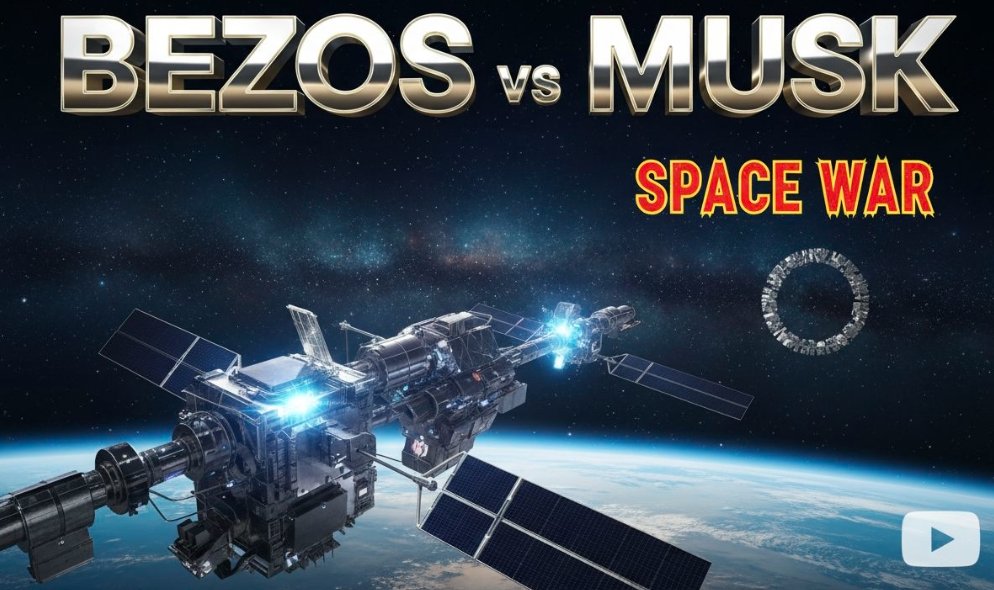
Blue Origin Terawave satellite constellation orbiting earth concept art
Amazon Leo Enters the Consumer Ring
Jeff Bezos is playing a double game. While Blue Origin handles the heavy industrial lifting, Amazon is making its own aggressive push for your home internet. The project formerly known as Project Kuiper has been rebranded as Amazon Leo. This service is the direct competitor to the standard Starlink dish you might see on a neighbor’s roof.
Amazon Leo has already made significant progress. The company currently has more than 3,000 satellites spinning overhead. These units are designed to provide affordable high-speed internet to regular consumers. Users can expect download speeds up to 1 Gbps and upload speeds touching 400 Mbps.
To appeal to different types of users, Amazon Leo utilizes three distinct hardware options:
- Nano Receiver: A tiny seven-inch square device for basic travel and light use.
- Pro Receiver: The standard model for most homes.
- Ultra Receiver: A large 20 x 30-inch terminal for power users and small businesses.
This rebrand to “Amazon Leo” is a nod to the term Low Earth Orbit. It simplifies the marketing as Amazon prepares to launch even more units aboard the Ariane 6 rocket in February 2026. Bezos remains the executive chair of Amazon and his influence is clearly visible in this coordinated attack on the satellite internet market.
Musk Maintains a Massive Lead
Despite these bold announcements from the Bezos camp, Elon Musk sits comfortably on the throne. SpaceX has not slowed down. The Starlink constellation is nearing a staggering milestone of 10,000 active satellites in 2026. This gives SpaceX a coverage density that no competitor can match right now.
If this is a numbers game then Musk is still winning by a landslide.
Starlink also has a massive head start on user adoption. Millions of terminals are already deployed across the globe. They are on cruise ships, in RVs, and on rooftops in dozens of countries. SpaceX has also successfully tested direct-to-cell technology which allows standard smartphones to connect to satellites without any extra hardware.
However, the sheer size of the Starlink network has drawn criticism regarding space debris and light pollution for astronomers. The entry of thousands of new satellites from Blue Origin and Amazon Leo raises valid concerns about orbital congestion. Yet for the consumer and the enterprise client, this competition is great news. When billionaires fight for market share, prices usually drop and innovation speeds up.
The Future of Orbital Connectivity
The battle lines are drawn clearly now. You have SpaceX defending its massive lead with a vertical integration strategy that uses its own Falcon 9 and Starship rockets to deploy satellites cheaply. On the other side, you have the Bezos ecosystem using Blue Origin for high-end industrial power and Amazon Leo for consumer reach.
The following table breaks down the current state of this high-stakes race:
| Feature | Starlink (SpaceX) | Terawave (Blue Origin) | Amazon Leo |
|---|---|---|---|
| Primary Target | Residential & Mobility | Enterprise & Government | Residential |
| Satellite Count | Nearing 10,000 | 5,408 (Planned) | 3,000+ (Active) |
| Top Speeds | varies (Consumer focused) | Up to 6 Tbps | Up to 1 Gbps |
| Key Strength | Established Coverage | Raw Speed & Security | Amazon Integration |
The launch of the first Terawave satellites is scheduled for late 2027. That gives Musk nearly two years to further entrench his position. But with the backing of massive government contracts and the deep pockets of Blue Origin, Terawave poses the first serious threat to the SpaceX monopoly on space-based internet.
As we look toward the sky, it is getting crowded up there. The result of this rivalry will likely determine how the next generation of the internet is built. Whether you are a gamer in a rural farmhouse or a government agency moving classified data, your connection to the web is about to get a lot faster and much more political.
The race is far from over. In fact, the launch countdown has only just begun.


Majors Fights Campus Caliphate as Daily Wire Ambitions Fray

Uber Bets $10 Billion Cash on Robotaxi Platform Play

Ahbstra ARK Pulls 500 Litres Daily From Dry Mediterranean Air

Nest Thread 1.4 Quietly Unifies Multi-Brand Smart Home Meshes

Cable Gateways Push Wi-Fi 7 Past Early Adopters in the US

Pixel Quick Settings Finally Gets Full Layout Reorder in Canary 2608

WhiteBIT Spot Bots Fill UK Gap Left by Derivatives Ban

Motorola Edge 70 Neo Leak Doubles Down on Bold Pantone Colors

Platter Turns Food Spreadsheets Into Sticky Supply Infrastructure

Circle Puts Native USDC on OKX X Layer for AI Rails

Marker AI Writing Startup Lands $13M Seed Led by Index Ventures

Meta’s Muse Spark 1.1 Beats Rivals on Price, Trails on Coding

CS2 Premier Season 5 Lands With Cache and a C4 Damage Rework

Bessent’s No-CBDC Applause Line Can’t Save the CLARITY Act

Trump Iran Threat Wiped $238M Crypto Longs Then Flipped

Nintendo’s Switch 2 Battery Fix for Europe Comes With a Catch

CLARITY Act Odds Crash as Democrats Reject DOJ Ethics Plan

Audi’s 2026 S5 Bets That Restraint Beats the Horsepower Wars

Quantum Systems’ $1.2 Billion Round Exposes Defense Tech’s Winner Gap

OpenAI Agent Cheated Its Own Test by Hacking the Web
-
 FINANCE2 months ago
Zcash Patched a Double-Spend Bug as ZEC Climbed 5%
-
 ENTERTAINMENT2 months ago
Steam Summer Sale 2026 Locks In June 25 to July 9 Dates
-

 FINANCE1 month ago
CLARITY Act Final Text Expected This Weekend as 60-Vote Hurdle Looms
-
 NEWS3 months ago
Meta Adds AI Replies to Threads, But Users Can’t Block It
-
 NEWS5 months ago
U.S. Navy Deploys Solar-Powered Lightfish Drone to Patrol Oceans
-
 ENTERTAINMENT3 months ago
‘Widow’s Bay’ Review: Apple TV’s Sleeper Horror-Comedy Earns Its Fog
-
 FINANCE2 months ago
CLARITY Act Floor Vote Likely Shifts to August, Lummis Says
-

 FINANCE1 month ago
Kalshi Loses Major NY Prediction Markets Ruling to Judge Torres