
BUSINESS
2150 Closes €210 Million Fund for Urban Climate Solutions

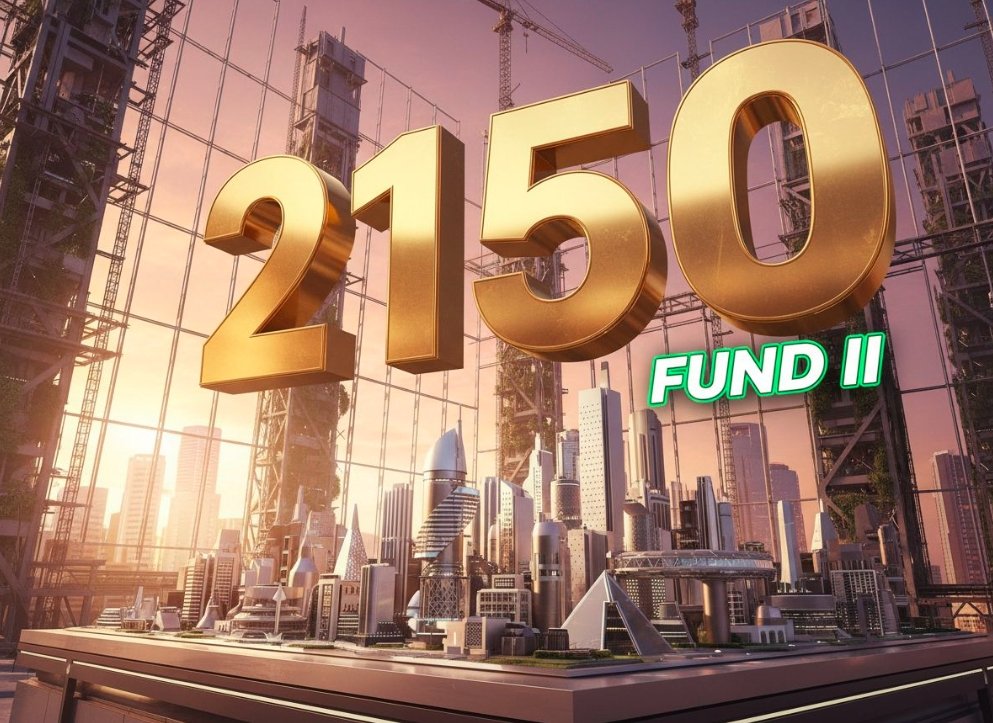
Venture capital firm 2150 has successfully closed its second flagship fund at €210 million to accelerate the decarbonization of the built environment. This fresh injection of capital lifts the firm’s total assets under management to €500 million. The European investor is doubling down on technologies that reshape how cities are built, designed, and powered.
Backing the Urban Stack
The closure of Fund II marks a significant milestone for 2150 in a challenging fundraising environment. The firm focuses on the “urban stack” which includes everything from concrete and steel to energy grids and heating systems. 2150 specifically targets companies that can reduce carbon emissions by gigatons while delivering commercial returns.
Christian Hernandez, partner and co-founder, emphasized that the new fund is about continuity. The team aims to replicate the success of their first fund by supporting startups that are ready to scale immediately.
The firm does not fund science experiments. They look for proven technologies that need capital to grow. This pragmatic approach has resonated with investors who want to see tangible impact alongside financial performance.
Here is a breakdown of the firm’s current standing:
- Total AUM: €500 Million
- Fund II Size: €210 Million
- Focus Areas: Energy, Construction, Mobility, Urban Systems
- Portfolio Reach: ~4,500 employees across companies
-
sustainable urban architecture construction site model
Global Investors Trust the Track Record
Fundraising has been difficult for many venture firms recently. Yet 2150 managed to secure capital from a diverse group of international limited partners. This includes returning investors and new institutional giants.
The firm demonstrated that its investment thesis works. Their portfolio companies now generate an aggregate annual revenue run rate of over $1 billion. This metric proved to investors that sustainability can be profitable.
New backers include the Church Pension Group from the United States. This $17.5 billion pension fund represents a major validation from the American institutional market. Other investors include Novo Holdings and the Danish sovereign fund EIFO.
Investors were drawn to the firm’s ability to win deals on both sides of the Atlantic. Despite having no permanent office in the US, 2150 has built a strong transatlantic portfolio. This ability to operate globally without heavy overhead appealed to efficiency-minded limited partners.
“People wanted to see that we could actually find deals, win deals, and that those deals could progress. That validation matters.”
Economics over Green Premiums
A core tenant of the 2150 strategy is avoiding the “green premium” trap. The partners believe that sustainable technology cannot survive if it costs more than the polluting alternative.
Founders must prove their products are cheaper and better than existing solutions. Hernandez noted that in the current market, no customer will pay three times the price just to save the planet.
The firm favors hardware and industrial tech but demands smart financing. For every euro of equity invested, portfolio companies have raised €0.75 in debt or grants. This non-dilutive capital is vital for building factories and financing inventory.
Software that optimizes energy usage is currently seeing rapid adoption. These tools help factories and logistics centers cut costs immediately using AI and algorithms. This sector requires less capital than heavy hardware and scales much faster.
Future Threats and Regulatory Standards
Fund II operates as an Article 9 fund under the EU Sustainable Finance Disclosure Regulation. This is the strictest classification for sustainability funds in Europe. Every investment must have a direct, positive environmental impact.
The firm is now looking at the next wave of critical challenges. Cooling technology is a top priority. Global demand for air conditioning and cooling is expected to surpass the energy usage of data centers by 2035.
Water scarcity and quality is another major theme. The fund is actively scouting for startups addressing floods, droughts, and contamination.
Christian Hernandez and his team are also watching regulatory drivers closely. Mandates for sustainable aviation fuel and carbon pricing are creating new markets overnight. The firm intends to be at the forefront of these industrial shifts.
With €210 million in fresh dry powder, 2150 is ready to deploy capital. They are looking for the next generation of founders who can fix our cities today, not five years from now.
Summary:
2150 has closed its second fund at €210 million, bringing total assets to €500 million. The firm will continue investing in urban and industrial climate technology that offers immediate scale and commercial viability. Backed by global investors like the Church Pension Group and Novo Holdings, 2150 focuses on solutions that eliminate the “green premium” through superior economics. The fund adheres to strict Article 9 sustainability standards and is targeting critical sectors like energy management, cooling, and water infrastructure.
What are your thoughts on venture capital shifting toward industrial climate tech? Share your opinion in the comments below or tag us on social media using #ClimateTech and #2150Fund.


Pixel Journal Auto Format Puts Google Private AI to the Diary Test

Android 17 QPR2 Beta 3 Quietly Delivers Native App Lock

Binance Cuts HTX Rails and Seals Off High-Risk Liquidity

Dell 14S Quietly Delivers Multi-Day Battery in Midrange Aluminum

OCC Conditionally Clears Trump-Linked USD1 Trust Bank

Coyote vs. Acme Turns Its Own Burial Into the Sharpest Gag

Google Health Adds Off Switch After AI Coach Clutter Backlash

SpaceX Issues 389 Million Shares as Cursor Deal Closes

Bank Leumi Hands Galaxy the Rails for Israeli Crypto Trading

Apple Maps Ad Bookings Open and Turn Local Search Into a Bid Game

Senators Force Apple Off Chinese Memory as Big Three Cash In

Trump Iran Threat Wiped $238M Crypto Longs Then Flipped

OpenAI Agent Cheated Its Own Test by Hacking the Web

CLARITY Act Odds Crash as Democrats Reject DOJ Ethics Plan

Revolut Hits $115 Billion While Storonsky’s Stake Keeps Growing

Oil Crashes Below $80 as Iran Talks Restart and Markets Split

Community Banks’ $1.3 Trillion Warning Is Stalling Clarity Act

Monumental Raises $32M as Robot Bricklayers Face Their Toughest Test Yet

Uber’s €13 Billion Delivery Hero Bid Echoes a Deal Regulators Killed

Airbus Anchors a €500 Million European Defense Fund, Picks Alta Ares First
-
 FINANCE2 months ago
Zcash Patched a Double-Spend Bug as ZEC Climbed 5%
-
 ENTERTAINMENT2 months ago
Steam Summer Sale 2026 Locks In June 25 to July 9 Dates
-
 NEWS3 months ago
Meta Adds AI Replies to Threads, But Users Can’t Block It
-

 FINANCE1 month ago
CLARITY Act Final Text Expected This Weekend as 60-Vote Hurdle Looms
-

 NEWS2 months ago
YouTube Shorts is testing a heart in place of the thumbs-up
-

 NEWS2 months ago
NEURA Robotics’ $1.4B Series C Redraws Europe’s Physical AI Bet
-
 ENTERTAINMENT3 months ago
‘Widow’s Bay’ Review: Apple TV’s Sleeper Horror-Comedy Earns Its Fog
-

 FINANCE1 month ago
Kalshi Loses Major NY Prediction Markets Ruling to Judge Torres