Sweden’s push for a green industrial revolution hit a stumbling block this week. Kinnevik has slashed the value of its stake in green steel startup Stegra by nearly 50 percent. The investment firm cited soaring project costs and potential shareholder dilution as the main reasons for this drastic move. This decision raises fresh questions about the financial viability of Europe’s ambitious climate technology projects.
Valuation Cut Hits Green Steel Ambitions
Kinnevik revealed the massive write-down in its latest financial report. The firm lowered the value of its holding in Stegra to 649 million kronor (roughly $60 million) for the fourth quarter. This is a steep drop from the 1.28 billion kronor valuation reported just three months earlier.
Investors are reacting to the sheer scale of the reduction. A 49 percent cut signals that the path to fossil-free steel is rockier than expected. Kinnevik currently owns a three percent stake in the company formerly known as H2 Green Steel.
The primary driver for this cut is money. Stegra is currently in the middle of a massive funding round. They are trying to secure an additional $1.1 billion to finish building their flagship plant. However, bringing in new money often means issuing more shares.
Kinnevik expects this process to dilute their existing ownership significantly. The investment firm stated that the current funding round reflects higher project costs than they previously calculated. This economic reality forced them to adjust their books to reflect the new, lower value of their investment.
Here is a breakdown of the valuation shift:
| Period | Valuation of Stake (SEK) | Status |
|---|---|---|
| Q3 2023 | 1.280 Billion | Stable |
| Q4 2023 | 649 Million | Written Down |
| Change | -49% | Significant Drop |
Kinnevik CEO Georgi Ganev did not mince words regarding the situation. He described the performance of many climate tech investments in their portfolio as “unsatisfactory.” This blunt assessment highlights the growing patience gap between venture capital expectations and industrial reality.
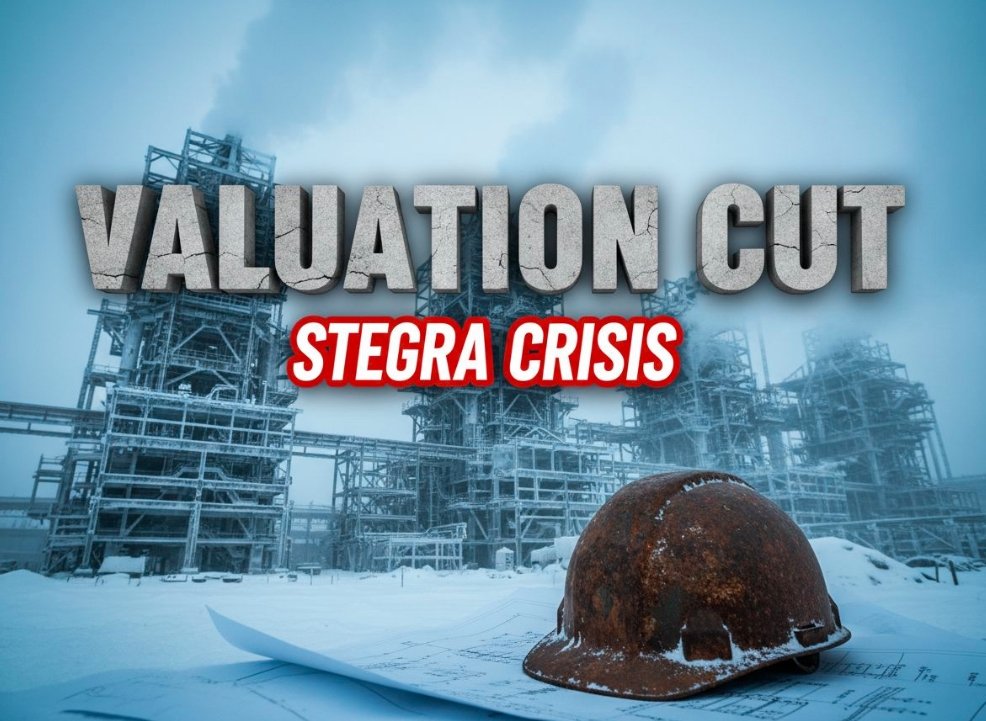
construction site of Stegra green steel plant in Boden Sweden
Delays Plague the Boden Plant Project
Stegra is attempting to do something that has never been done at this scale. They are building a massive industrial plant in Boden, located in northern Sweden. The goal is to produce steel using green hydrogen instead of coal.
This process emits water vapor instead of carbon dioxide. It is a key piece of Europe’s strategy to reduce industrial emissions. However, building such a facility from scratch is proving to be incredibly difficult and expensive.
The plant was originally scheduled to open this year. That timeline has now been scrapped. The company now expects production to begin in 2027. A delay of several years adds immense financial pressure to the project.
Construction costs have surged during this period. Inflation and supply chain issues have made every piece of steel and concrete more expensive. These rising costs are directly eating into the company’s valuation.
The delay also impacts revenue. Stegra cannot sell green steel until the plant is running. This means they must burn through cash for two extra years before seeing significant income from operations.
“The current funding round reflects a higher project cost than previously expected and is likely to cause meaningful economic dilution.” — Kinnevik Financial Report
The situation in Boden mirrors broader struggles in the green tech sector. Large infrastructure projects are capital intensive. They do not scale as quickly as software companies. Investors are learning that the timeline for green industrialization is measured in decades, not quarters.
Banking Jitters and Financing Struggles
The write-down comes at a sensitive time for Stegra. The company is working hard to close its financing gap. They have already raised an impressive €6.5 billion from a roster of global heavyweights.
Investors include Mercedes-Benz, Siemens, and the Agnelli family. Even the Singaporean sovereign wealth fund GIC has backed the project. Despite this support, recent reports suggest that banking partners are getting nervous.
The Financial Times recently reported that Citigroup is looking to step back. The bank reportedly wants to stop being a lender to Stegra. They have cited concerns about the company’s future viability.
Losing a major banking partner like Citigroup would be a significant blow. It could make other lenders hesitant to step in. This creates a difficult cycle for Stegra. They need money to finish the plant to prove the concept works. But lenders want proof the concept works before lending the money.
Kinnevik noted that the write-down remains sensitive to the outcome of the current funding round. If Stegra secures the cash on good terms, the value could stabilize. If they struggle or have to accept bad terms, further cuts could follow.
Signs of Hope Amidst the Gloom
It is not all bad news for the Swedish startup. Despite the financial engineering headaches, the underlying business still has momentum. Customers want the product Stegra promises to build.
Stegra recently signed a significant multi-year contract with ThyssenKrupp Materials Services. This deal proves that there is real market demand for green steel. Major industrial players are willing to commit to buying the product years in advance.
Kinnevik acknowledged these positive developments. They stated that the company’s progress is “positive” despite the valuation adjustment. The technology itself is not in question. The challenge is purely about execution and economics.
The demand for green steel is driven by European regulations. Car manufacturers and construction firms need to lower their carbon footprint. Stegra offers a solution that solves a major problem for these industries.
This long-term demand provides a safety net. As long as regulations push for lower emissions, someone will need to make green steel. Stegra is still one of the furthest along in this race.
Key positives keeping the project alive:
- Strong Customer Base: Contracts with industry giants lock in future revenue.
- Regulatory Support: EU laws favor low-carbon industrial products.
- Technological Lead: Few competitors are as advanced in hydrogen steel production.
The next six months will be critical. Stegra must close its funding round to keep the excavators moving in Boden. Kinnevik will be watching closely, hoping their “unsatisfactory” investment can turn into a long-term winner.
The green transition is proving to be a marathon with hurdles. Kinnevik’s decision to slash value is a reality check. It reminds the market that changing the way the world builds things will cost a lot of money and take a lot of time.
Investors, policymakers, and environmentalists are watching Sweden. If Stegra succeeds, it proves the model works. If it stumbles further, it could cool investment in green heavy industry for years.
What do you think about the future of green steel projects? Are they too risky for traditional investors? Share your thoughts in the comments below. If you are following the green tech market, use #GreenSteel and #Stegra to join the conversation on social media.
