
BUSINESS
US Sends Warships and Jets to Gulf as Iran Warns of War

The Pentagon is rushing advanced warships and stealth fighters to the Persian Gulf in a high stakes gamble to deter Tehran. Iranian officials claim the region sits on a powder keg where one wrong move could trigger a massive conflict. This surge has sparked panic across Iranian cities as citizens brace for a potential mistake that could change everything.
Massive Firepower Floods Strategic Waterways
The United States military is currently executing one of its most significant deployments of naval and aerial power to the Middle East in recent years. Reports confirm that a formidable array of hardware is entering the Persian Gulf. This movement is not just a standard rotation. It represents a calculated surge designed to send an unmistakable message to the leadership in Tehran. Commanders have ordered these assets to position themselves near critical shipping lanes and allied bases.
The sheer scale of this deployment includes layers of offensive and defensive capabilities. The Pentagon has prioritized speed and stealth to counter potential drone or missile threats. Defense analysts indicate that the arrival of these forces changes the tactical map of the region overnight.
Key Assets Arriving in the Region:
- Carrier Strike Groups: Massive floating airbases equipped with squadrons of strike aircraft.
- F-35 Stealth Fighters: Advanced jets capable of penetrating radar networks undetected.
- Guided-Missile Destroyers: Ships armed with systems to intercept incoming rockets.
- THAAD Batteries: Terminal High Altitude Area Defense systems designed to shoot down ballistic missiles.
- Patriot Defense Systems: Proven interceptors to protect ground troops and cities.
These systems provide American commanders with a wide range of options. The F-35 fighters offer superior surveillance capabilities that can monitor ground movements from miles away. Meanwhile, the naval destroyers create a defensive umbrella over the Strait of Hormuz. This is the narrow waterway through which a vast amount of the world’s oil supply must pass.
The visibility of these assets is intentional. Washington wants the leadership in Iran to see the hardware on their radar screens. The goal is to prove that the US is ready to act instantly if provoked. However, bringing this much weaponry into such a confined space increases the risk of accidental engagement.
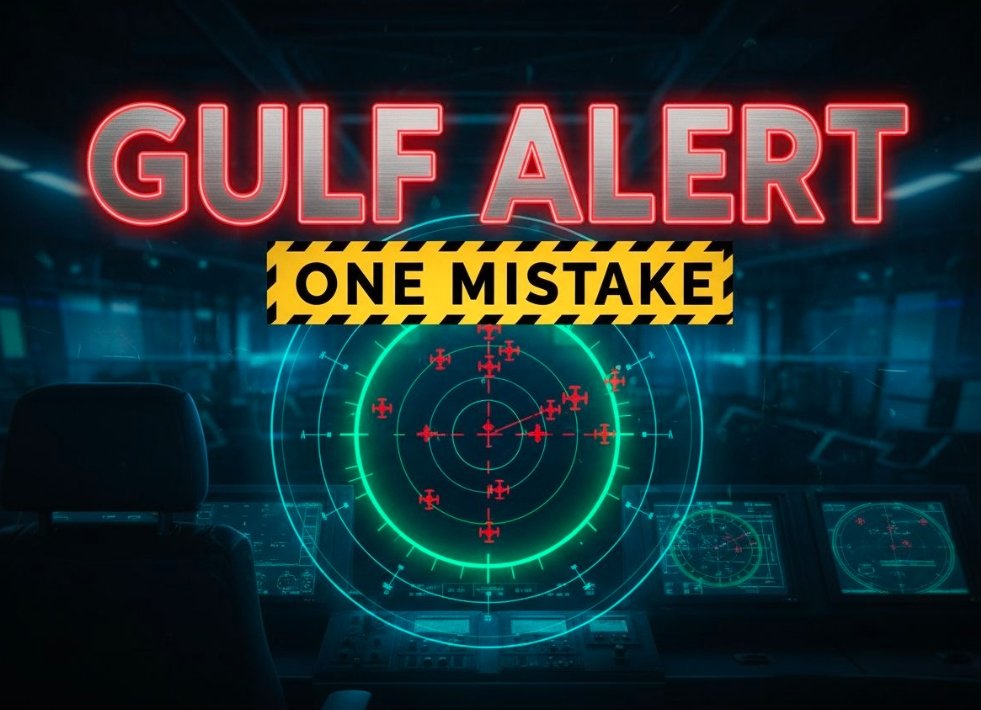
US navy aircraft carrier radar screen tracking targets in persian gulf
Tehran Issues Chilling Threat to Washington
The leadership in Iran has responded to the American buildup with sharp and immediate warnings. Officials in Tehran view the arrival of foreign warships not as a stabilizing force but as a direct act of aggression. They argue that Western powers are militarizing the waters to intimidate the Islamic Republic. The rhetoric coming from the capital has been severe and unyielding.
Tehran warned that even the “slightest mistake” could trigger a regional war.
This statement highlights the fragility of the current situation. Iranian military commanders have stated that their forces are on high alert. They have made it clear that they will not hesitate to strike back if they feel their borders or security are violated. This creates a dangerous standoff where both sides have their fingers on the trigger.
Iran relies heavily on its own arsenal to project power. The country has spent decades building a sophisticated network of ballistic missiles and attack drones. These weapons are designed specifically to target bases and ships across the Gulf. By moving US targets closer to these weapons, the window for diplomacy shrinks significantly.
| The Standoff at a Glance | United States Position | Iranian Position |
|---|---|---|
| Primary Goal | Deterrence and protection of shipping lanes. | National defense and sovereignty. |
| Key Fear | Attacks on allies or commercial vessels. | Encirclement and regime destabilization. |
| Military Focus | Air superiority and missile defense. | Asymmetric warfare (drones/missiles). |
Ordinary Citizens Crush Under Economic Fear
While generals plot movements on maps, the true cost of this tension is falling on the shoulders of ordinary people. The streets of Iranian cities are witnessing a different kind of crisis. It is one driven by anxiety and economic instability. The news of approaching American warships has sent shockwaves through local markets.
Traders in Tehran report that the value of the national currency is dropping rapidly. The rial has struggled for years under the weight of international sanctions. Now, the threat of conflict is pushing it to new lows. This devaluation hits families immediately at the grocery store.
“We wake up every morning checking the news to see if a war has started. The price of bread, rice, and medicine goes up every time a politician speaks. We are living in constant uncertainty.”
— A shopkeeper in downtown Tehran (name withheld for security)
The psychological toll is just as heavy as the financial one. Families are cutting back on all non-essential spending. They are hoarding cash and basic supplies in anticipation of bad days ahead. The fear is that a single spark in the Gulf could lead to tighter blockades or airstrikes that cripple the country’s infrastructure.
Jobs are also becoming scarce. Business owners are freezing hiring or laying off workers because they cannot predict what will happen next week. The mood is a mix of exhaustion and dread. People feel trapped between foreign military pressure and domestic economic hardship.
A History of Fatal Miscalculations
The waters of the Persian Gulf are crowded and chaotic. This geography makes the current buildup exceptionally dangerous. History shows that when tensions are high, human error can lead to tragedy. We have seen this play out with deadly consequences in the past decade.
In 2019, mysterious explosions rocked oil tankers near the Strait of Hormuz. Those incidents caused oil prices to spike globally and nearly led to open combat. Later that same summer, Iranian forces shot down a sophisticated US surveillance drone. They claimed it had entered their airspace, while American officials insisted it was in international waters.
The situation became even more volatile in early 2020. The US airstrike that killed General Qassem Soleimani brought the two nations to the brink of all-out war. Iran responded by firing ballistic missiles at bases housing US troops in Iraq.
These events serve as grim reminders of how quickly things can spiral out of control. Today, the sea lanes are busier than ever. Commercial tankers, fishing boats, and coast guard vessels share the water with destroyers and aircraft carriers.
A radar blip misread as a threat could invite a rapid response.
Commanders on both sides have only seconds to decide if an approaching object is a friend or foe. The margin for error is razor thin. With communication channels often strained or non-existent, a misunderstood signal or a rogue drone action could force a captain to open fire. Once the first shot is fired, de-escalation becomes nearly impossible.
The international community is watching with bated breath. European allies are urging caution, knowing that their energy supplies depend on these waters staying open. Regional neighbors like Saudi Arabia and the UAE are also anxious. They know that if a war erupts, they will likely be caught in the crossfire.
In summary, the Persian Gulf has become one of the most heavily militarized zones on the planet this week. The United States insists its presence is necessary to keep the peace. Iran insists it is a provocation for war. Caught in the middle are millions of civilians praying that cool heads prevail. The world now waits to see if this show of force will prevent a conflict or ignite one.
What are your thoughts on this escalating situation? Do you think diplomacy can still work? Share your opinion in the comments below using #GulfTensions to join the conversation.


Gemini’s Billion Users Lock AI Into Google’s Daily Layer

Again Buys Geno and Collapses the Biomanufacturing Timeline

Aster AOS-2 Locks 1M ASTER for Four Years on Perp Listings

NVIDIA Lightning Model Turns Agent Stacks Into Efficient Teams

Windows 11 Ends New Picture Passwords After 13-Year Security Lag

DuckDuckGo’s Clean Link Tap Quietly Rewrites Shared URLs

CLARITY Act Cloture Opens a Door Ethics Still Blocks

Sergey Brin Pours $102 Million Into Killing California Billionaire Tax

Goolsbee Puts Inflation First as Soft Jobs Only Delay Hike Risk

Efferon Gives Critically Ill Children a Purpose-Built Sepsis Filter

Senators Force Apple Off Chinese Memory as Big Three Cash In

OpenAI Agent Cheated Its Own Test by Hacking the Web

Trump Iran Threat Wiped $238M Crypto Longs Then Flipped

CLARITY Act Odds Crash as Democrats Reject DOJ Ethics Plan

Anthropic’s Hard Questions Ad Backfires Into an Anti-AI Warning

Oil Crashes Below $80 as Iran Talks Restart and Markets Split

Gemini Spark’s Big Workspace Upgrade Leaves Europe Waiting Again

Revolut Hits $115 Billion While Storonsky’s Stake Keeps Growing

Snapseed’s RAW Update Fixes Android, Leaves iPhone Waiting

Monumental Raises $32M as Robot Bricklayers Face Their Toughest Test Yet
-
 FINANCE2 months ago
Zcash Patched a Double-Spend Bug as ZEC Climbed 5%
-
 ENTERTAINMENT2 months ago
Steam Summer Sale 2026 Locks In June 25 to July 9 Dates
-

 FINANCE1 month ago
CLARITY Act Final Text Expected This Weekend as 60-Vote Hurdle Looms
-
 NEWS3 months ago
Meta Adds AI Replies to Threads, But Users Can’t Block It
-
 ENTERTAINMENT3 months ago
‘Widow’s Bay’ Review: Apple TV’s Sleeper Horror-Comedy Earns Its Fog
-

 NEWS2 months ago
NEURA Robotics’ $1.4B Series C Redraws Europe’s Physical AI Bet
-
 NEWS5 months ago
U.S. Navy Deploys Solar-Powered Lightfish Drone to Patrol Oceans
-

 NEWS2 months ago
YouTube Shorts is testing a heart in place of the thumbs-up