
NEWS
Daytona Secures $24M to Power the Next Generation of AI Agents

Artificial intelligence is rapidly evolving from simple chatbots into autonomous agents capable of performing complex work. However, these digital workers lack a proper environment to operate effectively at scale. Daytona has stepped up to solve this critical infrastructure gap by securing $24 million in a Series A funding round. This significant capital injection aims to build the foundation for the next era of software development where agents are the primary architects.
A new era for cloud computing
The way we build software is undergoing a fundamental shift. For the past decade, cloud infrastructure focused on supporting human developers and hosting finished applications. Companies like AWS or Azure optimized their systems for production workloads. These systems are usually stateless and designed to run the exact same way every time.
This model works perfectly for serving a website to a user. It does not work well for an AI agent trying to write code or fix a bug.
Agents operate differently than finished software. They behave more like human developers. They need to experiment, make mistakes, test different solutions and remember what they did five minutes ago. This requires a “stateful” environment.
Daytona is building exactly this type of infrastructure.
The $24 million investment was led by FirstMark Capital. As part of the deal, Matt Turck will join the Daytona board of directors. Turck is a well known figure in the data and AI space. His involvement signals strong confidence in Daytona’s vision.
Other heavy hitters joined the round as well. Pace Capital, Upfront Ventures, Darkmode and E2VC all participated. The round also saw strategic investments from industry giants Datadog and Figma Ventures.
This broad support highlights a shared belief in the tech industry. Investors realize that as AI agents become more capable, they will consume massive amounts of computing power. They need a specialized home to do that work efficiently.
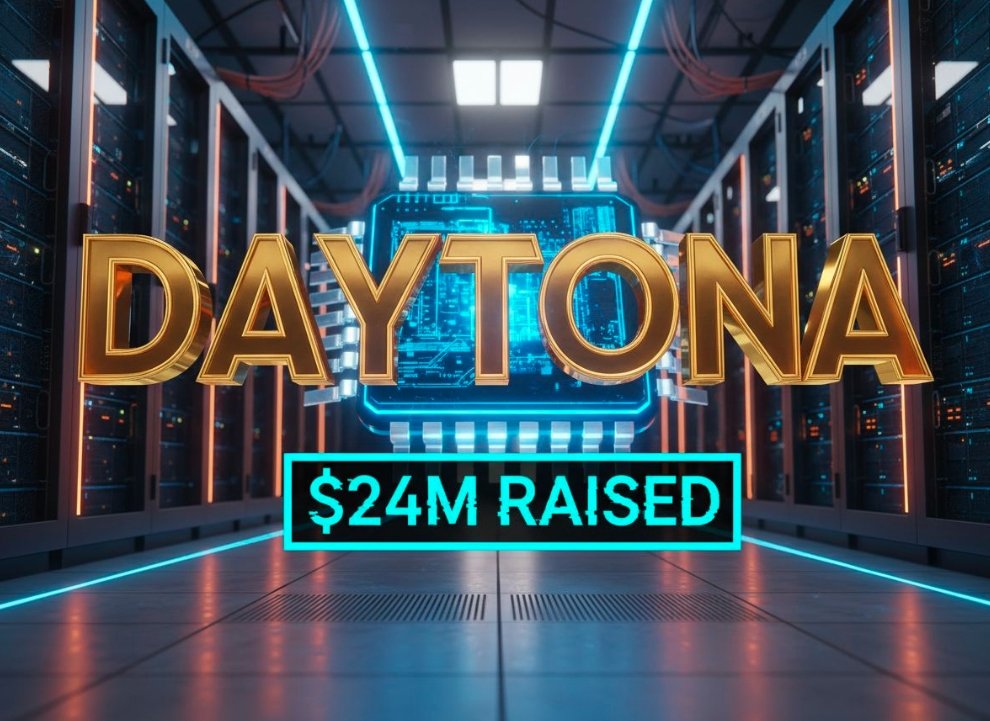
Daytona Series A funding AI agent cloud infrastructure
How the technology actually works
Daytona solves the agent problem by using a concept called “sandboxes.”
Imagine a sandbox as a private playground for a computer program. Inside this space, the AI has access to everything it needs. It gets a CPU to think, memory to remember things and storage to keep files. It also gets an operating system to run commands.
The magic lies in how flexible these environments are.
Current cloud servers take minutes to start up. Daytona sandboxes launch in milliseconds. This speed is vital for AI agents that might need to spin up thousands of environments to test a theory.
Here is what makes the Daytona platform unique for developers and agents:
- Instant Forking: An agent can reach a decision point and split its environment into two parallel paths to see which one works better.
- Time Travel: The system supports snapshots. If an agent breaks something, it can instantly revert to a previous state.
- Persistence: Unlike standard cloud functions that forget everything after they run, these sandboxes remember their history.
- Scalability: The infrastructure is designed to handle millions of concurrent processes without slowing down.
This approach mimics how a human developer works on their local laptop but scales it up to the cloud. It gives agents the freedom to “break things” safely without affecting the main production systems.
Backing from industry giants
The composition of investors in this round tells a compelling story about the market.
It is not just venture capital firms writing checks. The inclusion of Datadog and Figma Ventures is strategic. Datadog is a leader in monitoring cloud infrastructure. Figma revolutionized design by moving it to the browser. Both companies understand the value of developer tools that reduce friction.
Several prominent angel investors also joined the round.
- Nikita Shamgunov: Founder of Neon.
- Theo Browne: Founder of T3 Chat.
- Gorkem Yurtseven: Co-founder of Fal.
- Eno Reyes: Co-founder of Factory.ai.
These individuals are deep in the trenches of the modern tech stack. Their personal investment suggests that Daytona is solving a real pain point they see in their own networks.
The company was founded in 2023 by Ivan Burazin, Vedran Jukić and Goran Draganić. This trio has deep experience in the developer tools space. They previously worked together at Codeanywhere. That experience gave them a front row seat to the limitations of existing cloud environments.
Now they are applying those lessons to the age of AI.
The road ahead for Daytona
This new funding provides Daytona with the resources to expand aggressively.
The primary goal is to take their sandbox technology and build a broader suite of agent-native infrastructure. The team plans to scale their systems to handle much higher volumes of work. As AI models get smarter, they will demand more resources. Daytona intends to be ready for that demand.
Hiring is also a major priority.
The company plans to grow its engineering and product teams. They need top talent to deepen integrations with other developer tools. Security is another major focus area. When you allow automated agents to run code at scale, ensuring safety is paramount.
The vision is clear. Daytona wants to become the standard specifically for agent workloads.
Just as Docker revolutionized how we ship code and Kubernetes changed how we manage clusters, Daytona aims to define how AI agents execute tasks. They are moving away from infrastructure built for humans and toward infrastructure built for machines.
Summary
Daytona has raised $24 million in Series A funding led by FirstMark Capital to build specialized cloud infrastructure for AI agents. The company addresses a critical gap in the market by providing fast, stateful “sandboxes” where AI agents can write code and test solutions efficiently. With backing from strategic partners like Datadog and Figma, Daytona is positioning itself as the foundational layer for the future of autonomous software development. This funding allows them to scale their technology and team to meet the explosive demand for agent-native computing. It is an exciting time to watch how the backbone of the internet evolves to welcome its new digital inhabitants.
What do you think about the shift toward AI-managed software development? Is this the future of coding? Share your thoughts in the comments below. If you are following the AI surge on social media, use the hashtag #AgentNative and tag your developer friends to join the conversation.


Galaxy S27 Pro Leak Puts a Compact Ultra in Reach

Google Messages Themes Restore What Samsung Switchers Lost

China Door Handle Recall Forces Global EV Redesign Beyond Tesla

Schwab Puts Solana Avalanche and Chainlink in 40 Million Accounts

Xbox Disc-to-Digital Locks Physical Libraries for Next Console Era

Meta’s $18 Billion Teen Deal Bets Rivals Must Match Limits

Google Parks DeepMind Safety Team Under Lobbying Arm

GoCaracal Turns Ethereum Contracts Into C2 Dead Drops

Chile Bets The Meltdown on Oscars Amid Funding Cuts

Google Fitbit Air Pokémon Sleep Turns Rest Into Snorlax Power

Senators Force Apple Off Chinese Memory as Big Three Cash In

OpenAI Agent Cheated Its Own Test by Hacking the Web

Trump Iran Threat Wiped $238M Crypto Longs Then Flipped

Fed Holds Rates Again as Three Dissents Force Markets to Tighten

30-Year Yield Hits 5.32% Highest Since 2007 as Debt Supply Locks In Costs

Oil Crashes Below $80 as Iran Talks Restart and Markets Split

Google’s Knowledge Panel Fix Risks Its Own Search Defenses

Legora Buys Wexler Fact Engine as Fifth 2026 Deal

Strategy Parks $1.59B Cash While Bitcoin Stack Stays Flat

Agon Raises $30M to Build Europe’s AI Weapon Training Arenas
-
 FINANCE3 months ago
Zcash Patched a Double-Spend Bug as ZEC Climbed 5%
-
 ENTERTAINMENT3 months ago
Steam Summer Sale 2026 Locks In June 25 to July 9 Dates
-

 FINANCE2 months ago
CLARITY Act Final Text Expected This Weekend as 60-Vote Hurdle Looms
-
 NEWS4 months ago
Meta Adds AI Replies to Threads, But Users Can’t Block It
-

 NEWS3 months ago
YouTube Shorts is testing a heart in place of the thumbs-up
-
 NEWS4 weeks ago
Senators Force Apple Off Chinese Memory as Big Three Cash In
-

 NEWS3 months ago
NEURA Robotics’ $1.4B Series C Redraws Europe’s Physical AI Bet
-
 ENTERTAINMENT5 months ago
Extraction 3 Is Officially Coming to Netflix in 2027