
NEWS
Marines Deploy First 3D Printed Modular Drone Built for Combat

Warfighting just got cheaper and faster for the US Marine Corps. Meet HANX, the service’s first fully accredited 3D-printed drone designed entirely by active-duty Marines. This modular powerhouse passed rigorous anti-spyware checks and promises to revolutionize front-line logistics through rapid field fabrication. It represents a massive shift in how military forces approach disposable air power.
A New Era of Expendable Air Power
The conflict in Ukraine demonstrated the terrifying effectiveness of cheap drone warfare. Expensive missiles are often overkill when a small, remote-controlled aircraft can deliver an explosive payload with pinpoint accuracy. The US Marine Corps has taken this lesson to heart with the HANX. This system is officially categorized as a “one-way attack” drone.
It is designed to crash into its target and detonate. This capability eliminates the need for a return trip. Return flights often expose drone operators to enemy tracking systems. By removing the return journey, the Marines increase the safety of their ground troops significantly.
Key Capabilities of the HANX System:
- Strike Capability: Delivers kinetic payloads directly to enemy positions.
- Surveillance: Can be outfitted with cameras for reconnaissance missions.
- Logistics: Capable of ferrying small supplies between units.
- Modularity: Users can swap mission modules in the field without special tools.
This project is not just a prototype. It has received the green light under the National Defense Authorization Act (NDAA). This is a critical hurdle for military hardware. It ensures the software and hardware contain no foreign spyware or compromised components. Getting approval from NAVAIR usually takes years. The HANX achieved this milestone rapidly because it was built in-house.
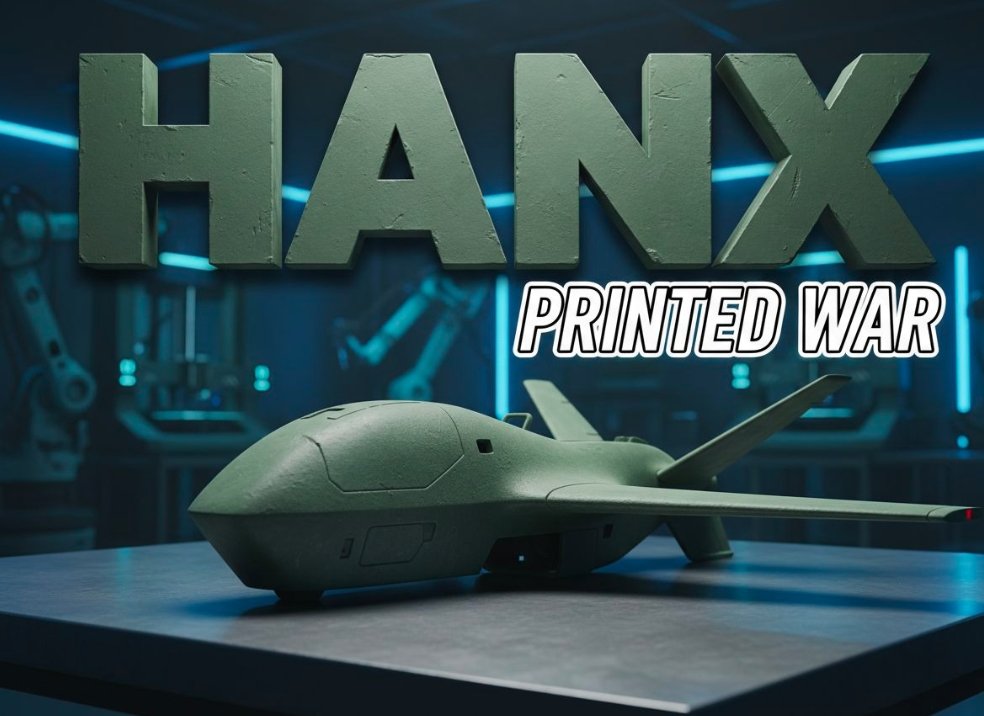
modular 3d printed military drone on workbench
From Lego Robotics to Battlefield Innovation
The brain behind this breakthrough is Sergeant Henry David Volpe. His journey to military innovation began long before he donned the uniform. Volpe started with a middle school Lego robotics club. He credits his engineer parents for fostering a love of tinkering.
Volpe joined the Marines with the 2nd Maintenance Battalion. He soon discovered the Expeditionary Force Innovation Campus at Camp Lejeune. This facility specializes in robotics and additive manufacturing. Volpe wasted no time making his mark. He repaired a broken 3D printer shortly after arriving. This caught the eye of Matthew Pine who ran the campus.
“I saw a big price tag. I knew I could make something far cheaper without sacrificing too many features.”
— Sgt. Henry David Volpe (Regarding traditional military drones)
Pine and Volpe observed existing Army drones at Fort Campbell. Volpe saw potential but hated the high cost. He believed he could do better. Pine assembled a specialized team of Marines to support Volpe. They went from concept to a working prototype in just 90 days. This speed is unheard of in traditional military procurement.
Logistics and the Power of 3D Printing
The true genius of the HANX lies in its supply chain. Traditional military equipment relies on complex logistics. If a part breaks, a unit must order a replacement. They then wait for a contractor to manufacture and ship it. This process can take weeks or months.
The HANX changes this dynamic entirely.
The drone is built using commercial off-the-shelf components and 3D-printed bodies. If a wing snaps or a fuselage cracks, Marines do not order parts. They simply download a digital blueprint. They then print the replacement part right there on the base or ship.
Comparison: Traditional Drone vs. HANX
| Feature | Traditional Military Drone | HANX System |
|---|---|---|
| Repair Time | Weeks for shipping parts | Hours for printing parts |
| Cost | High (Proprietary tech) | Low (3D printed materials) |
| Flexibility | Fixed configuration | Modular payload swapping |
| Supply Chain | Dependent on contractors | Dependent on raw filament |
This capability aligns with broader naval strategies. Aircraft carriers are already experimenting with onboard 3D printers to keep jets flying. The Marine Corps is now bringing that same self-sufficiency to the infantry level. This reduces reliance on vulnerable supply convoys.
Strategic Shift in Modern Warfare
The HANX represents more than just a cool gadget. It signals a shift in how the US prepares for near-peer conflict. The 2024 and 2025 defense landscapes have focused heavily on “replicator” initiatives. The goal is to field thousands of autonomous systems quickly.
The HANX fits perfectly into this strategy. It is cheap enough to be used in swarms. It is effective enough to take out light armor or personnel. Most importantly, it is compliant with strict security standards.
The NDAA compliance is vital. The US government has banned drones from specific countries due to data security concerns. Many commercial drones are no longer viable for military use. The HANX fills this gap using trusted American software and manufacturing.
Commanders now have a versatile tool. They can launch a HANX to scout a hill. If the drone spots a high-value target, the operator can engage immediately. If the drone survives a surveillance mission, it can be recovered and refitted. This flexibility grants tactical commanders immense freedom.
Volpe remains humble about his contribution. He insists the project was a team effort. The name “HANX” is a nod to his nickname “Hank.” Yet he deflects the praise to the collaborative environment at Camp Lejeune. His work proves that innovation often comes from the bottom up.
The Marine Corps has officially signaled that it is ready for the future of war. That future is printed, modular, and expendable. The HANX is just the beginning of this transformation.


Entravel Raises $7.5M as Travel Booking Leaves Travel Sites

MSCA Partnerships Quietly Rebuild Europe’s Industry Talent Pipeline

EU Fund Takes Equity Stake as Lovable Hits $13.3bn

AOC Laughs Off Woke 1 as Hollywood Counts the Losses

Aptoide Lands in Google Play as Managed Rival After Epic Ruling

Eva Green and Samuel L. Jackson Scheme in Just Play Dead Trailer

Edge Opens Apple Account Door After Google to Chase Dual-Device Users

DJI Pocket 4P Wins on Dynamic Range Where It Ships

GTA 6 Preorders Skew to the $100 Ultimate Edition

Accel’s $800M Europe Fund Speeds Up Early AI Rounds

Senators Force Apple Off Chinese Memory as Big Three Cash In

Trump Iran Threat Wiped $238M Crypto Longs Then Flipped

OpenAI Agent Cheated Its Own Test by Hacking the Web

CLARITY Act Odds Crash as Democrats Reject DOJ Ethics Plan

Anthropic’s Hard Questions Ad Backfires Into an Anti-AI Warning

Gemini Spark’s Big Workspace Upgrade Leaves Europe Waiting Again

Oil Crashes Below $80 as Iran Talks Restart and Markets Split

Revolut Hits $115 Billion While Storonsky’s Stake Keeps Growing

Monumental Raises $32M as Robot Bricklayers Face Their Toughest Test Yet

Duda’s New AI Tools Speed Up Agencies, but Risk Sameness
-
 FINANCE2 months ago
Zcash Patched a Double-Spend Bug as ZEC Climbed 5%
-
 ENTERTAINMENT2 months ago
Steam Summer Sale 2026 Locks In June 25 to July 9 Dates
-
 NEWS3 months ago
Meta Adds AI Replies to Threads, But Users Can’t Block It
-

 FINANCE1 month ago
CLARITY Act Final Text Expected This Weekend as 60-Vote Hurdle Looms
-

 NEWS2 months ago
NEURA Robotics’ $1.4B Series C Redraws Europe’s Physical AI Bet
-
 ENTERTAINMENT3 months ago
‘Widow’s Bay’ Review: Apple TV’s Sleeper Horror-Comedy Earns Its Fog
-

 FINANCE1 month ago
Kalshi Loses Major NY Prediction Markets Ruling to Judge Torres
-

 NEWS2 months ago
YouTube Shorts is testing a heart in place of the thumbs-up