
BUSINESS
UK Households Hit by January Energy Bill Surge

Millions of families across Great Britain are grappling with tighter finances this month as the energy price cap officially rose on New Year’s Day. The increase comes at the height of winter, adding significant pressure to household budgets already strained by the broader cost of living crisis. Ofgem, the energy regulator, confirmed the hike following volatility in the global wholesale market.
This adjustment means typical dual fuel households paying by direct debit will see their annualized bills climb from £1,834 to £1,928. For many, this 5% jump is particularly stinging as it coincides with the coldest weather of the year when heating usage naturally peaks.
Understanding the Drivers Behind the Hike
The primary catalyst for this latest price increase lies in the instability of global gas markets. While prices had stabilized somewhat throughout last year, renewed geopolitical tensions in the Middle East and the ongoing war in Ukraine have spooked the markets. These events created a ripple effect that pushed wholesale gas prices upward in late 2023.
Since the UK relies heavily on gas for both heating and electricity generation, these global fluctuations translate directly into domestic bills. The price cap mechanism is designed to reflect these underlying costs so suppliers do not go bust.
Key factors influencing the January rate:
- Wholesale Gas Costs: The price suppliers pay for energy rose significantly in the assessment window.
- Market Volatility: Uncertainty over global supply chains caused traders to bid up prices.
- Regulatory Adjustments: Ofgem reviews the cap quarterly to ensure it reflects the true cost of supplying energy.
It is crucial to note that the “price cap” limits the rate per unit of energy, not the total bill. Households that use more energy than the average will pay more than the headline figure of £1,928. Conversely, those who use less will pay less.
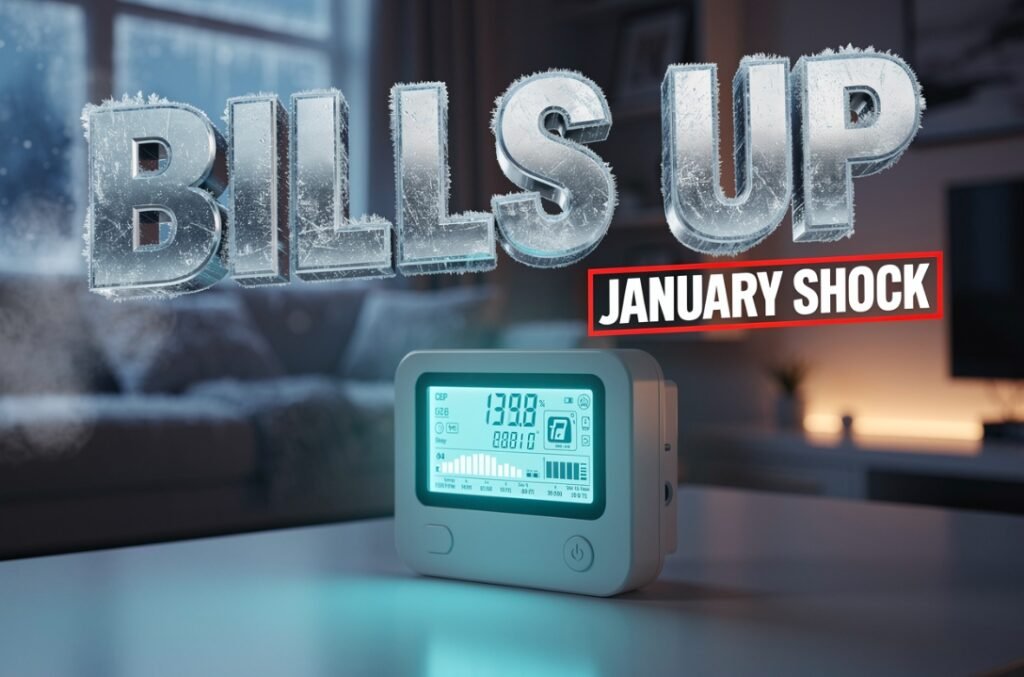
digital smart meter displaying british pounds sterling energy cost
The Human Cost of Higher Winter Bills
The timing of this increase could not be worse for vulnerable households. January is historically a month of financial hangover after the holiday season, and the absence of the universal £400 government support payments that cushioned the blow in previous winters is being felt acutely.
Charities have sounded the alarm regarding fuel poverty. Organizations like National Energy Action warn that the combination of high unit rates and cold weather forces millions into a desperate “heat or eat” dilemma.
“For many, this is not just a squeeze on the wallet; it is a health emergency. Cold homes lead to respiratory issues and exacerbate mental health struggles.”
Data indicates that energy debt is already at record levels. Households are entering 2024 carrying billions in arrears to suppliers. This debt pile makes it incredibly difficult for families to manage even a marginal increase in monthly outgoings without falling further behind.
Standing Charges and Fixed Deals Explained
A major point of contention in this latest cap update is the standing charge. This is the fixed daily amount households pay regardless of how much energy they use. It covers the cost of the distribution network and the failure of suppliers in previous years.
These charges have remained stubbornly high. This disproportionately affects low users and those trying to save money by cutting back on heating. Even if you turn off every light and radiator, the daily fee accumulates.
| Payment Method | Average Impact |
|---|---|
| Direct Debit | Rates rose to approx 29p/kWh for electricity and 7p/kWh for gas. |
| Prepayment | Costs are now aligned closer to direct debit but still require upfront cash. |
| Pay on Receipt | Often pay higher rates; checking payment terms is vital. |
Consumers are currently facing a complex choice regarding fixed deals. Some suppliers are offering fixed tariffs slightly below the price cap. However, locking in now carries a risk if the price cap drops significantly later in the year as some analysts predict.
Strategies to Manage the Rising Costs
While the macro factors are out of consumer control, there are actionable steps households can take to mitigate the impact of the January hike. The first step is clarity.
Check your meter reading immediately. Submitting a reading ensures you are billed accurately for usage before and after the price change date. This prevents suppliers from estimating that you used more expensive energy than you actually did.
Improving home efficiency remains the most effective long term defense. Simple measures like draught proofing windows, bleeding radiators and turning down the flow temperature on combi boilers can result in genuine savings without massive upfront investment.
If you are struggling to pay, contact your supplier instantly. Under Ofgem rules, suppliers must offer payment plans to those in distress. There are also hardship funds available from major suppliers and grants for improving insulation in low income homes.
Do not ignore the letters from your energy provider. Early communication can prevent the installation of forced prepayment meters and open doors to available support schemes.


NFL Preseason Week 2 Quietly Tests the Schemes That Matter

Alonso’s Towering Drive Stands Foul and Flips Orioles Momentum

US Debt Crosses $40 Trillion as Interest Crowds the Budget

Trevon Diggs Joins Seahawks on One-Year Deal After Cowboys Exit

Pixel Watch 5 Turns Passive Trends Into Early Health Alerts

Pixel 11 Pro Fold Sleek Build Undercuts Its Own Unfolding Appeal

Tugboat Wilkinson’s Scoreless Debut Pays Off Giants’ Bailey Trade

Brown Shines for Pats as Love for Eagles Meets Trade Reality

Pixel Watch 5 Turns Wrist Data Into Early Metabolic Alerts

Resistance Stars Pay the Price in Democratic Primaries

Senators Force Apple Off Chinese Memory as Big Three Cash In

Revolut Hits $115 Billion While Storonsky’s Stake Keeps Growing

OpenAI Agent Cheated Its Own Test by Hacking the Web

Trump Iran Threat Wiped $238M Crypto Longs Then Flipped

30-Year Yield Hits 5.32% Highest Since 2007 as Debt Supply Locks In Costs

Fed Holds Rates Again as Three Dissents Force Markets to Tighten

Memory Shortage Now Dictates Apple’s Two-Year Mac Roadmap

Oil Crashes Below $80 as Iran Talks Restart and Markets Split

Google’s Knowledge Panel Fix Risks Its Own Search Defenses

Community Banks’ $1.3 Trillion Warning Is Stalling Clarity Act
-
 FINANCE3 months ago
Zcash Patched a Double-Spend Bug as ZEC Climbed 5%
-
 ENTERTAINMENT3 months ago
Steam Summer Sale 2026 Locks In June 25 to July 9 Dates
-

 FINANCE2 months ago
CLARITY Act Final Text Expected This Weekend as 60-Vote Hurdle Looms
-
 NEWS3 months ago
Meta Adds AI Replies to Threads, But Users Can’t Block It
-

 NEWS2 months ago
YouTube Shorts is testing a heart in place of the thumbs-up
-

 NEWS2 months ago
NEURA Robotics’ $1.4B Series C Redraws Europe’s Physical AI Bet
-
 NEWS3 weeks ago
Senators Force Apple Off Chinese Memory as Big Three Cash In
-
 ENTERTAINMENT3 months ago
‘Widow’s Bay’ Review: Apple TV’s Sleeper Horror-Comedy Earns Its Fog