
NEWS
Want Advanced AI Chips? You Must Invest In America First

The United States government is rewriting the rulebook on how it shares powerful artificial intelligence technology with the rest of the world. Officials have denied rumors of a blanket ban on exports and are instead proposing a strategic trade of high-tech chips for domestic security and financial investment.
This new approach marks a significant shift in American foreign policy and trade regulations. It aims to secure the nation’s lead in technology while forcing other countries to help build up the US economy.
New Strategy Replaces Broad Export Bans
The US Commerce Department recently stepped forward to clear the air regarding the future of AI hardware shipments. There was growing fear in the tech world that the government would shut down exports completely.
Officials stated clearly that they are not planning wide ranging bans that would hurt the industry. They described previous heavy handed regulations as “burdensome” and potentially “disastrous” for American business growth.
The government is now focused on a more precise method to control the flow of technology. The goal is to keep American companies like Nvidia and AMD profitable while ensuring their products do not fall into the wrong hands.
Discussions are currently happening behind closed doors to finalize this new export model. It is designed to be a scalpel rather than a hammer. The administration wants to allow trade to flow but only under very specific and strict conditions.
This strategy protects national interests without stifling the massive revenue streams that come from selling chips globally.
united states flag circuit board digital lock technology background
Middle East Deals Set The Standard
The inspiration for this new policy comes from recent negotiations with nations in the Middle East. Successful talks with countries like the United Arab Emirates and Saudi Arabia have provided a blueprint for the future.
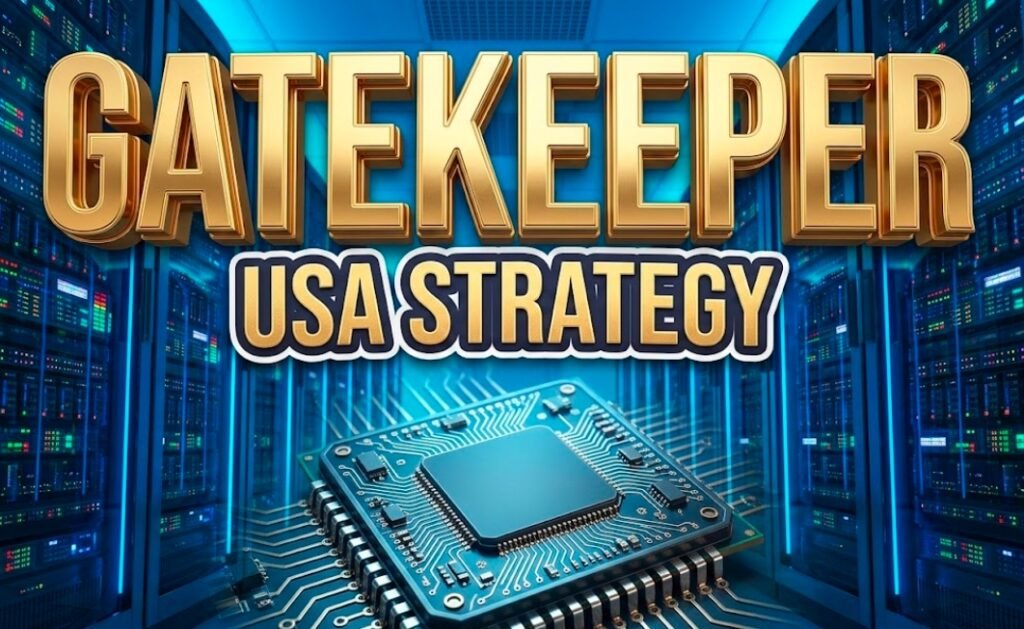
The Commerce Department is looking to use a “gatekeeper” model for these transactions. This means that access to the world’s fastest AI processors is no longer just about having the money to buy them.
Foreign governments must now meet specific requirements to get their hands on American hardware. The US is using its technological dominance as leverage to secure guarantees that benefit the American public.
Here is what the US government is asking for in these new deals:
- Direct Investment: Foreign nations may need to invest money directly into US manufacturing or energy infrastructure.
- Security Assurances: Buyers must prove that the technology will not be shared with rival nations like China.
- Tech Alignment: Countries must agree to use American security protocols and digital standards for their networks.
This approach ensures that as other countries build their AI capabilities, they become dependent on the American ecosystem. It creates a global network of technology that is built on US rules.
Strict Security Checks For Global Buyers
The most critical part of this new plan involves keeping a close watch on where the chips actually go. The US government is worried that powerful hardware could be resold or accessed by adversaries.
The level of oversight will increase drastically based on the size of the order.
If a foreign company or government wants to build a massive data center, they will face intense scrutiny. Projects involving hundreds of thousands of advanced graphics processing units will trigger a deep investigation.
US officials may require physical access to these sites to verify how the chips are being used. This could involve regular inspections and real time monitoring of the data centers.
This is necessary to prevent “diversion.” Diversion happens when a friendly country buys chips but then secretly allows a restricted country to access the computing power remotely.
By forcing buyers to adopt US standards, Washington makes it much harder for this unauthorized sharing to happen. It essentially locks the hardware down digitally.
Boosting American Tech Infrastructure
This policy is not just about safety; it is also a clever economic move. By requiring “matching” investments, the US is forcing foreign capital to flow into American borders.
The administration wants to use global demand for AI to fund domestic growth.
When a foreign nation invests in US infrastructure, it creates jobs and strengthens the local supply chain. This aligns with the broader goals of the CHIPS and Science Act which aims to bring semiconductor manufacturing back to America.
This strategy creates a “win-win” scenario for the US economy and its tech giants.
“We are using our technological leadership to secure our economic future and national defense simultaneously.”
Companies like Nvidia and AMD benefit because they can continue selling their expensive products to wealthy nations. The government benefits because it gets security guarantees and foreign money for public projects.
It changes the dynamic from a simple sales transaction to a complex diplomatic alliance. The US provides the brainpower, and the buyer provides the capital and loyalty.
Conclusion
The US Commerce Department is moving away from simple bans and toward a complex strategy of leverage and investment. By tying access to Nvidia and AMD chips to security pledges and domestic funding, Washington is securing its dominance for the next decade. This “gatekeeper” model allows American tech firms to thrive while ensuring that rival nations cannot easily access or exploit Western technology. It is a bold move that turns a simple computer chip into one of the most powerful diplomatic tools on the planet.
We want to hear your thoughts on this strategy. Do you think it is fair for the US to demand investment in exchange for technology? Share your opinion in the comments below using the hashtag #AIChips and let us know what you think.


Boldr’s $5M Bet Puts HVAC Contractors at Grid Center

NEON Bets Big on Lily James Cliffhanger for February 2027

Gemini Locks Apex Pipes for Crypto Event Contracts

Sony Email Restates Old License Rules Amid Disc Backlash

TidalSense Breaks Spirometry’s Grip With a 75-Second COPD Test

Asus Zenbook Duo 2026 Makes Dual Screens a Daily Driver

SoftBank’s €172M Robot Bet Tops Europe’s €684M Funding Week

NEURA Gives Cleaning Robots a New Brain With ADLATUS Deal

Lotus Emira V6 Manual Delivers Pure Thrills Before Hybrid Shift

Pimax Dream Air Cracks the Bulk Barrier for High-End PCVR

Senators Force Apple Off Chinese Memory as Big Three Cash In

OpenAI Agent Cheated Its Own Test by Hacking the Web

Trump Iran Threat Wiped $238M Crypto Longs Then Flipped

Fed Holds Rates Again as Three Dissents Force Markets to Tighten

30-Year Yield Hits 5.32% Highest Since 2007 as Debt Supply Locks In Costs

Oil Crashes Below $80 as Iran Talks Restart and Markets Split

Google’s Knowledge Panel Fix Risks Its Own Search Defenses

Legora Buys Wexler Fact Engine as Fifth 2026 Deal

Capital Clusters and the Dual Tracks of European Tech Finance

Agon Raises $30M to Build Europe’s AI Weapon Training Arenas
-
 FINANCE3 months ago
Zcash Patched a Double-Spend Bug as ZEC Climbed 5%
-
 ENTERTAINMENT3 months ago
Steam Summer Sale 2026 Locks In June 25 to July 9 Dates
-

 FINANCE2 months ago
CLARITY Act Final Text Expected This Weekend as 60-Vote Hurdle Looms
-
 NEWS3 months ago
Meta Adds AI Replies to Threads, But Users Can’t Block It
-

 NEWS3 months ago
YouTube Shorts is testing a heart in place of the thumbs-up
-
 NEWS4 weeks ago
Senators Force Apple Off Chinese Memory as Big Three Cash In
-

 NEWS3 months ago
NEURA Robotics’ $1.4B Series C Redraws Europe’s Physical AI Bet
-
 ENTERTAINMENT5 months ago
Extraction 3 Is Officially Coming to Netflix in 2027