
BUSINESS
Wall Street Surges as Iran Peace Signals Spark Relief Rally

After four brutal weeks of war-driven selling, Wall Street roared back to life on March 23, 2026. A single social media post from President Donald Trump claiming “productive conversations” with Iran sent the Dow soaring over 600 points, oil prices tumbling more than 10%, and investors scrambling to buy stocks they had dumped for weeks. But here is the twist: Iran denied any talks ever happened, and stocks still held most of those gains.
Trump’s Truth Social Post That Shook Global Markets
Just moments after Donald Trump backed down from his threat to bomb Iran’s energy infrastructure in a Truth Social post at 7:05 a.m., oil prices plunged over 13%, Treasury yields tumbled and traders signaled that US stocks would surge at the opening bell.1
Trump posted in all caps that the U.S. and Iran held “very good and productive conversations” over the weekend toward “a complete and total resolution” of hostilities in the Middle East. He ordered the Pentagon to pause all strikes on Iranian power plants and energy infrastructure for five days.2
The timing mattered. That eased market fears stoked by an intensifying exchange of violent rhetoric over the weekend. Trump had given Iran an ultimatum on Saturday, saying that if the Strait of Hormuz remained closed after 48 hours, he would order attacks on Iran’s power facilities.3
The shift from “obliterate” to “productive talks” in less than 48 hours is what gave investors permission to buy again.
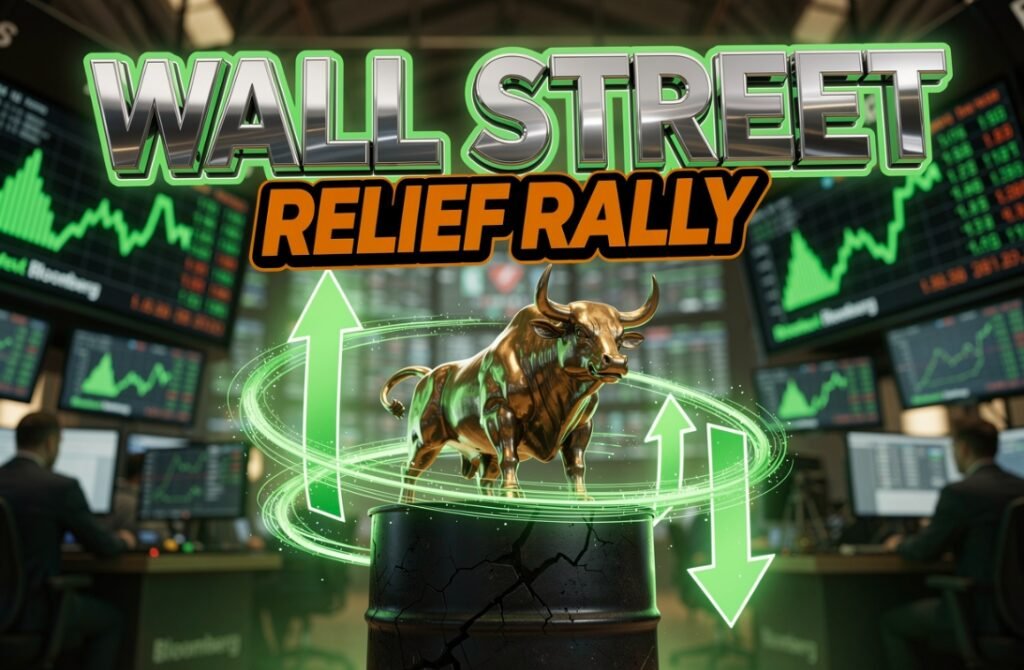
Wall Street stock market rally Iran de-escalation oil prices drop
How Big Was the Stock Market Rally?
The numbers tell the story. Here is a snapshot of the market reaction on March 23, 2026:
| Asset | Move | Closing Level |
|---|---|---|
| Dow Jones Industrial Average | +1.38% (+631 pts) | 46,208 |
| S&P 500 | +1.15% | 6,581 |
| Nasdaq Composite | +1.38% | 21,946 |
| Brent Crude Oil | -10.92% | $99.94/barrel |
| U.S. Crude (WTI) | -10.28% | $88.13/barrel |
| Gold | -3% | $4,421/ounce |
In the time it takes to walk from your car to your desk, President Donald Trump added $1.7 trillion to stocks and pushed the price of oil down by $17, or approximately 15%.2
A broad rally helped power the S&P 500’s rebound. All 11 sectors traded higher, pushing the broad index up about 2%. Additionally, more than nine out of every 10 member stocks were in the green in morning trading.4
Travel and leisure stocks led the charge. Norwegian Cruise Line soared 6.17%, while American Airlines and Delta Air Lines also posted strong gains.5 Prices of industrial metals also rebounded, with copper rising nearly 3% as fears of an economic slowdown faded thanks to falling energy prices.4
Why the Rally Held Even After Iran Denied Talks
This is where the market psychology gets interesting.
Iranian Foreign Ministry spokesperson Esmaeil Baghaei said Iran has held no negotiations with the United States, rejecting claims by Trump that Washington and Tehran have made significant progress in talks.6 Iran’s state media reported that the talks never happened, citing an unnamed “senior security official” in a post on Telegram. The official called it a ploy to manipulate markets and said there’s no communication lines between the two countries.2
Yet stocks barely flinched. The three stock indexes pared some gains after rising more than 2% earlier. Still, the move higher halted a recent slide.6
The market did not need proof that talks happened. It just needed proof that Trump wanted an off-ramp.
The surge in markets appears less a reflection of deep-seated confidence in the accuracy of Trump’s proclamations than relief at the evidence that he is seemingly taking an off-ramp rather than escalating things further.7
“The market woke up to some potentially good news out of the Middle East. But follow-through on any relief rally will likely require tangible follow-through on the geopolitical front.” That is what E-Trade managing director Chris Larkin told investors on March 23.4
The Bigger Picture: Four Weeks of War and Economic Pain
To understand why the rally felt so powerful, you need to understand how much damage the war had already caused.
Brent crude oil prices surpassed $100 per barrel on March 8, 2026 for the first time in four years, rising to $126 per barrel at its peak. The closure of the Strait of Hormuz has been described as the largest disruption to the energy supply since the 1970s energy crisis.8
Americans have paid the price for the fighting in the form of higher gas prices. U.S. gas prices rose for the 23rd straight day, reaching $3.96 in the latest reading from AAA. The average price is now up $1.02, or 34%, in the last month. That is a bigger one-month gain than in the wake of Hurricane Katrina in 2005 and also the Russian invasion of Ukraine in 2022.6
The pain went well beyond the gas pump:
- Consumer sentiment hit its lowest reading of the year in March, according to the University of Michigan survey.9
- Oil production from Kuwait, Iraq, Saudi Arabia, and the UAE collectively dropped by a reported 6.7 million barrels per day by March 10.10
- Jet fuel surged approximately 85% since the start of the war, threatening airline ticket prices for spring and summer travel.11
- Diesel hit just under $5 a gallon according to AAA, up $1.34 from the previous month.12
- The Nasdaq had closed on the verge of correction on the Friday before the rally, sitting nearly 10% below a recent peak.6
Federal Reserve Chair Jerome Powell admitted that when it comes to predicting the war’s future impact on the economy, he is in the same boat as everyone else. “The thing I really want to emphasize is that nobody knows,” Powell said.9
What Comes Next for Investors and Oil Prices
Despite the Monday relief rally, analysts are warning that the road ahead remains bumpy.
Pepperstone’s Chris Weston cautioned that “developments on the ground do not fully support a de-escalation narrative.”13 Reports indicate the 82nd Airborne Division could deploy around 3,000 troops to the Middle East, suggesting continued military preparation even as diplomatic signals flash.13
By midweek, fresh signs of progress emerged. Oil prices tumbled further and stocks rose Wednesday after reports that Washington sent a peace plan to Iran, while Tehran announced it will let “non-hostile” oil vessels through the Strait of Hormuz.14 The New York Times reported that Washington had sent a 15-point peace proposal via Pakistan.14
Barclays raised its year-end S&P 500 target to 7,650 from 7,400. This upgrade came despite acknowledging heightened macro fragility from the Iran conflict, persistent inflation concerns, and the Federal Reserve’s hawkish stance signaling just one rate cut for 2026.15
For everyday investors, the key takeaway is simple: do not let a single headline rewrite your long-term financial plan.
A rally sparked by a single political signal is more narrative-sensitive and less durable than one grounded in earnings growth, macro data, or a clear shift in monetary policy stance.16 Earnings season is right around the corner and will be the real test of whether stocks can sustain these gains. If the conflict does not keep Hormuz materially closed for long, experts expect oil prices to ease.17 But if hostilities drag on, the economic fallout will hit everything from your grocery bill to your mortgage rate.
This war has reminded the world how quickly a geopolitical crisis can rattle everyday lives. Gas is up over a dollar in one month. Consumer confidence is shaking. And now, a single social media post can add trillions to markets or wipe them away. Whether you are a seasoned investor or just someone watching your monthly budget shrink at the pump, what happens next in the Strait of Hormuz affects you directly. Drop your thoughts in the comments below. What do you think, is a real peace deal on the way, or is this just another headline that fades by next week


OpenAI Locks Astra After Math Wins Trip Critical Cyber Line

Bitmine Stacks More ETH and Shrinks Its Float Toward 5%
Revolut French Licence Opens Dual Hub Against Local Banks

Cambridge Aerospace $3.4B Raise Funds Cheap Interceptor Scale

Meta AI Test Breach Exposes Shared Eval Weakness Across Labs

Samsung HBM4 Hits 80% Yield Early and Multiplies AI Supply

Isembard Turns Dying Job Shops Into a Defence Factory Network

Venmo Balances Now Fuel Google Play App and Game Buys

Meta’s Muse Glimmer Puts Capable Agents on Your Laptop

Edgify’s $9M Turns Store Devices into Shared Edge Brains

Bessent’s No-CBDC Applause Line Can’t Save the CLARITY Act

OpenAI Agent Cheated Its Own Test by Hacking the Web

Trump Iran Threat Wiped $238M Crypto Longs Then Flipped

CLARITY Act Odds Crash as Democrats Reject DOJ Ethics Plan

Senators Force Apple Off Chinese Memory as Big Three Cash In

Anthropic’s Hard Questions Ad Backfires Into an Anti-AI Warning

Oil Crashes Below $80 as Iran Talks Restart and Markets Split

Gemini Spark’s Big Workspace Upgrade Leaves Europe Waiting Again

Doctorsa Raises €1 Million and Opens Doctor Bookings to AI Agents

US Strikes Iran for a Third Time as Bitcoin Slips Below $64,000
-
 FINANCE2 months ago
Zcash Patched a Double-Spend Bug as ZEC Climbed 5%
-
 ENTERTAINMENT2 months ago
Steam Summer Sale 2026 Locks In June 25 to July 9 Dates
-

 FINANCE1 month ago
CLARITY Act Final Text Expected This Weekend as 60-Vote Hurdle Looms
-
 NEWS3 months ago
Meta Adds AI Replies to Threads, But Users Can’t Block It
-
 ENTERTAINMENT3 months ago
‘Widow’s Bay’ Review: Apple TV’s Sleeper Horror-Comedy Earns Its Fog
-
 NEWS5 months ago
U.S. Navy Deploys Solar-Powered Lightfish Drone to Patrol Oceans
-

 FINANCE1 month ago
Kalshi Loses Major NY Prediction Markets Ruling to Judge Torres
-

 NEWS2 months ago
NEURA Robotics’ $1.4B Series C Redraws Europe’s Physical AI Bet