
BUSINESS
Trump Takes 10 Percent Intel Stake in Historic Move

The United States government just became one of the largest shareholders in Intel.
President Donald Trump converted unpaid federal grants into a massive 9.9 percent equity stake to rescue the struggling chipmaker.
This historic 8.9 billion dollar financial deal signals a massive shift in how Washington handles corporate bailouts. It proves that national defense and domestic security now officially dictate global market rules.
A Swift Reversal for CEO Lip Bu Tan
The path to this historic agreement began with public hostility. Trump demanded the resignation of Intel CEO Lip Bu Tan on social media at four in the morning. The president called the tech executive highly conflicted and demanded his immediate removal.
This sudden attack stemmed from Tan and his previous investment ties to Chinese companies. Tan previously led investment firms like Walden International and Celesta Capital. These firms had a long history of backing Chinese technology startups.
These foreign connections triggered massive alarm bells in Washington. Tan had absolutely no prior relationship with the president. He rushed to the capital to save his career and his company.
Tan secured a major meeting in the Oval Office. He sat down with Trump, Commerce Secretary Howard Lutnick, and Treasury Secretary Scott Bessent. The men engaged in a tense but highly productive negotiation.
The high stakes meeting completely flipped the script for everyone involved. Trump later told reporters that Tan walked in wanting to keep his job and ended up giving the United States a massive asset worth billions.
This dramatic pivot secured Tan his leadership position immediately. It also won the struggling chipmaker the full public backing of the current administration.
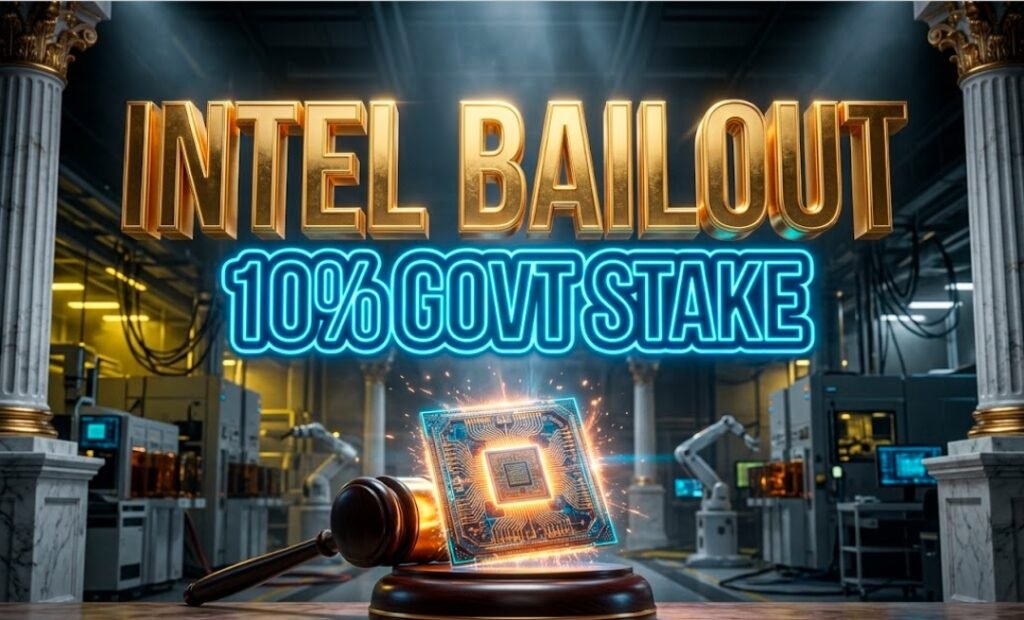
US government purchases major equity stake in Intel corporation
Unpacking the Massive Equity Deal
Instead of giving out free grant money, Washington demanded a permanent piece of the pie. The administration converted 5.7 billion dollars in unpaid CHIPS Act grants and 3.2 billion dollars from the Secure Enclave program into direct equity.
The federal government purchased 433.3 million primary shares at 20.47 dollars each. This purchase price represented a steep four dollar discount from the actual market closing price of 24.80 dollars.
The Intel Equity Deal at a Glance
<table> <tr><th>Deal Component</th><th>Financial Detail</th></tr> <tr><td>Government Ownership</td><td>9.9 percent passive stake</td></tr> <tr><td>Share Purchase Price</td><td>20.47 dollars per share</td></tr> <tr><td>Total Investment Value</td><td>8.9 billion dollars</td></tr> <tr><td>Additional Warrant</td><td>Option to buy 5 percent more at 20 dollars</td></tr> </table>
The United States now ranks as the third largest institutional shareholder in Intel. They currently sit just behind massive investment giants Vanguard and BlackRock.
The government will hold these shares passively without occupying a board seat. They will not have direct voting power over standard daily corporate operations.
However, Washington retains a very powerful five year warrant. The government can buy an additional five percent stake if Intel sells majority control of its foundry business. This specific clause effectively guarantees the manufacturing sector remains under strict American influence.
Market Reactions and Legal Backlash
The financial markets reacted wildly to this surprise White House announcement. Intel stock jumped significantly as investors digested the news of permanent government backing.
This newfound momentum attracted immediate attention from other major technology leaders. Nvidia announced a massive 5 billion dollar investment in Intel stock shortly after the government deal went public.
Call Out Box: A New Industrial Playbook Experts view this move as a historic departure from traditional free market principles. The federal government is now directly participating in private enterprise to secure national defense priorities.
Despite the stock market bump, not everyone is celebrating this unusual agreement. An Intel investor named Richard Paisner filed a lawsuit in Delaware against Tan and Lutnick.
The lawsuit alleges massive financial mismanagement by corporate leadership. Paisner claims the government bought the shares at an unfair discount at the direct expense of regular public shareholders.
The company also sent a strict warning to the Securities and Exchange Commission regarding global business risks. Intel currently earns 76 percent of its total revenue from overseas markets.
Corporate lawyers warned that foreign nations might severely penalize the chipmaker. Local foreign subsidy laws could be triggered now that Washington is a major owner. This scenario could force severe trade restrictions in important overseas regions.
Global Implications and Competitor Threat
Intel is not fighting this corporate battle in an isolated vacuum. They are constantly losing critical ground to foreign rivals like Taiwan Semiconductor Manufacturing and Samsung.
These specific competitors have dominated the global semiconductor market for several years. They achieved this by securing massive manufacturing contracts with huge companies like Apple and AMD.
Intel originally fell behind because they failed to innovate their core chip architecture fast enough.
The United States views reliance on foreign foundries as a severe national security threat. This deep fear is exactly why the Trump administration stepped in so aggressively to save the company.
By taking a direct ownership stake, the White House is sending a very clear message to the world. America will not allow its only domestic leading edge chip manufacturer to completely fail.
However, free market critics argue this creates a very dangerous precedent for the future. They believe government ownership distorts natural market competition entirely.
Critics argue this deal unfairly rewards a single company for years of poor historical management. It also places Washington in the awkward position of being both a strict market regulator and a massive corporate shareholder.
The Future of American Chipmaking
Intel desperately needs this fresh capital to completely revive its domestic manufacturing operations. The company reported a staggering 18.8 billion dollar financial loss in 2024 after years of severe internal management issues.
They are banking heavily on their massive new chip fabrication plants located in Arizona and Ohio. Their corporate survival completely hinges on the overall success of their upcoming 18A and 14A processor nodes.
Infographic Style List: Key Milestones for Intel Recovery
- Rolling out Panther Lake processors successfully for consumer devices.
- Securing major corporate clients for their struggling domestic foundry business.
- Rebuilding critical investor trust after a turbulent year of massive employee layoffs.
Trump stated proudly online that building advanced semiconductors and chips is fundamental to the future of the nation. He firmly believes that having the United States as a direct financial partner will revitalize the storied tech brand.
Commerce Secretary Lutnick echoed this nationalistic sentiment heavily in recent public statements. He claimed the investment is already delivering tens of billions in value for the American people just months after the initial agreement.
This historic agreement places the ultimate gamble on American technology directly into the hands of taxpayers. We are witnessing a massive shift where national security concerns completely rewrite the traditional rules of capitalism. It is a bold leap that could either save a foundational American business or entangle it in years of political chaos. We would love to hear your thoughts on this unusual government intervention. Share your opinions online using the hashtag #IntelDeal and join the conversation with your friends and family.


BenQ iScreenBar Brings Native Lighting to the 24-Inch iMac

Druckenmiller Warns Bessent Bond Buybacks Delay a Fiscal Invoice

The Dog Stars Survives on Elordi Charm but Barely Thrives

Treasury’s Economic Outcast Recycles Iran Max-Pressure Playbook

Rockstar Veteran Calls GTA 6 Leaks a Nothing Burger While Staff Pay the Price

SpaceX $100 Billion Louisiana Starbase Rises on Vanishing Marsh

Itoflow $2.5M Raises the Quant Bar for Mid-Size Funds

MIRAVA’s $5M Smart Boat Cracks Old Recreational Limits

Lunar Founders Crack Audit Moat With €8.2M AI Firm

Nose Wheel Crush at YUL Echoes Decades of Ramp Fatalities

Senators Force Apple Off Chinese Memory as Big Three Cash In

OpenAI Agent Cheated Its Own Test by Hacking the Web

Trump Iran Threat Wiped $238M Crypto Longs Then Flipped

Fed Holds Rates Again as Three Dissents Force Markets to Tighten

30-Year Yield Hits 5.32% Highest Since 2007 as Debt Supply Locks In Costs

Oil Crashes Below $80 as Iran Talks Restart and Markets Split

Google’s Knowledge Panel Fix Risks Its Own Search Defenses

Legora Buys Wexler Fact Engine as Fifth 2026 Deal

Capital Clusters and the Dual Tracks of European Tech Finance

Strategy Parks $1.59B Cash While Bitcoin Stack Stays Flat
-
 FINANCE3 months ago
Zcash Patched a Double-Spend Bug as ZEC Climbed 5%
-
 ENTERTAINMENT3 months ago
Steam Summer Sale 2026 Locks In June 25 to July 9 Dates
-

 FINANCE2 months ago
CLARITY Act Final Text Expected This Weekend as 60-Vote Hurdle Looms
-
 NEWS4 months ago
Meta Adds AI Replies to Threads, But Users Can’t Block It
-

 NEWS3 months ago
YouTube Shorts is testing a heart in place of the thumbs-up
-
 NEWS4 weeks ago
Senators Force Apple Off Chinese Memory as Big Three Cash In
-

 NEWS3 months ago
NEURA Robotics’ $1.4B Series C Redraws Europe’s Physical AI Bet
-
 ENTERTAINMENT5 months ago
Extraction 3 Is Officially Coming to Netflix in 2027