
ENTERTAINMENT
Supergirl Star Milly Alcock Sparks Backlash With Pre-Release Gender Comments

The movie does not hit theaters until June, but the “Supergirl” promotional campaign is already on fire for all the wrong reasons. Star Milly Alcock’s comments about being a woman in franchise filmmaking have triggered a fierce online debate, drawing comparisons to some of Hollywood’s most controversial pre-release marketing missteps.
What Milly Alcock Actually Said
2 In a profile published Tuesday by Vanity Fair, Alcock was asked whether her experience with the notoriously passionate “Game of Thrones” fandom had prepared her for the reaction she would face in her new role. 1 She replied: “It definitely made me aware that simply existing as a woman in that space is something that people comment on. We have become very comfortable having this weird ownership of women’s bodies. I can’t really stop them. I can only be myself.”
The 25-year-old Australian actress broke out playing young Rhaenyra Targaryen in HBO’s “House of the Dragon.” 3She debuted as Supergirl in a cameo in last year’s “Superman,” which launched James Gunn and Peter Safran’s new DC Universe on the big screen.
5 Alcock also explained that she initially did not want to appear in a big franchise film, but after other roles dried up for nearly a year, she took “Supergirl” because of concerns that her career might be over. She told Vanity Fair she “bullied myself into it.”
That admission alone has raised eyebrows. The lead of a major superhero film openly saying she did not even want the part is not exactly a ringing endorsement of the project.
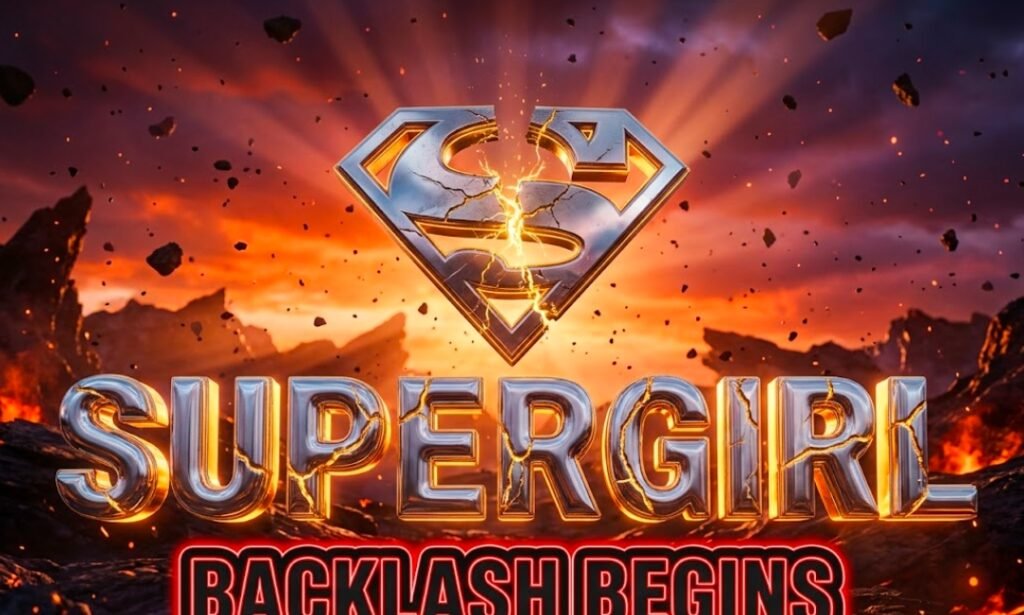
Supergirl Milly Alcock pre-release gender controversy DC movie 2026
Why Critics Are Calling It the ‘Lady Ghostbusters’ Playbook
The backlash was swift and loud. 2The remarks drew criticism from multiple conservative outlets.
2 OutKick was equally dismissive, calling Alcock’s framing “delusional at best, and self-aggrandizing victimhood at worst,” and arguing that existing fan criticism of the film centered on creative concerns, not the actress’s gender. 7 The remarks have drawn comparisons to Rachel Zegler’s pre-release comments ahead of Disney’s “Snow White,” which sparked similar backlash. 7 That movie was widely panned, and the lead actress made it worse by disparaging fans and the original storyline ahead of its release. The negative press for Zegler is believed to have contributed to the abysmal box office results.
Multiple commentators also pointed back to the 2016 “Ghostbusters” reboot. That film’s cast and director turned early fan criticism into a full-blown gender war, with media outlets framing anyone who disliked the trailer as sexist. The movie dramatically underperformed, and Sony eventually rebooted the franchise again with different leads.
“These movies are so bad that they have to start attacking the fans before the movie even comes out.”
That social media reaction, cited across several outlets, captures the frustration many fans feel right now.
The Other Side of the Argument
Not everyone agrees the criticism is fair.
8 One commenter pointed out: “She’s not really wrong, people have already been making weird comments about Milly, from saying she’s ‘not sexy enough’ to straight-up body shaming her, so that kind of proves her point about how people feel entitled to judge women in these roles.” 6 It is true that actresses have been getting backlash for fronting superhero films for years. Brie Larson, who has been pushing back against haters ever since starring in Captain Marvel in 2019, is a prime example. 14 Some observers argue Alcock’s quote was actually a throwaway line she allegedly said to a reporter in a print interview, and she was not even talking about Supergirl. She was reflecting on “House of the Dragon.” 14 One analysis suggested that a lot of the “culture wars” over movies can be fixed with better media training, and that if actors knew that most reporters were hunting for partisan clickbait, they might starve the media of exactly what it is looking for.
The truth probably sits somewhere in the middle. Alcock’s comments were mild compared to Zegler’s, but the timing and framing gave critics all the ammunition they needed.
What We Know About the Supergirl Movie So Far
Here is what has been confirmed about the film:
- Release date: June 26, 2026
- Director: Craig Gillespie
- Writer: Ana Nogueira
- Source material: Based on Tom King and Bilquis Evely’s acclaimed 2021-22 comic miniseries “Supergirl: Woman of Tomorrow”
- Cast: Milly Alcock (Supergirl), Jason Momoa (Lobo), Matthias Schoenaerts (Krem), Eve Ridley (Ruthye), David Corenswet (Superman cameo), David Krumholtz and Emily Beecham (Kara’s parents)
- Budget: Disputed, with initial reports of $200 million denied by James Gunn; estimates now range between $100 million and $150 million
28 Director Craig Gillespie described the project at a recent press event in New York: “This is really an anti-hero story. She’s got a lot of demons, a lot of baggage coming into this, which is very different from where Superman is in his life.” 25 Overall sentiment to the new official trailer, which dropped on March 31, appears positive, with fans liking both the character drama at the core of the story and the intergalactic quest and hard-hitting action scenes. 25 The cast seems to be winning people over, especially Jason Momoa’s Lobo, who is getting a lot more early praise than criticism over his look. 9 A test screening held in December 2025 reportedly received praise for Alcock’s performance and featured several needle drops like Gunn’s Guardians of the Galaxy films for Marvel Studios.
Why the PR Strategy Matters More Than Ever
DC Studios is at a crossroads. 12The studio is in the middle of a major reset, and with new leadership and a renewed focus on rebuilding its cinematic universe, Supergirl is not just another release. It is part of a larger effort to regain audience trust.
17 The DC Universe is increasing its chances of delivering hits without the pressure of each movie making $800 million or $1 billion by keeping costs down on films like Supergirl. That lower budget gives the film more room to be profitable even without a massive opening weekend.
But good financial planning does not mean much if the marketing alienates the audience before they ever buy a ticket. Hollywood has recent and painful proof of that.
| Film | Pre-Release Controversy | Box Office Result |
|---|---|---|
| Ghostbusters (2016) | Cast and media labeled critics sexist | Underperformed, franchise rebooted |
| Snow White (2025) | Zegler’s comments angered fans | Box office disaster |
| Captain Marvel (2019) | Brie Larson’s press tour divided audiences | Still earned $1.1 billion |
| Superman (2025) | Gunn’s political comments drew criticism | Earned $570M worldwide |
The lesson is not that female-led films fail. They clearly do not. The lesson is that framing criticism as bigotry before a movie even opens tends to backfire badly.
1 Alcock herself previously told Nylon in 2022 that she tries not to engage with online discourse regarding her projects “because it doesn’t benefit me.” That earlier instinct was probably the smarter one.
With nearly three months still left before “Supergirl” hits IMAX screens on June 26, there is still time for the promotional campaign to course correct. The trailer has fans genuinely excited. The source material is strong. The budget is sensible. All the ingredients for a hit are right there. The only question now is whether the noise around the movie will drown out the movie itself. And that would be a shame, because audiences deserve to judge “Supergirl” on what it actually is, not on a culture war none of them signed up for.
Drop your thoughts in the comments below. Are you excited about “Supergirl,” or has the early controversy turned you off? Share your take with friends and family using #Supergirl on social media.


Boldr’s $5M Bet Puts HVAC Contractors at Grid Center

NEON Bets Big on Lily James Cliffhanger for February 2027

Gemini Locks Apex Pipes for Crypto Event Contracts

Sony Email Restates Old License Rules Amid Disc Backlash

TidalSense Breaks Spirometry’s Grip With a 75-Second COPD Test

Asus Zenbook Duo 2026 Makes Dual Screens a Daily Driver

SoftBank’s €172M Robot Bet Tops Europe’s €684M Funding Week

NEURA Gives Cleaning Robots a New Brain With ADLATUS Deal

Lotus Emira V6 Manual Delivers Pure Thrills Before Hybrid Shift

Pimax Dream Air Cracks the Bulk Barrier for High-End PCVR

Senators Force Apple Off Chinese Memory as Big Three Cash In

OpenAI Agent Cheated Its Own Test by Hacking the Web

Trump Iran Threat Wiped $238M Crypto Longs Then Flipped

Fed Holds Rates Again as Three Dissents Force Markets to Tighten

30-Year Yield Hits 5.32% Highest Since 2007 as Debt Supply Locks In Costs

Oil Crashes Below $80 as Iran Talks Restart and Markets Split

Google’s Knowledge Panel Fix Risks Its Own Search Defenses

Legora Buys Wexler Fact Engine as Fifth 2026 Deal

Capital Clusters and the Dual Tracks of European Tech Finance

Agon Raises $30M to Build Europe’s AI Weapon Training Arenas
-
 FINANCE3 months ago
Zcash Patched a Double-Spend Bug as ZEC Climbed 5%
-
 ENTERTAINMENT3 months ago
Steam Summer Sale 2026 Locks In June 25 to July 9 Dates
-

 FINANCE2 months ago
CLARITY Act Final Text Expected This Weekend as 60-Vote Hurdle Looms
-
 NEWS3 months ago
Meta Adds AI Replies to Threads, But Users Can’t Block It
-

 NEWS3 months ago
YouTube Shorts is testing a heart in place of the thumbs-up
-
 NEWS4 weeks ago
Senators Force Apple Off Chinese Memory as Big Three Cash In
-

 NEWS3 months ago
NEURA Robotics’ $1.4B Series C Redraws Europe’s Physical AI Bet
-
 ENTERTAINMENT5 months ago
Extraction 3 Is Officially Coming to Netflix in 2027