Markets were watching. Businesses were waiting. And the central bank just sent its clearest signal yet that it will not blink.
Amid swirling trade tensions, regional conflicts, and stubborn supply chain pressures, the central bank has laid out a calm, data-driven policy roadmap that prioritizes steady growth and cooling inflation over reactive moves. For millions of households and businesses, what happens next with interest rates just got a little clearer.
A Wait-and-See Strategy Built Around Real Data
The core message from the central bank is simple: no surprises.
Officials have made clear that rate decisions will follow the data, not a fixed calendar. If inflation stays on track and growth holds, the policy path stays steady. If either shifts meaningfully, the bank will respond, but not before.
This kind of forward guidance is itself a policy tool. By telegraphing its thinking, the bank reduces uncertainty in credit markets, which helps keep lending costs from swinging wildly. It is a lesson drawn from past crises, where unclear messaging triggered unnecessary market selloffs and froze business investment.
The roadmap rests on three pillars:
- Interest rates remain dependent on incoming economic data
- Communication will aim to reduce policy surprises for markets
- Global risks, including trade disputes and regional conflicts, stay on the radar
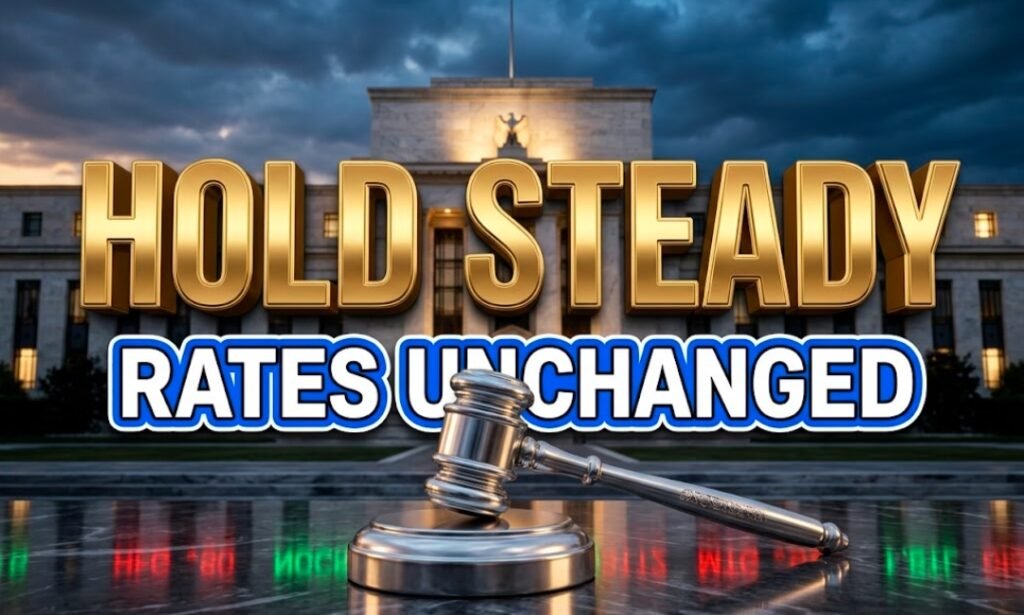
central bank interest rate decision amid global economic volatility
Why Holding the Line Matters Right Now
The global backdrop makes this moment genuinely difficult for any central bank.
Trade tensions have pushed shipping costs higher in recent months. Supply bottlenecks that seemed to ease after the pandemic years have resurfaced in some sectors, driven by geopolitical friction. Consumers are still feeling pressure in grocery aisles and at fuel pumps.
History is a useful guide here. During the turbulence of 2018 and again in 2022, central banks that moved too fast or signaled poorly triggered credit market disruptions that hurt small businesses and ordinary borrowers most. The bank appears to have internalized that lesson.
A steady posture does not mean an inactive one. It means that every move, when it comes, will be deliberate and backed by evidence.
“With growth holding steady and inflation remaining manageable, the central bank’s latest roadmap offers a reassuring path through global geopolitical volatility.”
Economists Are Split on Whether Patience Is Enough
Not everyone is applauding the approach.
Many mainstream economists welcome the patience. They point to the fact that inflation has cooled meaningfully from its earlier peaks across several major economies. That progress, they argue, gives policy room to breathe without pushing rates aggressively in either direction.
But a vocal group of analysts is pushing back.
| Camp | View | Main Concern |
|---|---|---|
| Patient economists | Inflation cooling gives room to hold | Moving too fast could damage growth |
| Hawkish analysts | Labor markets remain tight | Waiting too long risks a price resurgence |
| Market strategists | Clarity reduces volatility | External shocks could force faster action |
Strategists on trading desks largely agree that clarity itself calms markets. But they are quick to add a caveat. A major commodity shock, an unexpected escalation in a conflict zone, or a sudden trade policy shift could force the bank’s hand faster than any roadmap predicts.
The bank’s response to that concern is built into the plan itself: moves are tied to what the data shows, not to a preset schedule.
What This Means for Your Wallet and Your Business
For families carrying mortgages, auto loans, or credit card balances, a stable rate environment is genuinely good news.
When rates hold steady, monthly payment calculations become more predictable. Households can plan budgets with more confidence. And if the bank’s growth outlook holds, job markets should remain resilient enough to support wage growth, which helps offset the cost pressures that have lingered from the past few years.
For businesses, the impact is equally significant. Capital spending decisions, which often get delayed when rate paths are foggy, become easier to commit to. Inventory financing costs stay more predictable. Even firms exposed to currency fluctuations through imports or exports get some cushion when domestic monetary policy is steady and well-communicated.
Small and mid-sized businesses tend to feel rate uncertainty the most sharply, since they rely more heavily on variable-rate credit lines. A clear, data-dependent approach from the central bank directly reduces that risk for them.
The broader point is this. Central bank policy, which can feel distant and technical, lands directly on kitchen tables and factory floors. When the bank signals calm and holds its course through turbulence, it creates the conditions for ordinary economic life to continue without disruption.
The road ahead still has risks on it. Trade policy could shift overnight. Commodity prices remain unpredictable. But the central bank has drawn its line clearly: steady, watchful, and ready to move when the data calls for it, not before. For now, that steady hand may be exactly what an anxious global economy needs.