Millions of viewers around the globe are preparing to hold their breath tonight. Alex Honnold is set to attempt the most dangerous climb of his life without any safety ropes. The subject of the Oscar winning documentary Free Solo will scale the side of the iconic Taipei 101 skyscraper in Taiwan. This is not a pre-recorded movie or a stunt with a safety net. This is a raw live event streaming exclusively on Netflix where one slip creates a fatal disaster.
The climbing world and general public are buzzing with nervous energy. Honnold has spent years mastering the art of climbing rock faces like El Capitan, but an urban ascent brings entirely new challenges. Viewers can tune in starting at 5 p.m. PT / 8 p.m. ET today to witness a man push the absolute boundaries of human potential.
A Historic Ascent Without Ropes
The stakes for this event could not be higher. Honnold is famous for his calm demeanor in the face of death, but this challenge is different. He will be climbing 1,667 feet of glass, steel, and aluminum. The event marks a massive shift for Netflix as it moves deeper into live broadcasting.
Most people know Honnold from his conquest of Yosemite’s El Capitan. That was granite. This is a man-made structure with slick surfaces and high winds. Honnold is attempting to free solo the building, meaning he will use only his hands and climbing shoes. There is no harness to catch him if he falls.
Producers have taken precautions for the audience, though not for the climber. The broadcast will feature a ten second delay. This ensures that if the worst happens, the feed can cut away instantly to avoid traumatizing millions of viewers.
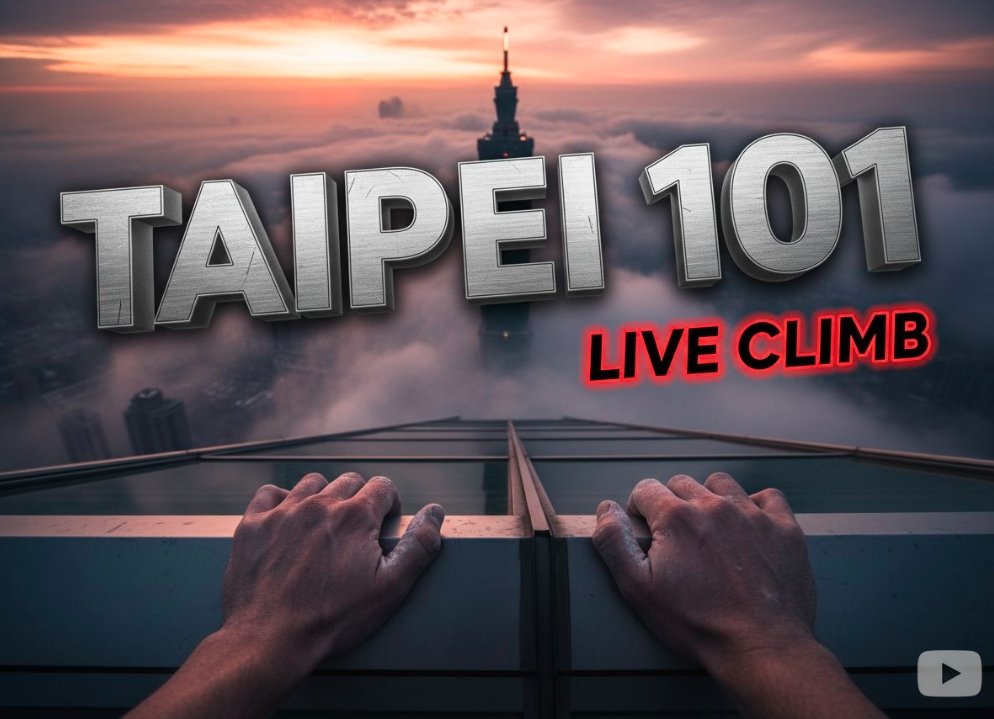
Alex Honnold climbing Taipei 101 skyscraper exterior without ropes
Event Schedule and Details
- Date: Saturday, January 24, 2026
- Start Time: 5:00 p.m. Pacific Time / 8:00 p.m. Eastern Time
- Location: Taipei 101, Taiwan
- Stream Platform: Netflix Live
- Safety Gear: None
This delay adds a grim layer of reality to the viewing experience. We are watching a man gamble his life in real time.
Why Taipei 101 Is The Ultimate Challenge
Taipei 101 is not just a tall building. It is an architectural marvel designed to resemble a stalk of bamboo rising into the sky. This design choice makes it incredibly difficult to climb. The tower is stacked in eight distinct sections, each flaring outward like a pagoda.
These flared sections create massive overhangs. Honnold will have to climb outwards against gravity at regular intervals to bypass these architectural features. It requires immense upper body strength and perfect finger friction on the building’s exterior fins.
The weather in Taipei adds another layer of difficulty. The city is known for humidity and strong winds. At 1,600 feet, wind speeds can be unpredictable and fierce. A sudden gust could easily knock a climber off balance.
“The building’s geometry provides many places where a fall might not be instantly lethal, making it a low risk, high consequence activity.”
Honnold believes the structure is climbable because of its deep window ledges and exterior locking plates. He has studied the blueprints and scouted the surface. He sees handholds where most people see only smooth glass.
Calculating Risk on a Vertical Glass Wall
Risk management is what Alex Honnold does best. He does not view himself as a daredevil. He views himself as a calculated athlete. He has likely spent hundreds of hours simulating the movements required for this specific climb.
The phrase “low risk, high consequence” is his mantra. It means that while the likelihood of him falling is very low due to his skill, the result of a fall is certain death. This logical separation helps him stay calm while clinging to a ledge thousands of feet in the air.
Neuroscientists have actually studied Honnold’s brain. They found that his amygdala, the fear center of the brain, requires much more stimulation to activate than an average person. This biological difference allows him to think clearly in situations that would cause panic in others.
However, skyscrapers present risks that rocks do not.
- Surface Heat: Glass and steel can become incredibly hot in the sun or slippery with condensation.
- Loose Hardware: Unlike solid granite, a building has bolts and panels that could theoretically come loose.
- Disorientation: The repetitive nature of the windows can be dizzying compared to natural rock features.
Honnold has addressed these concerns in the lead up to the event. He simply asks, “Why not?” For him, the unique shape of Taipei 101 is an invitation rather than a warning sign.
A New Era for Live Entertainment
This event represents a turning point for streaming entertainment. Netflix is betting that the thrill of live danger will draw massive audiences. It connects to a primal human curiosity. We are drawn to spectacles of endurance and danger.
The production quality will be cinematic. Drones and long range cameras will track every move Honnold makes. Viewers will see the sweat on his brow and the chalk on his fingertips. The audio will likely pick up his breathing and the wind whipping around the tower.
Social media is already on fire with debates about the ethics of broadcasting such a dangerous feat. Some argue it encourages reckless behavior. Others see it as the ultimate celebration of human athletic achievement. Regardless of the opinion, the world is tuning in.
This climb is more than just a stunt. It is a testament to focus, preparation, and the human spirit. When Alex Honnold places his hand on the first ledge of Taipei 101 tonight, he carries the attention of the world on his shoulders.
We witness history tonight. Whether it ends in triumph or tragedy remains to be seen. The only certainty is that for the next few hours, nobody will be looking away.
Do you think this type of event is too dangerous to broadcast live? Or is it the ultimate test of skill? Share your thoughts in the comments below using #HonnoldLive to join the conversation with fans around the world.
