Drones have fundamentally changed how we capture the world from above, but a new release promises to change how we actually feel while doing it. The Antigravity A1 has officially launched as a groundbreaking device that combines high-resolution panoramic imaging with immersive virtual reality. This drone is not just about capturing footage. It is designed to make you feel like you are physically flying through the sky.
The device originates from Antigravity, a new manufacturer spun off from the 360-camera giant Insta360. By integrating an 8K camera that streams real-time video to a headset, the A1 offers a seamless “out of body” experience that traditional FPV drones have struggled to master. It bridges the gap between professional cinematography tools and the pure joy of flight.
Immersive Flight and Virtual Reality
The core appeal of the Antigravity A1 lies in its ability to put the pilot directly into the cockpit. Traditional First Person View (FPV) drones have a fixed field of view. You only see where the nose of the drone points. The A1 changes this dynamic entirely. The pilot wears goggles that receive a live stream from the drone’s 360-degree camera.
This setup allows you to look around freely in any direction regardless of where the drone is flying. It imparts a sense of realism that is hard to find elsewhere in the consumer electronics market.
Antigravity has also introduced augmented reality elements to the flight experience. The software includes a whimsical “dragon” feature. When activated, the pilot sees an animated dragon beneath them in the goggles. It creates the illusion that you are riding a mythical creature through the clouds rather than piloting a quadcopter.
This feature hints at massive potential for future gamification in the drone space. Users could eventually fly through virtual rings or compete in augmented reality races. For now, the panoramic view serves a vital practical purpose beyond just fun.
Key Benefits of 360-Degree Flight:
- Enhanced Safety: Pilots can look left or right to check for obstacles without turning the drone.
- Spatial Awareness: The depth and motion provide a better sense of position in tight spaces.
- Accessibility: It is easier for beginners to orient themselves compared to fixed-view drones.
-
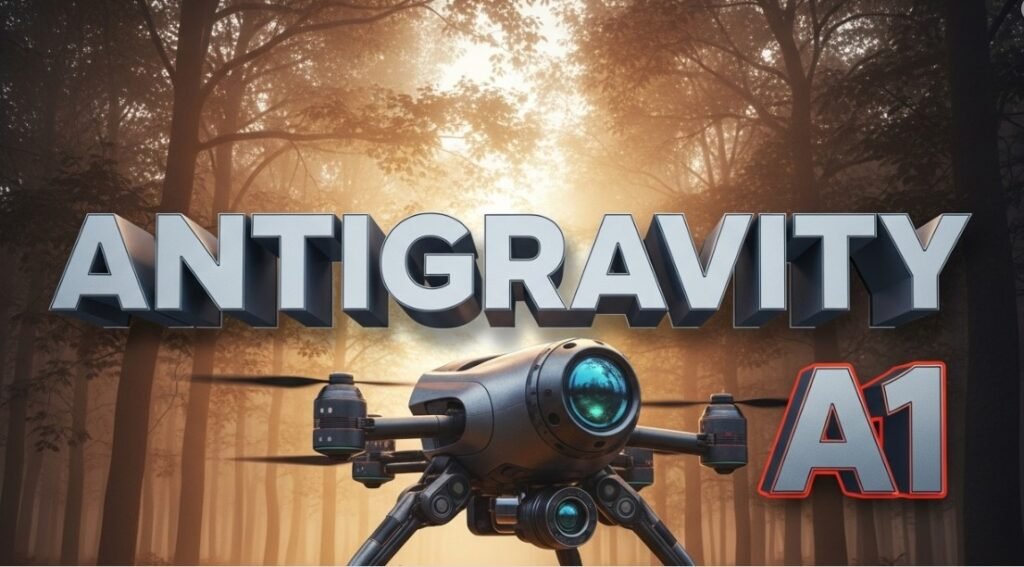
Antigravity A1 drone flying in forest fog
Revolutionary Camera Specifications
The camera hardware on the Antigravity A1 is nothing short of professional grade. To make a 360-degree video look sharp when viewed in a headset, you need immense resolution. The A1 delivers this with 8K video capture capabilities.
The imaging performance mirrors the high standards set by the Insta360 X series handheld cameras. It retains a high degree of detail even in difficult lighting. Tests have shown that the drone performs exceptionally well in high-contrast environments.
Flying through a foggy forest at sunrise usually presents a nightmare for camera sensors. The mix of bright sun, white fog, and dark trees creates exposure chaos. However, the A1 handles these extremes with impressive dynamic range. It maintains detail in the shadows while preventing the bright sky from blowing out completely.
Still photography is equally impressive. The drone captures 55-megapixel images. This allows creators to snap enormously wide aerial shots in a single click without needing to stitch multiple photos together manually.
One of the most critical features for content creators is the “invisible drone” effect. Because the lenses are positioned on the top and bottom of the chassis, the software stitches the footage to erase the drone from the final video. Viewers see only the landscape, with no propellers or landing gear obstructing the view.
Intelligent Design and Hardware
The physical design of the A1 demonstrates that this is a ground-up build rather than a modification of existing parts. The engineering team has solved several legacy problems found in 360-camera drones.
The landing gear features a novel retractable mechanism. Two small legs extend when the drone powers on to protect the delicate bottom lens. As soon as the drone takes off, these legs retract automatically. This keeps the field of view completely clear.
Vibration reduction is another standout feature. The camera unit hangs within the chassis on a specialized shock-absorbing suspension system. This isolates the lens from motor vibration and wind turbulence. The result is footage that looks like it was shot on a floating tripod.
Battery life is flexible depending on user needs.
- Standard Battery: Offers 24 minutes of flight time and keeps weight under 249 grams.
- Extended Battery: Pushes flight time to 39 minutes but increases the overall weight.
The 249-gram weight limit with the standard battery is a strategic choice. In many regions, drones under this weight class face fewer regulatory restrictions. This makes the A1 highly attractive for casual hobbyists who want to fly without complex registration processes.
Connectivity and Software Ecosystem
The software experience reveals the strong heritage of Insta360. The user interface in the goggles and the mobile app is polished and intuitive. The motion controller allows users to navigate menus with simple hand gestures.
Post-processing is where the A1 truly shines compared to competitors like the DJI Avata 2. Since the drone captures everything in 360 degrees, you do not need to frame your shot perfectly while flying. You can reframe the video later in the app.
This capability is a safety net for creators. You can fly a simple straight line and then use the software to pan the camera, zoom in, or create dynamic “tiny planet” effects during the edit. The desktop application offers advanced tools like motion blur and time manipulation to create professional cinematic results.
However, the technology does face some physical limitations. Transmitting high-resolution 360 video requires massive bandwidth. This results in a functional range of roughly 6.2 miles under perfect conditions. In real-world scenarios with interference, the range is shorter. Pilots are advised to keep the drone within a reasonable distance to maintain a clear video feed.
Pricing and Market Position
The Antigravity A1 enters the market with a premium price tag of $1599. This positioning places it well above entry-level drones and competes directly with high-end bundles from competitors.
While the price is steep, it reflects the dual nature of the device. You are effectively buying a high-performance drone and a professional 8K 360 camera in one package. The research and development required to miniaturize this technology explains the cost.
Pros vs. Cons Overview
| Pros | Cons |
|---|---|
| True 8K 360-degree video capture | High entry price of $1599 |
| Immersive VR flight experience | Range can be limited by interference |
| Invisible drone in final footage | Battery lanyard can be awkward |
| Retractable landing gear protects lenses | Replaces traditional controller flow |
The drone also supports replaceable lenses. This is a crucial feature for longevity. 360-camera lenses are bulbous and exposed. If a pilot crashes, being able to swap out a scratched lens instead of replacing the whole drone is a massive financial relief.
For creators who want to push the boundaries of what aerial footage looks like, the investment is justifiable. For casual users, the price might be a barrier, but the experience offers something truly unique that standard drones cannot replicate.
The Antigravity A1 is a significant leap forward for consumer aviation. It successfully merges the thrill of FPV flight with the creative freedom of 360-degree video. While the price point restricts it to serious enthusiasts and professionals, the technology is undeniably impressive. It transforms the sky into a personal playground where the pilot is no longer just watching a screen but is virtually present in the air. This device proves that the future of drones is not just about higher specs, but about deeper immersion.
What do you think about this new style of flying? Would you prefer a VR experience over a standard controller? Share your thoughts in the comments below using #AntigravityA1.