Apple has officially silenced the growing rumors regarding the fate of its digital assistant. The tech giant confirmed today that its next-generation Siri is firmly on schedule for a 2026 release. This revamped assistant will be powered by Google’s Gemini AI and aims to redefine how users interact with their devices. The announcement comes just ahead of the company’s historic 50th anniversary celebrations.
Siri 2.0 Release Date and Timeline
Reports circulating earlier this week suggested major internal setbacks might push the launch into 2027. Investors and fans alike became worried about further delays in Apple’s artificial intelligence roadmap. However, Apple has moved quickly to squash these fears. A company spokesperson told CNBC that the roadmap remains unchanged.
The target release window appears to be in the first half of 2026. This timing is not accidental. Apple turns 50 years old in April 2026. CEO Tim Cook has previously teased a “monumental year” for the brand. A reimagined Siri serves as the crown jewel of this golden jubilee.
While the exact date remains under wraps, industry analysts point to a March or April event. This would align perfectly with the anniversary festivities. It allows Apple to showcase its innovation exactly five decades after its founding.
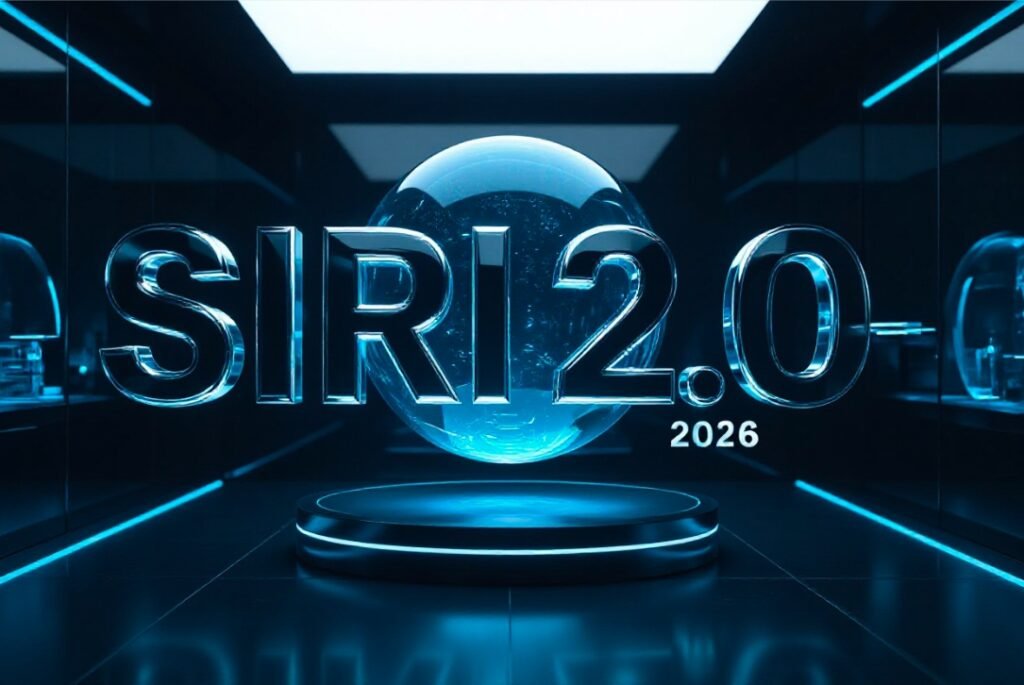
futuristic glowing glass siri sphere concept art with digital ripples
The Google Gemini Integration Strategy
The most significant shift in this update is the engine under the hood. Apple has confirmed it will license Google’s Gemini AI model to power Siri 2.0. This partnership marks a historic collaboration between two Silicon Valley rivals. It also highlights the pressure Apple faces to catch up in the generative AI race.
Why Apple Chose Google Gemini:
- Speed: Gemini offers faster processing capabilities than Apple’s current on-device models.
- Knowledge Base: Google’s vast index provides broader answers to complex questions.
- Reasoning: The new model handles multi-step instructions better than the legacy Siri framework.
This deal reportedly involves Apple paying billions to Google. It is a strategic move to bypass the years of development needed to build a comparable model from scratch. Critics argue this admits defeat in homegrown AI development. Supporters call it a pragmatic move to deliver the best product to consumers.
Overcoming Testing Hurdles and Bugs
The path to this confirmation has not been smooth. Internal testing reports leaked recently painted a chaotic picture of the development process. Engineers faced significant latency issues where Siri took too long to respond to simple voice commands. This lag breaks the illusion of a seamless conversation.
Another reported issue involved the AI cutting users off mid-sentence. The system struggled to detect natural pauses in human speech. This resulted in frustrated testers repeating commands multiple times. Such errors would be disastrous in a public release.
Common Issues Reported During Beta Testing:
| Issue Type | Description | Impact on User Experience |
|---|---|---|
| Latency | Delays of 3-5 seconds before answering. | High frustration. |
| Interruption | Siri speaks before the user finishes. | Breaks conversational flow. |
| Context Loss | Forgetting details from 2 minutes ago. | Requires constant repetition. |
Apple acknowledges these challenges but insists they are part of the standard beta process. The company claims the “delay” rumors stemmed from these bug reports. They assure stakeholders that the remaining time until 2026 is sufficient to polish the software.
Privacy Concerns in the Cloud
The integration with Google brings a massive privacy debate to the forefront. Apple built its brand reputation on the promise of user privacy. For years, they mocked competitors for data harvesting. Now, sending Siri queries to Google’s servers complicates that narrative.
Initial plans relied heavily on Apple’s own Private Cloud Compute. This system was designed to process complex AI tasks without exposing user data. However, the sheer computational power required for Gemini seems to have forced a compromise. Recent reports indicate a significant portion of queries will indeed route through Google servers.
This pivot has unsettled privacy advocates. Handing voice data and personal queries to an advertising company like Google feels like a betrayal to some loyalists. Apple must explain how they will encrypt and protect this data during transit. Trust is the currency here. If users feel their data is unsafe, they will simply turn the feature off.
The High Stakes for Apple Intelligence
Apple cannot afford to get this wrong. The current iteration of Apple Intelligence has received a lukewarm reception. Tech reviewers and everyday users often describe the current Siri as outdated compared to ChatGPT or Claude. It has become the subject of internet memes and frustration.
This 2026 update represents a “make or break” moment. The company has poured billions into hardware and software development. Shareholders expect a return on this investment. More importantly, the brand image of innovation is on the line.
What Users Expect from Siri 2.0:
- Natural Conversation: No more robotic keywords.
- App Control: The ability to navigate inside apps to perform tasks.
- Memory: Remembering preferences and past conversations.
- Reliability: It must work every single time without error.
Tim Cook is betting his legacy on this transition. The 50th anniversary is a celebration of the past, but Siri 2.0 is the test for the future. The company has asked for patience. Now they must deliver perfection.
Final Thoughts on the 2026 Launch
Apple has drawn a line in the sand. Siri 2.0 is coming in 2026, powered by Google, and aiming to redeem the company’s AI reputation. The potential is massive, but so are the risks regarding privacy and performance. We have waited years for a smarter Siri. We will have to wait a little longer to see if this partnership pays off.
What do you think about Apple partnering with Google for AI? Does the privacy change worry you? Share your thoughts in the comments below or join the conversation on social media using #Siri2026.