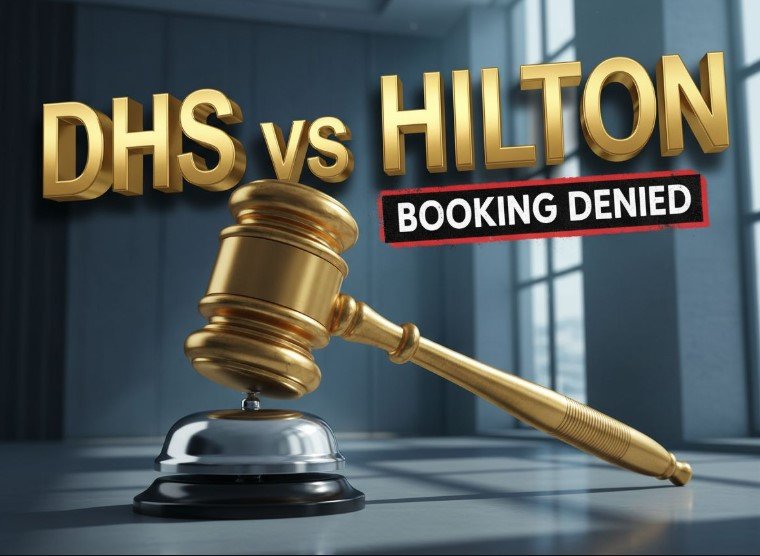
The Department of Homeland Security has publicly condemned Hilton following a controversial incident involving federal agents.
Immigration and Customs Enforcement agents faced an abrupt disruption when a Hampton Inn property canceled their confirmed reservations.
This clash has ignited a fierce debate about corporate responsibility and the autonomy of franchise owners in the hospitality industry.
Sudden Cancellations Disrupt Agents
The incident occurred earlier this week and immediately drew a sharp rebuke from federal officials.
Homeland Security leadership accused the hotel management of jeopardizing an ongoing operation by voiding the bookings.
According to reports, the agents were traveling on official government business when they received notice that their rooms were no longer available.
The cancellations forced the federal team to scramble for alternative secure accommodations at the last minute.
This logistical nightmare did more than just annoy the travelers.
It disrupted the operational schedule of the agents involved in the assignment.
Sources close to the situation indicate that the Department of Homeland Security views this as a direct hindrance to their enforcement duties.
Officials stated that federal employees rely on confirmed bookings to execute their missions safely and effectively.
The department has signaled that it expects reliable service from national brands that market themselves to government travelers.
DHS is now reviewing the reliability of booking contracts with major hotel chains to prevent future operational failures.
Hampton Inn hotel exterior sign with blurred federal agents in foreground
Hilton Points To Local Franchise Owners
Hilton was quick to respond to the public criticism with a clarification of its business structure.
The hospitality giant emphasized that the Hampton Inn in question is not owned or managed by the corporate parent company.
It operates under a franchise agreement which grants significant control to the local owner.
Hilton stated that while they provide the brand and booking system, daily decisions rest with the franchisee.
The company released a statement explaining the nuances of this ownership model to the public and federal partners.
Key Points From Hilton’s Response:
- Ownership: The specific Hampton Inn is independently owned and operated.
- Operations: Hiring, firing, and guest acceptance policies are largely local decisions.
- Brand Standards: While safety is mandated, individual reservation management is often at the owner’s discretion.
This defense highlights a common complexity in the modern hotel industry.
Most travelers assume that a brand name implies a monolithic corporate operation.
However, the reality is a patchwork of thousands of small business owners operating under a shared flag.
Hilton suggests that the decision to cancel the ICE reservations was likely made by local management or the property owner.
The corporation is distancing itself from the move while attempting to maintain its relationship with government clients.
Federal Travel Rules And Business Rights
This dispute raises critical questions about the reliability of government contracts with franchised brands.
Federal agents typically book rooms through specific channels like FedRooms or at negotiated General Services Administration (GSA) rates.
These bookings come with an expectation of guaranteed availability and security compliance.
When a franchise owner rejects a valid government booking, it creates a conflict between contract law and property rights.
The table below illustrates the conflicting priorities in this scenario:
| Stakeholder | Primary Priority | Key Concern |
|---|---|---|
| DHS / ICE | Mission Continuity | Secure, reliable lodging for agents on duty. |
| Franchise Owner | Local Autonomy | Right to refuse service or manage inventory. |
| Hilton Corporate | Brand Reputation | Balancing government contracts with franchisee independence. |
Legal experts suggest that while businesses can refuse service, discrimination based on profession is a gray area in some jurisdictions.
However, violating a GSA contract can lead to a property being blacklisted from future federal travel.
This would mean a significant loss of revenue for the specific hotel involved in the cancellation.
The federal government is one of the largest purchasers of travel services in the United States.
Hotels that become unreliable partners risk losing access to this massive, steady stream of revenue.
Growing Tension In Corporate Hospitality
The friction between national brands and local operators is becoming more visible in today’s polarized environment.
Franchisees sometimes make decisions that align with local sentiment but clash with corporate neutrality.
The Hampton Inn incident serves as a case study for the limits of corporate control over distributed assets.
Industry analysts note that major chains may need to tighten franchise agreements to avoid similar public relations crises.
If a local owner can unilaterally disrupt federal operations, the value of the national brand is diminished in the eyes of large clients.
DHS officials have hinted that they may prioritize booking with chains that can guarantee compliance across all locations.
This could force Hilton and competitors to implement stricter “duty to serve” clauses in their future franchise contracts.
For now, the Department of Homeland Security remains firm in its stance that the cancellation was unacceptable.
The agents involved have since been relocated, but the diplomatic fallout between the agency and the hotel chain continues.
Travel managers across the federal government are watching closely to see how Hilton resolves this dispute.
Their response will likely set a precedent for how government bookings are handled in a politically charged landscape.
Ensuring that federal employees can travel without fear of cancellation is now a top priority for agency logistics teams.
The balance between a private business’s right to operate and a government agency’s need to function is being tested.
As this story develops, it serves as a warning to other franchise owners about the weight of federal contracts.
Stability and reliability remain the currency of government travel, and volatility is not tolerated for long.
The Department of Homeland Security has made it clear that their mission cannot pause for hotel booking politics.
Summary:
The Department of Homeland Security criticized Hilton after a franchise-owned Hampton Inn canceled reservations for ICE agents, disrupting their operations. Hilton defended itself by citing the franchise model, which gives local owners control over daily decisions, but the incident highlights the fragility of government travel contracts. The clash underscores the tension between corporate brand promises and the autonomy of independent franchisees, potentially threatening future federal business for hotels that cannot guarantee reliability.
We want to hear your thoughts on this situation. Do you think local franchise owners should have the right to cancel government reservations, or should the corporate brand enforce mandatory acceptance? Share your opinion in the comments below.