Berlin based grocery delivery service Flink has successfully secured $100 million in a new funding round to solidify its dominance in Europe. While many competitors have collapsed or exited the market entirely, Flink stands tall as a survivor in the brutal quick commerce sector. This massive cash injection signals that investors still have faith in the promise of rapid grocery delivery when the business model makes financial sense.
A Vote of Confidence From Major Investors
This latest investment round is a major victory for the German startup. The funding was led by long time backer Prosus along with other existing investors. A notable new entrant in this round is Btomorrow Ventures which serves as the corporate venture arm of British American Tobacco (BAT).
The involvement of such heavy hitters suggests a strong belief in Flink’s refined strategy. The company has moved away from the burn cash at all costs mentality that doomed many of its peers. Instead, Flink has spent the last two years quietly fixing its operations to ensure every order makes money.
Investors are backing the survivor. The quick commerce industry saw a massive boom during the pandemic followed by a spectacular crash. Companies like Gorillas were acquired while Turkish giant Getir recently withdrew from key markets including Germany and the UK.
This consolidation left a massive void in the market. Flink has positioned itself to capture the customers left behind by these departures. The $100 million war chest will help the company defend its territory in Germany and the Netherlands without needing to worry about immediate cash flow issues.
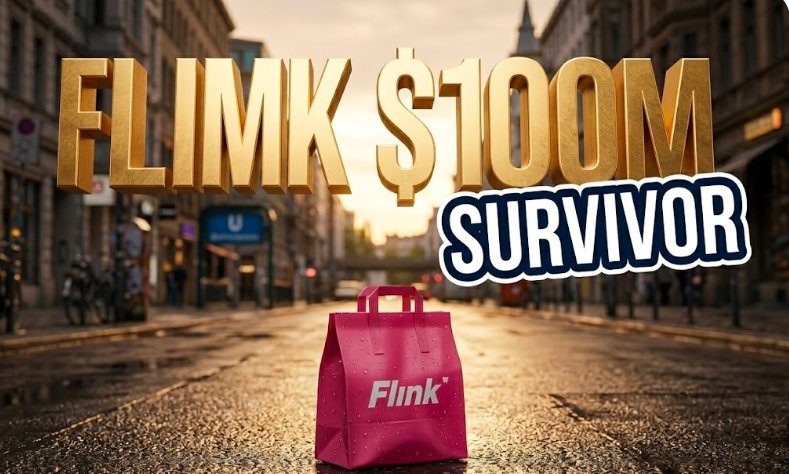
pink flink delivery rider bicycle bag berlin street
“Quick commerce works when it is built on operational discipline and realistic customer expectations.”
Julian Dames, Flink Managing Director
Profitability is The New Growth
The most impressive part of this news is not just the money raised but the financial health of the company. Flink reports that it is now operating profitably on an EBITDA level. This is a rare feat in an industry notorious for losing money on every banana and bottle of water delivered.
How did they do it? The secret lies in changing how customers use the app.
In the early days of quick delivery, apps promised groceries in 10 minutes. That speed was incredibly expensive to maintain. Flink has shifted that expectation. The average delivery time is now closer to 30 minutes. This allows couriers to bundle orders more efficiently.
Key Metrics Driving Success:
- Average Basket Size: Over €45 per order
- Delivery Time: Approximately 30 minutes
- Key Markets: Germany and Netherlands
- Operational Status: EBITDA Profitable
By increasing the basket size to over €45, Flink covers the cost of delivery and logistics much easier than competitors who delivered a single bag of chips. They have effectively transitioned from a convenience store replacement to a weekly top up shop for many households.
Strategic Expansion Plans for 2026
With the new capital in the bank, Flink is not planning a reckless global expansion. The company has learned from the mistakes of the past. The plan is to double down on what already works.
Management has outlined a strategy to open additional delivery hubs in 2026. These new locations will be strictly limited to areas that meet high population density criteria. Density is the magic number in delivery logistics. The closer customers are packed together, the cheaper it is to serve them.
This targeted approach ensures that new hubs will likely become profitable much faster than the initial wave of dark stores opened during the 2021 boom. The company is specifically looking at filling gaps in German regions where they already have a presence but see unmet demand.
The focus on core markets is a smart play. Germany has traditionally been a tough market for retail due to low margins, but Flink has cracked the code by partnering with retail giant REWE. This partnership gives them access to better purchasing prices and a reliable supply chain that smaller rivals lacked.
The Evolution of Online Grocery
The narrative around online grocery has shifted dramatically. Two years ago it was a race to see who could grow the fastest. Today it is a test of endurance and efficiency.
Flink has survived because it adapted. The new funding provides the flexibility to innovate further. They can now invest in better technology for their riders and warehouse staff to shave seconds off packing times.
Why Flink Succeeded Where Others Failed:
| Feature | Old Quick Commerce Model | Flink’s Sustainable Model |
|---|---|---|
| Promise | 10 minute delivery | 30 minute delivery |
| Order Size | Small snacks (€15) | Full bags (€45+) |
| Growth | Global domination | Local density (Germany/NL) |
| Focus | User acquisition | Unit economics |
This table clearly illustrates the pivot. By slowing down slightly and asking customers to buy more, Flink turned a broken business model into a sustainable one.
Navigating a Consolidated Market
The exit of Getir from the US and Europe earlier this year was the final bell for the first era of quick commerce. For a moment it looked like the entire sector might vanish.
Flink remaining standing is significant for the European tech ecosystem. It proves that local players who understand their specific market nuances can beat global giants who try to apply a one size fits all strategy.
The partnership with BAT’s venture arm is also intriguing. It could signal potential expansions into high margin regulated categories or simply be a financial bet from a corporation looking for solid returns.
Customers are sticking around. Despite inflation and the return of in store shopping, the convenience habit formed during the pandemic has proven sticky. People value their time. If Flink can deliver a heavy bag of groceries in 30 minutes for a reasonable fee, there is a permanent place for them in the modern city.
Summary
Flink has defied the odds and secured $100 million to cement its position as the leader of grocery delivery in Germany and the Netherlands. By focusing on profitability over wild expansion and increasing their average order value to €45, they have proven the business model can work. With competitors out of the way and fresh capital in the bank, Flink is poised to grow carefully and sustainably into 2026. This is a story of resilience and smart pivots in a tough economic climate.
What do you think about the future of 30 minute grocery delivery? Do you still use these apps or have you gone back to the supermarket? Share your thoughts in the comments below using #FlinkFunding if you are discussing this on social media!