The festive lights are glowing on Main Street, but American wallets remain tightly closed. New economic data reveals a stark shift this season as families battle lingering high prices and shrinking savings. Retail giants are now scrambling to salvage profits, but consumers are sending a loud message. The era of carefree spending is over. Shoppers are demanding deep value or they are simply walking away.
Why Your Money Feels So Tight Right Now
Inflation headlines have cooled down recently. However, the price tag on the shelf tells a different story. Shoppers are still paying significantly more for basics than they did just a few years ago.
The cumulative effect of price hikes has eroded the monthly budget for millions of households.
Most families are finding that their paycheck disappears into grocery bills and rent long before they can think about gifts. The savings cushion many people built up over the last few years is now gone. This financial reality is forcing tough choices at the kitchen table. You cannot spend what you do not have.
Credit card interest rates are adding fuel to the fire. Borrowing money to buy presents is now much more expensive. Analysts report that credit card balances are climbing. This makes every swipe of the card a risky move for budget-conscious buyers.
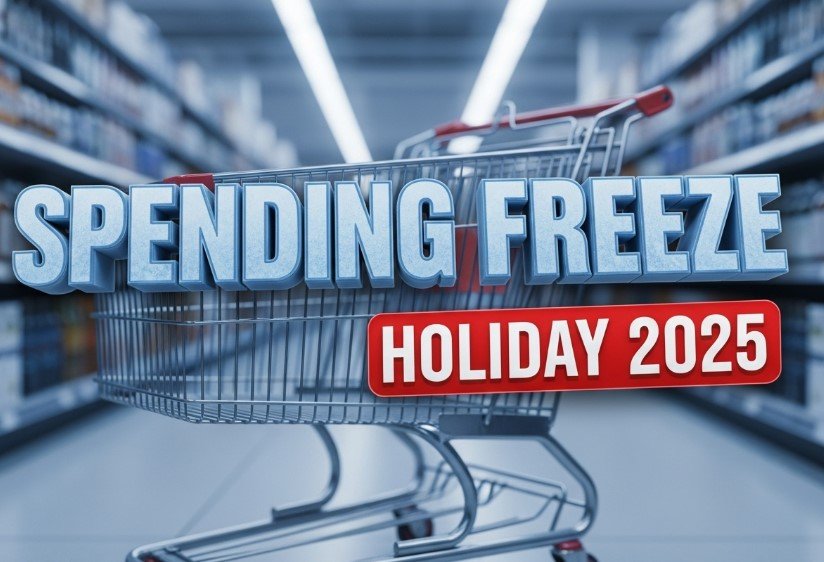
holiday shopping cart filled with discount tags and red sale signs
“We are seeing a clear pause in spending,” notes a retail analyst from a leading financial firm. “People want to be generous. But the math just does not add up for them this year.”
Stores Launch Early Sales to Win You Over
Retailers are fully aware of this hesitation. They are hitting the panic button early. You have likely noticed that holiday sales started weeks ago. This is not an accident. It is a survival strategy.
Companies are trying to spread out the pain. They want to capture your dollars before a competitor does. This means the traditional “Black Friday” rush is now a month-long marathon of discounts.
Retailers are betting on volume over high margins to keep their inventory moving.
Expect to see a flood of “limited time” offers in your inbox. These deals are designed to create a sense of urgency. Stores know that if they do not offer a discount, you will wait. The consumer has been trained to expect a sale.
Here is what shoppers are prioritizing this year:
- Essentials First: Food and household needs take the top spot.
- Value Gifts: items under $25 are seeing huge demand.
- Gift Cards: A safe bet that ensures the money is not wasted.
- Experiences: Family dinners are replacing expensive gadgets.
Inventory management is also a major factor for stores. No business wants to be stuck with unsold winter coats in January. They would rather sell them now at a lower profit than take a loss later. This fear of a “January Glut” is good news for patient shoppers.
The Great Divide Between Rich and Poor Shoppers
The economy is currently telling two very different stories. High-income households are still spending freely. They are booking expensive vacations and buying luxury goods without much worry.
For everyone else, the holiday season looks much different. Middle and lower-income families are trading down. They are switching from brand names to private labels. They are cutting out the “extra” gifts for friends and coworkers.
This “split-screen economy” means some stores will boom while others will bust.
Discount retailers and dollar stores are expected to see heavy foot traffic. Meanwhile, mid-tier department stores might struggle to attract buyers without massive markdowns. The gap between the “haves” and the “have-nots” is widening during what should be a time of unity.
Consumers are also becoming much smarter about return policies. Free returns are now a dealbreaker. If a store charges a fee to return an item, budget shoppers will likely shop elsewhere. There is zero room for error in this year’s budget.
Strategies to Save Cash Without Ruining Joy
Shoppers are getting creative to keep the holiday spirit alive. Many are turning to “Buy Now, Pay Later” (BNPL) services. These apps allow you to split a purchase into four smaller payments.
This sounds helpful on the surface. However, financial experts warn that it can be a trap. If you miss a payment on these services, the fees can hit hard. It is a risky way to stretch a budget that is already thin.
Families are also changing their traditions to save money. Secret Santa exchanges are becoming more popular to limit the number of gifts bought. Potluck dinners are replacing expensive restaurant outings. The focus is shifting from material goods to time spent together.
Smart shoppers are using technology to track price drops in real time.
There is no shame in hunting for a bargain. In fact, getting a great deal is a badge of honor this year. People are sharing tips on social media about where to find the cheapest toys and electronics.
Check out this comparison of shopping habits:
| Traditional Habit | New 2025 Habit |
|---|---|
| Buying for everyone | Buying only for immediate family |
| Impulse buying in-store | Strict lists and online price checks |
| Using credit cards freely | Using debit or cash to avoid debt |
| Paying full price for convenience | Waiting for deep discount codes |
This tactical approach helps families avoid the “holiday hangover” of debt in January. It is a disciplined way to navigate a very expensive world.
What This Means for the Future of Retail
This holiday season is a critical test. It will show retailers exactly how much stress the American consumer can handle. If sales are soft, expect to see store closures and strategic shifts in the new year.
The power has shifted back to the buyer. Companies can no longer raise prices and expect people to pay them. They must earn every single sale.
Watch the depth of discounts in the final days of December.
If stores panic, prices will crash right before the holiday. This game of “chicken” between stores and shoppers will define the season. Who will blink first? The retailer needing to clear shelves or the parent needing a toy under the tree?
Current data suggests the shopper is winning. They are willing to wait. They are willing to walk away. And most importantly, they are willing to say “no” to bad prices.
Conclusion
This holiday season is shaping up to be a battle of wills. While the desire to celebrate remains strong, financial reality has forced a pragmatic approach to gift-giving. Families are prioritizing financial health over a mountain of presents. This shift might feel restrictive, but it also brings a focus back to what truly matters. Connection and time together are free, even when everything else costs more. As we navigate these economic headwinds, the smartest gift you can give yourself is peace of mind. Stay within your means and enjoy the moments that money cannot buy.
What are your plans for this holiday season? Are you cutting back on gifts or finding new ways to celebrate? Share your thoughts in the comments below and let us know how you are handling the rising costs.