Your white furniture, sunscreen, and even the icing on your donuts are about to get a major eco-friendly upgrade. Inter IKEA Group has officially backed Swiss startup Seprify in a massive €13.4 million funding round announced today. This strategic move aims to replace controversial titanium dioxide with a plant-based cellulose alternative that is safer for both people and the planet.
Breaking Down the Big Green Investment
The race to clean up industrial ingredients just hit a major milestone. Seprify has successfully secured €13.4 million in Series A funding to bring their nature-derived white pigment to the global market. This is not just another startup funding news. It represents a massive shift in how companies view raw materials.
The investment round was led by some heavy hitters in the sustainability sector.
Inter IKEA Group joined the round to support materials that align with their circular economy goals. They were joined by Una Terra Early Growth Fund and Zürcher Kantonalbank (ZKB). Existing supporters like Cambridge Enterprise Ventures and Kickfund also doubled down on their belief in the technology.
This cash injection is strictly for growth.
Seprify plans to use these funds to move from lab-scale experiments to full industrial production. They need to prove they can make enough product to satisfy global giants. The company is already talking to over 100 potential customers who are desperate for a clean alternative.
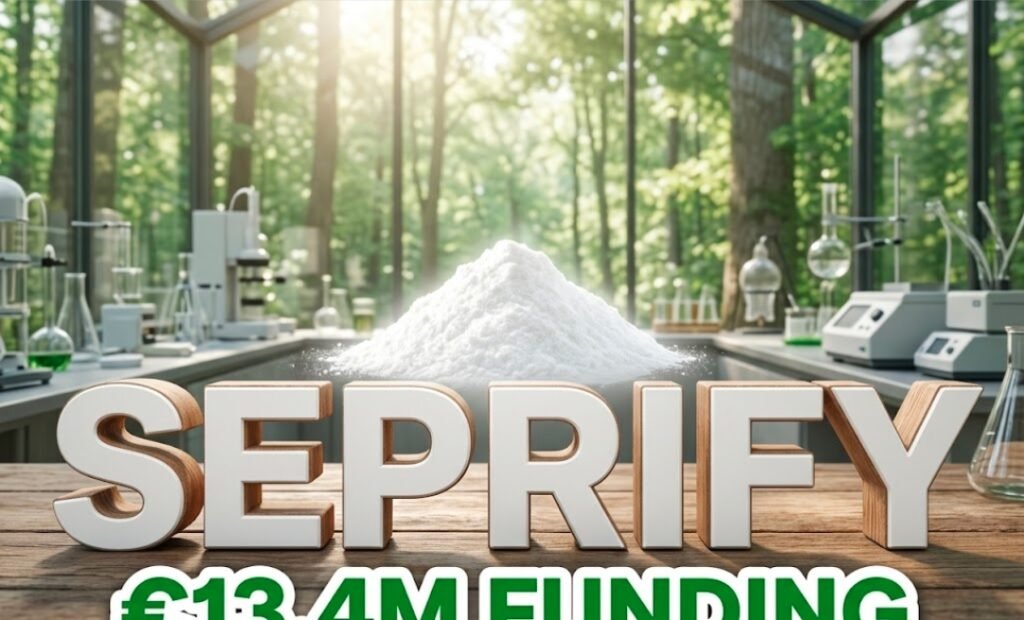
white cellulose powder alternative to titanium dioxide
Key Investment Highlights
- Total Raised: €13.4 Million (Series A)
- Lead Backer: Inter IKEA Group
- Key Investors: Una Terra, ZKB, Cambridge Enterprise
- Primary Goal: Scale production of cellulose-based whitening materials
The Problem with the Old Standard
You might not know it by name, but you likely touch, eat, or look at titanium dioxide every single day.
It is known industrially as TiO2.
This white powder has been the standard whitening agent for decades. It makes paint opaque, toothpaste white, and sunscreen protective. However, it comes with a heavy baggage of health and environmental concerns.
Regulators are cracking down on it hard.
The European Union banned titanium dioxide as a food additive (E171) back in 2022 due to potential genotoxicity risks. This means it could damage DNA. While it is still allowed in cosmetics and paints, consumer pressure is mounting to get rid of it entirely.
Mining it is also dirty business.
The extraction process has a high carbon footprint and disrupts local ecosystems. Companies are scrambling for a replacement that works just as well but does not harm the earth. This is exactly where Seprify steps in with a solution that grows on trees.
Turning Wood Fibers into Whitener
Seprify is not using new chemicals to create the color white.
They are using physics and biology.
Their technology transforms cellulose, the structural part of plants and wood, into a material that scatters light. This mimics how some insects and plants appear white in nature without needing heavy metals. It is a brilliant use of renewable resources.
The company has developed two flagship products to tackle different markets:
- SilvaLuma: This is designed specifically for cosmetics and personal care. It acts as an SPF booster in sunscreens and provides the white base for creams and makeup without the heavy metal load.
- SilvaAlba: This creates a food-grade whitening solution. It is the direct answer to the food industry’s need to replace the now-banned E171 additive in Europe.
Lukas Schertel, the co-founder and CEO of Seprify, emphasized that they are moving fast.
“This funding enables us to focus on execution and scale,” Schertel stated regarding the deal. “Our immediate priority is delivering consistent quality and reliable supply, meeting the operational standards large industrial customers require.”
The technology is already validated.
Seprify has tested their cellulose platform at high technology readiness levels (TRL 7-9). This means it works in real-world conditions, not just in a test tube. They are now qualifying suppliers to ensure they can produce tons of this material, not just grams.
Why IKEA is Betting on Cellulose
It is rare to see a furniture giant like IKEA invest so early in a chemical startup.
But the fit is logical.
IKEA produces millions of white products every year. From Billy bookcases to kitchen cabinets, they rely heavily on white pigments. Finding a renewable, non-toxic alternative fits perfectly with their goal to become a circular business by 2030.
They need materials that fit existing machines.
Changing a manufacturing line costs millions. IKEA is interested in Seprify because their cellulose powder can likely be dropped into existing paint and coating processes with minimal changes. This ease of adoption is key for industrial success.
Robert Carleke, Innovation Ventures Manager at Inter IKEA Group, explained their rationale:
“Seprify’s cellulose platform has reached a level of maturity that makes this a credible path to explore. We are looking for solutions that can realistically replace high-impact incumbent materials while fitting into existing systems.”
This is a massive vote of confidence.
When a company with the supply chain volume of IKEA says a technology is “credible,” the rest of the industry pays attention. It signals to other manufacturers in coatings and construction that this bio-material is ready for prime time.
The Future of Clean Manufacturing
The impact of this funding extends far beyond just white paint.
Seprify is looking at the bigger picture.
They are exploring applications in inks and printed electronics. The versatility of cellulose allows them to tweak the material for various high-volume uses. Imagine a world where the ink on your packaging and the paint on your walls are completely biodegradable.
We are seeing a shift in consumer power.
Shoppers are reading labels more than ever before. They do not want unpronounceable chemicals in their food or on their skin. Brands that switch to “cellulose-based” ingredients will have a massive marketing advantage over those sticking with titanium dioxide.
The timeline is accelerating.
With €13.4 million in the bank, Seprify can hire more engineers and build bigger facilities. We could see SilvaLuma in high-end skincare products within the next year. Food applications will likely follow shortly after as regulatory approvals clear.
This is a win for circularity.
Using wood-derived cellulose means the material comes from a renewable source and returns to nature at the end of its life. It breaks the cycle of mine-make-waste that defines the titanium dioxide industry.
The investment marks a turning point where sustainability is no longer just a nice idea. It is becoming a scalable, industrial reality backed by major capital.
In summary, the €13.4 million investment in Seprify is a game-changer for the materials industry. It brings together the financial muscle of IKEA and the scientific innovation of Swiss researchers to solve a global toxic problem. By replacing titanium dioxide with safe, plant-based cellulose, we are stepping closer to a world where our everyday products are as clean as they look. This is a huge win for consumer safety and environmental health.
What do you think about replacing chemicals with plant-based materials in your home products? Would you pay more for furniture painted with natural pigments? Let us know your thoughts in the comments below.