The irony is almost too perfect to believe. A documentary specifically highlighting the rise of censorship has been banned from a public screening. This decision has sent shockwaves through free speech communities and highlighted a growing divide in how we handle dissenting views.
It forces us to ask a terrifying question about our current cultural climate. Are we now living in a society where discussing censorship is itself a prohibited act?
The Irony of Silencing a Film About Silence
The venue at the center of this storm is Rich Mix. This is an arts center located in East London that prides itself on community engagement. The film in question is titled Think Before You Post and was produced by the online magazine Spiked.
The creators planned to show their film on November 25 to a live audience. They intended to host a question and answer session afterward to debate the themes of the movie.
However, the theater abruptly pulled the plug.
Tom Slater, the editor of Spiked, received an email that shut down the event completely. The venue claimed the content did not align with their mission. They stated their goal is to support marginalized communities and eliminate racial discrimination.
Here is the crucial part of their reasoning.
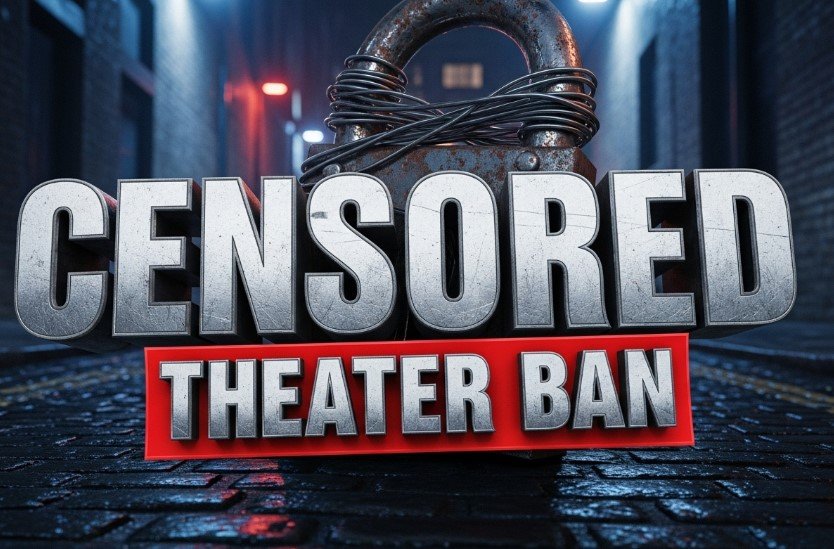
think before you post documentary cancellation london theater
“Since confirming your booking, it has come to light that the content and speakers featured do not align with our values and mission here at Rich Mix.”
This statement suggests that a film about legal overreach is somehow dangerous to marginalized groups. It implies that open debate is now a threat rather than a tool for understanding. Rich Mix effectively proved the documentary’s point by cancelling the screening.
Critics argue this is a textbook example of the “heckler’s veto” being applied by institutions. They are preemptively silencing discussion to avoid potential controversy.
UK Speech Laws Under the Spotlight
We need to understand what this film actually exposes. The documentary Think Before You Post investigates the harsh reality of online policing in the United Kingdom. It focuses on how the state is jailing citizens for words typed on a screen.
The film covers the aftermath of the riots that swept through the UK in the summer of 2024. Authorities warned citizens to “think before you post” or face prison time.
This was not an empty threat.
Data suggests that arrest rates for online communications in Britain are staggering. The film claims that roughly 30 people are arrested every single day in England and Wales for things they say online.
These are not always threats of violence.
Many arrests fall under vague laws regarding “grossly offensive” communication. The Malicious Communications Act allows police to detain individuals for causing “anxiety” or “distress” through digital messages.
The documentary argues this creates a two-tier justice system. It suggests the government is policing thought crimes rather than actual physical violence. By canceling the screening, the theater has prevented the public from seeing this evidence.
The Weaponization of Safety and Values
The cancellation at Rich Mix highlights a specific tactic used to shut down speech. Institutions often cite “values” or “safety” as the reason to deplatform speakers. This is a soft form of censorship that is hard to fight legally.
It frames the suppression of speech as a moral virtue.
Rich Mix stated they want to “foster equality of opportunity.” But they denied the filmmakers the opportunity to show their work. This contradiction is becoming common across Western democracies.
We see this trend in universities and corporate boardrooms alike.
- Speakers are disinvited because they might upset students.
- Books are removed from shelves to protect modern sensibilities.
- Social media accounts are banned for questioning official narratives.
The “safety” argument claims that words are a form of violence. Therefore, removing those words is seen as an act of protection.
Free speech advocates reject this entirely. They argue that the only way to combat bad ideas is with better ideas. Driving these discussions underground only breeds more resentment and radicalization.
Selective Outrage in the Entertainment Industry
There is a deafening silence coming from the usual defenders of artistic freedom. Hollywood stars and media elites often rally when a book is banned in a school library. They speak up loudly when their peers face criticism.
Yet, they are missing in action on this issue.
Where is the outrage for a documentary being banned in a major global city?
High-profile figures in the entertainment industry frequently claim democracy is under attack. They warn that authoritarianism is around the corner. However, when a theater literally bans a film about government overreach, these voices are nowhere to be found.
This suggests a political bias in who gets to speak.
If the documentary promoted a view that aligned with the “correct” political values, it is unlikely it would have been canceled. The industry seems to defend free speech only when it benefits their own ideological side.
This hypocrisy damages the credibility of the arts community. It signals to the public that free speech is no longer a universal principle. It has become a partisan tool used to protect friends and silence enemies.
The Dangerous Path Forward
The cancellation of Think Before You Post is a warning sign. It shows that the infrastructure of censorship is tightening. It is not just about government laws anymore.
It is about cultural institutions enforcing compliance.
If a theater in London is too afraid to show a film about tweets, what else will they refuse to show? We are creating a culture of fear where artists must self-censor to survive.
This hurts everyone.
It prevents honest conversations about difficult topics. It leaves citizens in the dark about how their governments operate. When we lose the ability to debate, we lose the ability to solve problems peacefully.
The filmmakers at Spiked are likely to find another venue. But the damage is already done. The message has been sent to every other creator out there: stay in line, or you will be silenced.
We must decide if this is the kind of society we want to build.
One where safety is valued over liberty. Or one where we trust citizens enough to hear opposing views and decide for themselves.
The choice is ours. But as this cancellation proves, the window for making that choice is closing fast.