Modern warfare is changing rapidly as cheap suicide drones flood the skies and overwhelm traditional defenses. MaXon Systems has just secured a significant funding round to solve this deadly equation with autonomous technology. This Ukrainian defense tech company is building a system designed to intercept mass aerial threats without relying on human pilots for every single shot.
A New Approach to Air Security
MaXon Systems recently closed a funding round that includes prominent investors like Greenflag Ventures, BRAVE1, Freedom Fund VC and Big Defence. The financial backing highlights a growing urgency in the defense sector. Military leaders and investors are looking for sustainable ways to counter high volume drone attacks. The current methods are simply not working well enough against large swarms.
Traditional air defense systems are incredibly effective but they are also incredibly expensive. Using a million dollar missile to shoot down a cheap Shahed drone is a financial loss for the defender.
Manual interception using First Person View or FPV drones is the cheaper alternative used today. However, this method has a major flaw. It requires one skilled pilot for every single target. This model breaks down when an adversary launches fifty or a hundred drones at the same time. MaXon is addressing this scalability issue by removing the pilot from the cockpit and letting software take the wheel.
The company is developing a closed loop counter UAS platform. This system handles everything from detecting the threat to destroying it. The goal is to defend large perimeters like cities or power plants against saturation attacks.
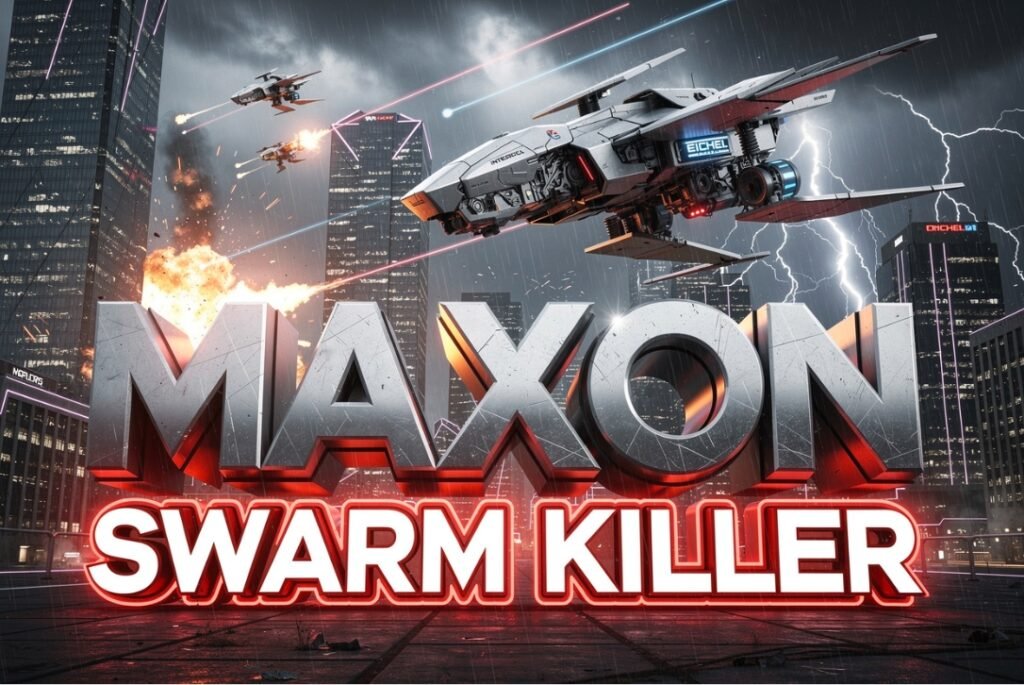
autonomous drone interceptor destroying shahed swarm in sky
The Eichel Interceptor and Tech Stack
At the heart of MaXon’s solution is a proprietary high speed interceptor named Eichel. This hardware is paired with a sophisticated software stack designed for “detect to defeat” operations. The system is built to survive in the harshest conditions of modern combat.
Electronic warfare is a major factor in Ukraine and other conflict zones. GPS signals are often jammed or spoofed to confuse defensive systems. MaXon has engineered its guidance software to function effectively even in these GPS denied environments.
Key Technical Capabilities:
- Long Range Vision: The Detection and Tracking Unit boasts a proven range of 16 kilometers.
- Automated Guidance: The system supports multiple real target contacts in automatic guidance mode.
- Resilient Comms: It is built to operate under heavy electronic warfare jamming.
- Parallel Engagement: A single command post can manage multiple interceptors simultaneously.
The technology compresses the interception process into a tight sequence. It moves rapidly through launch, target selection and engagement confirmation. This speed is vital when seconds count.
Shifting Control from Humans to Software
The defining innovation of MaXon Systems is the shift in workload. Current defense relies heavily on human reflexes and decision making during the flight. MaXon shifts this burden to software execution.
This change allows for a centralized defense strategy. A remote command post can dispatch a wave of interceptors to meet an incoming wave of enemy drones. The software handles the complex flight paths and terminal guidance.
The company has already achieved significant milestones in its development. The team reports that their technology has reached TRL 8 which means the system has been validated in real combat conditions.
This level of maturity is rare for early stage defense startups. It suggests that the technology is not just a concept but a working solution that has seen the field.
| Feature | Traditional FPV Defense | MaXon Autonomous System |
|---|---|---|
| Control | Manual (1 Pilot per Drone) | Autonomous Software |
| Scalability | Low (Limited by Pilot count) | High (Software managed) |
| Cost | Low Hardware / High Training | Moderate Hardware / Low Labor |
| Response Time | Human Reaction Speed | Machine Calculation Speed |
Greenflag Ventures highlighted this execution speed in a recent public statement. They noted that MaXon combines battlefield traction with a clear path to autonomy at scale. The investors were particularly impressed by the ambition of the technical vision and the seriousness of the execution.
Future Roadmap and Global Implications
The company is moving fast toward commercialization. They have positioned the MaXon System V1 as commercially ready. The team targets the first official sales for early 2026.
Development is continuing on the “last mile” capabilities of the system. This is the terminal guidance phase where the interceptor must lock onto the target and destroy it.
To ensure all weather performance, MaXon is integrating FMCW radar technology. They are reportedly working with a large European automotive partner on this specific integration. This partnership indicates that MaXon is looking beyond off the shelf components to build a robust industrial grade solution.
The roadmap is shaped by the single constraint that matters most which is high volume defense. The ability to control multiple interceptors from a remote command center is the future of air defense.
This architecture is likely to define European and NATO modernization efforts over the next decade. As drone swarms become a standard part of military doctrine, the defense must evolve to match that volume. MaXon Systems is positioning itself at the forefront of this necessary evolution.
Autonomous defense systems raise important questions about the future of warfare. However, in the face of relentless aerial bombardment, the demand for effective protection is the primary driver. MaXon has secured the funds and the technology to meet that demand.
The rise of MaXon Systems marks a turning point in defense technology. By securing this funding and proving their tech in combat conditions, they are offering a glimpse into the future of city protection. We are moving away from manual dogfights and toward automated aerial shields. This shift promises to save lives and protect critical infrastructure more efficiently than ever before.
What are your thoughts on using autonomous software to control weapons systems for city defense? Do you think this is the inevitable future of security?
Please share your opinion in the comments below. If you found this update insightful, feel free to share it on social media using #DefenseTech and #DroneWarfare to join the conversation.
