Most automotive historians believe General Motors destroyed every single EV1 nearly twenty years ago in a controversial recall program. They are mostly right. But a rare survivor from the 1990s electric car experiment is currently sitting in a parking lot in Washington D.C. This dust covered relic is not just surviving. It is teaching a new generation of engineers how the electric revolution actually started.
A Survivor Hiding in Plain Sight
You might walk right past it without noticing the history resting on those tires. Located at Howard University, this teardrop shaped vehicle looks like a prop from a vintage science fiction movie. It is one of the roughly 40 units that escaped the infamous crusher.
General Motors donated this specific chassis to the university exclusively for engineering education purposes.
The car is not in pristine museum condition. It sits outdoors and bears the weathering of time. Yet, it represents a critical chapter in automotive history. Most of its siblings were flattened into cubes in the Arizona desert. Finding one in the wild is statistically harder than winning the lottery. This specific unit has become a local legend on campus. Students walk by it daily. Few realize they are looking at the great-grandfather of the modern Tesla or Chevy Bolt.
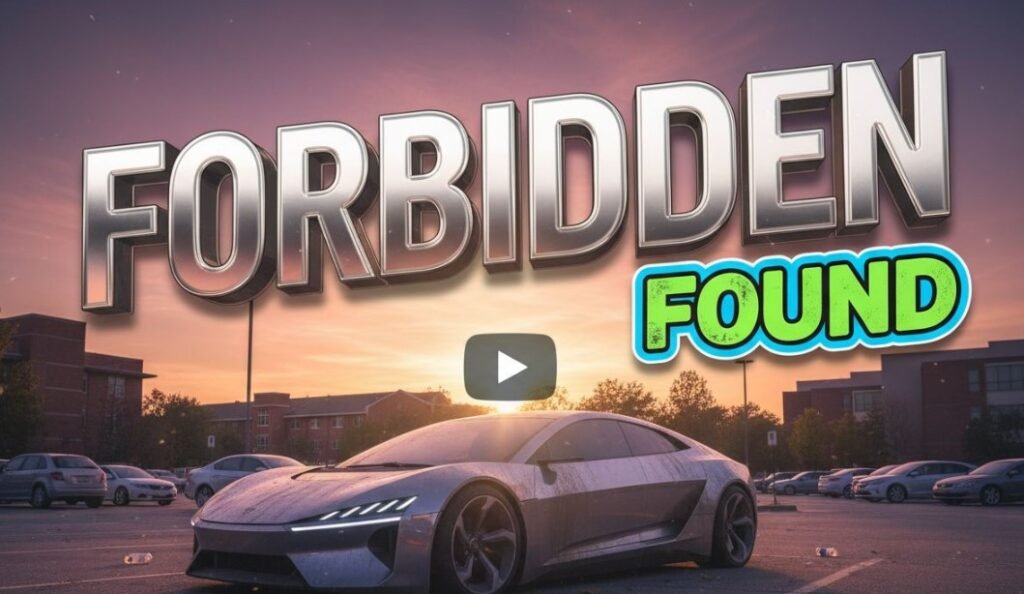
dusty general motors ev1 electric car howard university parking lot
The Dark History of the EV1 Program
To understand why this car is so special, you have to look at the timeline. GM produced the EV1 from 1996 to 1999. It was the first mass produced electric vehicle of the modern era.
Drivers fell in love with the instant torque and silent operation.
| Quick Specs | GM EV1 (Original) |
|---|---|
| Battery Type | Lead Acid / NiMH |
| Range | 70 to 100 miles |
| 0-60 MPH | Approx. 8 seconds |
| Total Produced | 1,117 units |
Then came the end. GM cited profitability issues and a lack of consumer interest. They canceled the lease program. They took the cars back. Owners held vigils and protests, but GM crushed almost the entire fleet.
Only a handful were deactivated and given to museums and schools with a strict agreement. They were never to be driven on public roads again. The controllers were removed. The brakes were disabled. They were meant to be statues. But the engineers at Howard University had other ideas.
How Students Brought It Back to Life
This is where the story gets truly interesting. The EV1 at Howard arrived as a shell. It had no battery and no way to move under its own power.
That did not stop the engineering department.
Jason C. Ganley, a former professor at Howard, led a project to change the destiny of this car. He worked with bright students to convert the powertrain. They did not just restore it; they transformed it into a hybrid.
“If someone gets it some gasoline, it’ll charge up and it’ll drive.”
The students installed a system where a gas engine charges the system to get it moving. Later cohorts of students have attempted to revert it to pure electric power. It serves as a real world final exam. Students do not just read about voltage and drivetrain mechanics in a textbook. They go outside and wrench on a piece of history.
What This Relic Teaches Us Today
The automotive landscape looks very different today than it did in 1999. We now have electric trucks like the Hummer EV that weigh 9,000 pounds. We have sedans that can travel 500 miles on a charge.
The EV1 offers a humble perspective.
It reminds us that innovation is not a straight line. The EV1 failed so that modern electric cars could succeed. The technology in the Howard University parking lot was ahead of its time. The battery tech just was not ready yet.
This car is more than just metal and plastic. It is a time capsule. It shows students that engineering is about solving problems that seem impossible. It also serves as a warning about what happens when companies kill innovation too early.
We should be thankful this one survived. It might be dusty. It might be modified. But it is still standing.