In a major blow to global internet expansion, Google and Meta have hit pause on key undersea cable projects amid rising dangers in the Red Sea. This delay affects billions of users worldwide, raising costs and slowing data speeds. What does this mean for your online life? Read on to uncover the full story behind these stalled tech giants’ plans.
Delays Hit Major Cable Projects
Google and Meta face big setbacks in their efforts to boost global connectivity. The companies announced delays to their undersea cable systems due to security threats in the Red Sea region. Meta’s 2Africa project, a huge 45,000-kilometer network meant to link Africa, Europe, and parts of Asia, remains unfinished in its southern Red Sea section. Google’s Blue-Raman cable, designed to connect Europe and Asia directly, also sits on hold.
These projects were set to go live soon, with Blue-Raman originally planned for 2024. Now, indefinite delays stem from geopolitical tensions, including attacks that make the area unsafe for workers. Crews on specialized ships can’t operate without risking lives, forcing a full stop.
The news broke on November 17, 2025, as reported by various outlets. It highlights how real-world conflicts can derail tech ambitions. For Meta, the 2Africa cable aimed to circle Africa and improve internet access for millions. Google’s effort focused on faster links between continents. Both now wait for safer times.
One key issue is permitting problems tied to the instability. Local authorities in the region hesitate to approve work amid ongoing risks. This isn’t just a short hiccup; it could push timelines back by months or years.
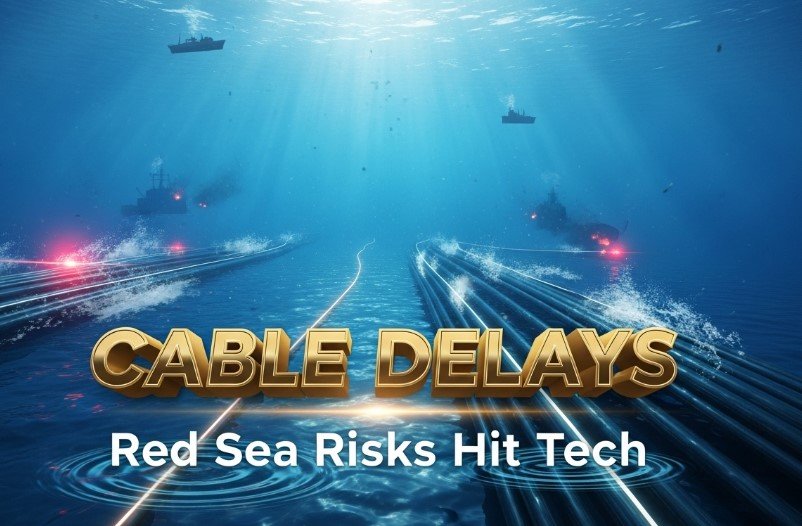
Red Sea conflict undersea cable delays
Why the Red Sea is a Critical Hotspot
The Red Sea serves as a vital pathway for global data flow. It handles about one-fifth of the world’s internet traffic, making it a chokepoint for connections between Europe, Asia, and Africa. Without it, data must take longer routes, like around Africa’s southern tip, which adds delays and costs.
Geopolitical instability fuels the problem. Conflicts involving groups like the Houthis have led to missile strikes and ship attacks. These threats make the corridor too risky for cable-laying vessels. Earlier this year, cable cuts in the area disrupted services, causing latency spikes for cloud users and businesses.
Think of the Red Sea as a busy highway for the internet. When accidents block lanes, traffic backs up everywhere. About 400 undersea cables worldwide carry over 95% of global data, and the Red Sea is one of the busiest spots. Disruptions here echo across continents.
Security experts point to rising tensions since late 2023. Attacks on shipping have forced reroutes, and now tech projects feel the pinch. This isn’t new; past incidents, like cable damages in March 2024, showed how fragile these links can be. Companies like HGC Global Communications noted traffic shifts to other paths, but those alternatives often get overloaded.
Global Internet Faces Bigger Risks
These delays expose weaknesses in our digital world. With the Red Sea stalled, internet users might notice slower speeds, especially in Africa and parts of Asia. Businesses relying on cloud services, like Microsoft’s Azure, have already seen issues from similar cuts.
The core problem is clear: geopolitical risks now directly threaten the internet’s backbone, forcing tech firms to rethink strategies.
Data from industry reports shows the impact. A 2025 study by TeleGeography estimates that Red Sea routes handle 17% to 20% of intercontinental traffic. When cables go down, it can cut connectivity by up to 90% in affected countries, as seen in places like Ethiopia and Somalia during recent outages.
This affects everyday life. Online banking, video calls, and streaming could lag more. For regions with poor internet, these cables promised big improvements. Now, that hope dims.
Experts warn of broader vulnerabilities. Undersea cables are prime targets in conflicts because they’re hard to protect. Sabotage or accidental damage can isolate entire nations. In 2025, we’ve seen more such events, tying into global tensions.
To break it down, here are key risks highlighted by recent events:
- Direct Threats: Attacks on vessels delay laying and repairs.
- Economic Fallout: Higher costs for bandwidth on detours.
- User Impact: Increased latency for apps and services.
These points show why stability in the Red Sea matters to everyone online.
Financial Toll and Business Fallout
The costs of these delays pile up fast for Google and Meta. Building undersea cables runs into billions of dollars. Meta’s 2Africa alone involves massive investments from partners like telecom firms. With parts unfinished, they can’t start earning from the added capacity.
Google faces similar headaches. The Blue-Raman project aimed to boost data flow, but now the company buys space on other cables at premium prices. This eats into profits and slows expansion plans.
A Bloomberg analysis from November 2025 estimates daily losses in the millions for delayed projects. Rerouting traffic adds expenses, and investors watch closely. Stock dips followed the announcements, reflecting market worries.
Beyond money, operations suffer. Tech giants planned these cables to handle growing data demands from AI and streaming. Without them, existing networks strain, potentially leading to outages.
One silver lining: both companies push ahead elsewhere. Google’s Atlantic cable to Togo moves forward, and Meta works on other segments of its global network. Still, the Red Sea gap leaves a hole in their strategies.
| Project | Original Timeline | Current Status | Estimated Cost Impact |
|---|---|---|---|
| Meta’s 2Africa | Completion by 2024 | Southern Red Sea segment stalled | Billions in delayed revenue |
| Google’s Blue-Raman | Go-live in 2024 | Indefinite delay | High rerouting expenses |
This table captures the basics, based on 2025 reports from sources like TeleGeography. It shows how timelines slipped due to risks.
Alternatives and Paths Forward
With the Red Sea off-limits, companies explore workarounds. Some consider routes avoiding the area entirely, like through the Mediterranean or around Africa. But these add length and cost, making them less ideal.
Meta and Google team up with partners to monitor the situation. They hope for improved security to resume work. In the meantime, they invest in satellite options and land-based fibers to bridge gaps.
Industry leaders call for better protections. International agreements could safeguard cable routes, similar to shipping lanes. Groups like the International Cable Protection Committee push for this, citing 2025’s disruptions.
For users, this means pushing for diverse internet paths. Diversification reduces risks from single chokepoints. Tech firms already build redundancies, but events like this test those systems.
Looking ahead, expect more focus on stable regions. Projects in the Pacific and Atlantic gain speed as alternatives. Yet, the Red Sea’s efficiency keeps it attractive once safe.
Broader Lessons for Digital Infrastructure
These delays teach hard lessons about our connected world. Geopolitical issues aren’t just news headlines; they hit home by slowing your internet or raising costs for services.
Nations and companies must plan for such risks. Building resilient networks becomes key. This includes more cables in safe areas and tech like advanced monitoring to spot threats early.
Analysts predict that by 2030, global data needs will double, per a 2025 IDC report. Without new cables, bottlenecks loom. The Red Sea saga underscores the need for action.
In the end, this story reminds us how fragile our digital links are. Conflicts far away can disrupt daily life, from work calls to online shopping.
As the world watches the Red Sea situation unfold, the push for secure, reliable internet grows stronger. What do you think about these delays and their impact on global connectivity? Share your thoughts in the comments and pass this article along to friends on social media to spread the word.