Abu Dhabi has officially opened its doors to Ripple’s new USD stablecoin in a move that could reshape digital finance in the Middle East.
The financial landscape of the UAE just witnessed a pivotal moment. Ripple received full approval from the Financial Services Regulatory Authority (FSRA) to deploy its RLUSD stablecoin within the Abu Dhabi Global Market (ADGM). This regulatory green light allows licensed institutions to facilitate payments and trade using the token immediately.
A Historic Milestone for Digital Finance
The Financial Services Regulatory Authority of Abu Dhabi has officially designated Ripple’s RLUSD as an “Accepted Fiat-Referenced Token.” This specific classification is crucial for institutional adoption. It removes the regulatory grey area that often holds banks back from using digital assets.
Licensed firms operating within the ADGM can now use RLUSD for regulated financial activities. This includes cross-border payments, remittances and digital asset trading. This approval signals that Abu Dhabi is ready to integrate blockchain finance into its core banking systems.
Jack McDonald serves as the Senior Vice President of Stablecoins at Ripple. He emphasized that this approval validates their strategy of putting compliance first.
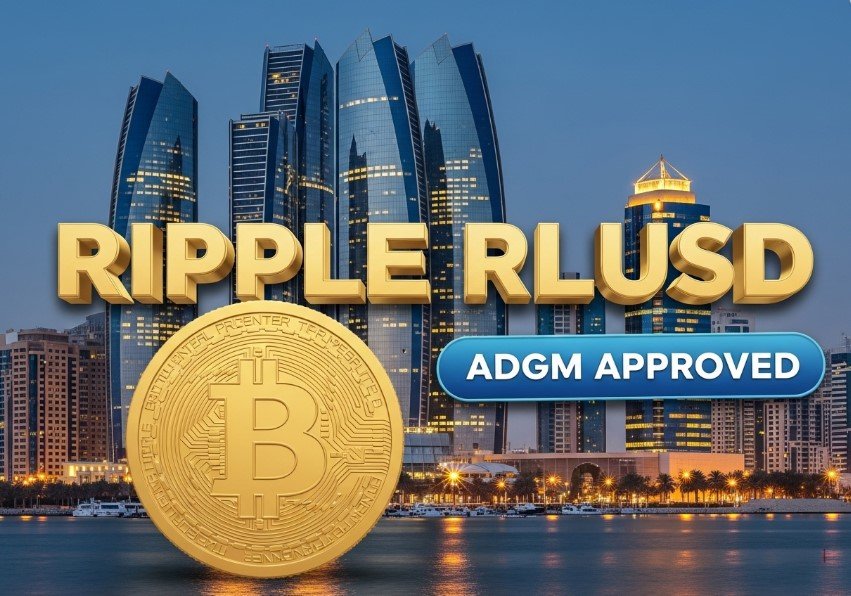
Ripple RLUSD stablecoin approval Abu Dhabi financial district concept
“The FSRA’s recognition of RLUSD as a Fiat-Referenced Token strengthens our commitment to regulatory compliance and trust. RLUSD is rapidly emerging as the go-to USD stablecoin for leading institutions.”
The move aligns with the broader vision of the UAE. The region is aggressively positioning itself as a global hub for crypto businesses. By attracting major players like Ripple, Abu Dhabi is bringing high-level technology to its financial infrastructure.
Expanding the Middle East Footprint
Ripple has been steadily building its presence in the United Arab Emirates for years. This latest approval from the FSRA is not an isolated event. It follows a strategic pattern of expansion across the region.
Earlier this year, the Dubai Financial Services Authority (DFSA) also granted Ripple a license. That license allowed the firm to offer regulated digital asset services in the wider UAE market. Ripple is now one of the few crypto companies with regulatory clarity in both Abu Dhabi and Dubai.
Here is a quick look at Ripple’s recent milestones in the region:
- Establishment of HQ: Ripple set up its regional headquarters in Dubai to serve the Middle East and North Africa.
- DFSA License: Secured approval to operate within the Dubai International Financial Centre.
- Partnerships: Forged alliances with major local banks for cross-border payment solutions.
- ADGM Approval: The latest FSRA clearance for the RLUSD stablecoin.
Arvind Ramamurthy is the Chief Market Development Officer at ADGM. He welcomed the development and praised the robust framework they have built.
“We congratulate Ripple on achieving this important milestone. We look forward to seeing them make use of our robust regulatory framework designed to support the sustainable growth of innovative firms.”
Why Compliance Is the New Standard
The crypto market has matured significantly over the last few years. In the past, speed and anonymity were the main selling points. Today, the focus has shifted entirely to trust, transparency and regulatory compliance.
Institutions cannot risk using unregulated tokens for billion-dollar transactions. RLUSD is designed specifically to solve this problem by offering a 1:1 USD peg backed by audited reserves.
The FSRA has some of the strictest standards in the world. Their approval process involves a deep dive into the reserves, security protocols and operational integrity of the issuer. Gaining this “Accepted” status proves that RLUSD meets the high bar set for traditional financial instruments.
This focus on being a “compliance-first” token separates RLUSD from many competitors. While other stablecoins dominate retail trading, Ripple is clearly targeting the enterprise sector. They want to be the plumbing for global trade settlements.
The Battle for Stablecoin Dominance
The stablecoin market is currently a massive industry worth over $170 billion. It has been dominated for years by Tether (USDT) and Circle (USDC). However, the entry of a banking-focused player like Ripple changes the dynamic.
Ripple already has a vast network of banking partners through its RippleNet service. Introducing a trusted stablecoin into that existing network is a logical next step. It allows banks to settle transactions instantly without relying on volatile cryptocurrencies or slow wire transfers.
Key differences between the major players:
| Feature | Tether (USDT) | Circle (USDC) | Ripple (RLUSD) |
|---|---|---|---|
| Primary Focus | High Volume Trading | DeFi & Payments | Enterprise & Banking |
| Regulatory Status | Global Mixed | Highly Regulated | Institutional Grade |
| Target Audience | Retail Traders | Web3 Developers | Banks & Institutions |
| Network | Multi-Chain | Multi-Chain | XRP Ledger & Ethereum |
This table highlights the strategic gap Ripple is trying to fill. They are not just trying to be another trading chip on a crypto exchange. They aim to be the standard for settling real world value between financial giants.
Future Outlook for RLUSD
The approval in Abu Dhabi sets the stage for a global rollout. As liquidity builds within the ADGM, we can expect to see the first real commercial use cases go live.
Cross-border payments are the most immediate application. Currently, sending money between countries takes days and costs high fees. Using a regulated stablecoin can cut this time down to seconds and reduce costs to a fraction of a cent.
Experts predict that other regulators might follow the lead of the FSRA. When a top-tier regulator approves an asset, it often creates a framework for others to do the same. This could speed up approvals in Europe and Asia.
The success of RLUSD will ultimately depend on adoption. Having the license is the first step. Now Ripple must convince its banking partners to switch from legacy Swift systems to this new digital rail. Given the efficiency gains, that switch seems inevitable.
Ripple has made its move. The infrastructure is built. The regulators are on board. Now the financial world watches to see how fast the money starts moving.
Conclusion
Ripple has secured a vital victory in Abu Dhabi that solidifies its standing in the Middle East. The FSRA approval for RLUSD provides the regulatory certainty that large institutions need to adopt blockchain technology. This moves the industry beyond speculation and into an era of legitimate financial utility. As the UAE continues to lead in crypto innovation, the world is witnessing the future of money being built in real time.
What are your thoughts on this major regulatory approval? Do you think RLUSD will challenge the dominance of USDT? Share your opinion in the comments below and if you are on X use the hashtag #RLUSD to join the conversation!