Millions of Americans brace for a volatile week as a relentless parade of storm systems targets vulnerable communities. Meteorologists and emergency managers warn that the combination of saturated soil and fierce winds will likely snap tree limbs and trigger widespread power outages. This developing weather pattern poses a serious threat to aging electrical infrastructure and residential safety across the country.
The Perfect Storm for Power Failures
A volatile atmospheric setup is currently driving a series of potent low-pressure systems across the nation. Forecasters highlight a dipping jet stream that is scooping up moisture and hurling it against cold air masses. This clash creates the ideal engine for damaging wind gusts and heavy precipitation.
The ground in many regions is already soaked from previous rainfall which makes tree roots unstable.
When high winds hit these compromised trees, they easily topple over onto nearby power lines. Utility companies call this the number one cause of blackouts during severe weather events. It is not just the wind speed that matters. It is the wet ground loosening the grip of massive oak and pine trees near residential streets.
Local public works departments are racing against the clock to clear storm drains. They know that clogged inlets lead to flash flooding in minutes. Crews are also inspecting river banks and low-lying roads. Even a small amount of additional rain can now push waterways over their banks.
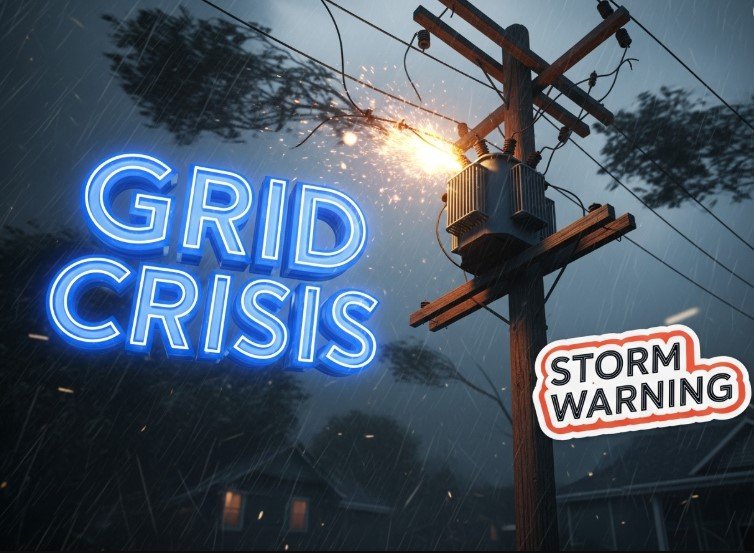
broken power line sparking during severe thunderstorm night
Why Our Grid Cannot Handle the Strain
The United States relies on an electrical grid that was built for the climate of the last century. Federal energy data reveals that seventy percent of the transmission lines and transformers are over 25 years old. This equipment struggles to withstand the intensity of modern storms.
Experts point out that overhead lines are the weak link in the chain.
Grid Vulnerability Stats:
- Age: Most infrastructure was built in the 1960s and 1970s.
- Cause: Weather causes nearly 80 percent of all major outages.
- Cost: Power failures cost the U.S. economy roughly 150 billion dollars annually.
Repair crews face a difficult battle when storms hit back-to-back. They must wait for winds to die down before they can safely go up in bucket trucks. This safety protocol often delays restoration efforts by several hours or even days.
Smart grid technology helps dispatchers isolate faults. However, it cannot physically stop a heavy branch from tearing down a live wire. The physical hardening of the grid lags behind the increasing frequency of these severe weather events.
Protecting Your Home and Wallet
Homeowners face financial risks alongside physical danger. Insurance adjusters report a sharp rise in claims related to wind damage and water intrusion. A missing shingle might seem minor until wind-driven rain destroys the insulation and drywall in the attic.
Preventive maintenance is the most effective way to save money.
| Preventive Action | Estimated Cost | Potential Repair Savings |
|---|---|---|
| Cleaning Gutters | $0 – $150 | $2,000+ (Water damage) |
| Trimming Trees | $300 – $800 | $5,000+ (Roof/Fence repair) |
| Sump Pump Check | $0 – $200 | $10,000+ (Basement flood) |
Residents should inspect their property before the first drop of rain falls. Look for loose fence posts and secure patio furniture. These items become dangerous projectiles in high winds.
Check your sump pump if you have a basement. A power outage often stops these pumps exactly when you need them most. Consider installing a battery backup system to keep water out during a blackout.
Emergency Preparation Is Essential
Emergency coordinators urge every household to have a concrete plan in place right now. You cannot rely on cell networks or internet access during a major disaster. Towers lose power and networks become congested with high traffic.
Stocking the right supplies changes the experience from a crisis to an inconvenience.
- Water: Keep one gallon per person per day for at least three days.
- Light: Use battery-powered lanterns instead of candles to prevent fire risks.
- Food: Stock non-perishable items that do not require cooking or heating.
- Medical: Keep a supply of necessary prescription medications on hand.
- Power: Charge all external battery banks for phones immediately.
Never approach a downed power line under any circumstances. You must assume every wire is live and carries a lethal voltage. Call 911 or your local utility provider to report hazards immediately.
Generators are helpful but require strict safety adherence. Never run a generator inside a garage or near open windows. Carbon monoxide poisoning is a silent killer that spikes during winter storm outages.
Moving Toward a Resilient Future
Local governments are debating the high cost of burying power lines underground. This process is expensive and costs up to ten times more than running overhead wires. Yet many communities argue the long-term reliability is worth the investment.
Utilities are currently adopting a hybrid approach to strengthen the network.
They are installing stronger composite poles that do not snap as easily as wood. They are also using coated wires that resist shorting out when branches brush against them. Vegetation management teams are working overtime to cut back tree canopies along critical feeder routes.
These upgrades take time and massive funding. Until the grid is fully modernized, residents must remain vigilant and prepared for interruptions. The connection between weather patterns and infrastructure limits defines our current reality.
As storm seasons intensify, the collaboration between residents and utility providers becomes vital. We must adapt our homes and our habits to weather the storms ahead. Safety remains the priority while crews work to keep the lights on.
How are you preparing for the severe weather season this year? Do you have a backup power plan for your home? Share your tips and thoughts in the comments below using #StormPrep2025 to help others in your community get ready.