The tech world witnessed history this week as Elon Musk officially merged his two powerhouse companies. SpaceX has acquired the artificial intelligence startup xAI in a deal that reshapes the future of computing. This massive move combines the leader in rocketry with a rising star in generative AI.
Investors and analysts are calling this the largest merger ever seen. The deal creates a combined entity worth a staggering $1.25 trillion. This strategic move aims to move the internet’s physical infrastructure off the planet and into orbit.
Breaking Down the Largest Merger in Tech History
The numbers behind this acquisition are astronomical. This is an all-stock transaction that rewards early investors in xAI heavily. The structure converts every single share of xAI stock into 0.1433 shares of SpaceX stock.
Financial documents filed with banks reveal the massive scale of this agreement. SpaceX holds a valuation of $1 trillion on its own. The AI startup xAI brings another $250 billion to the table. This pushes the total value past the trillion-dollar mark comfortably.
The share prices at the time of signing tell the story best:
- SpaceX Share Price: $526.59
- xAI Share Price: $75.46
- Combined Valuation: $1.25 Trillion
This merger consolidates Elon Musk’s control over the future of hardware and software. He is bringing the transportation method and the digital cargo under one roof.
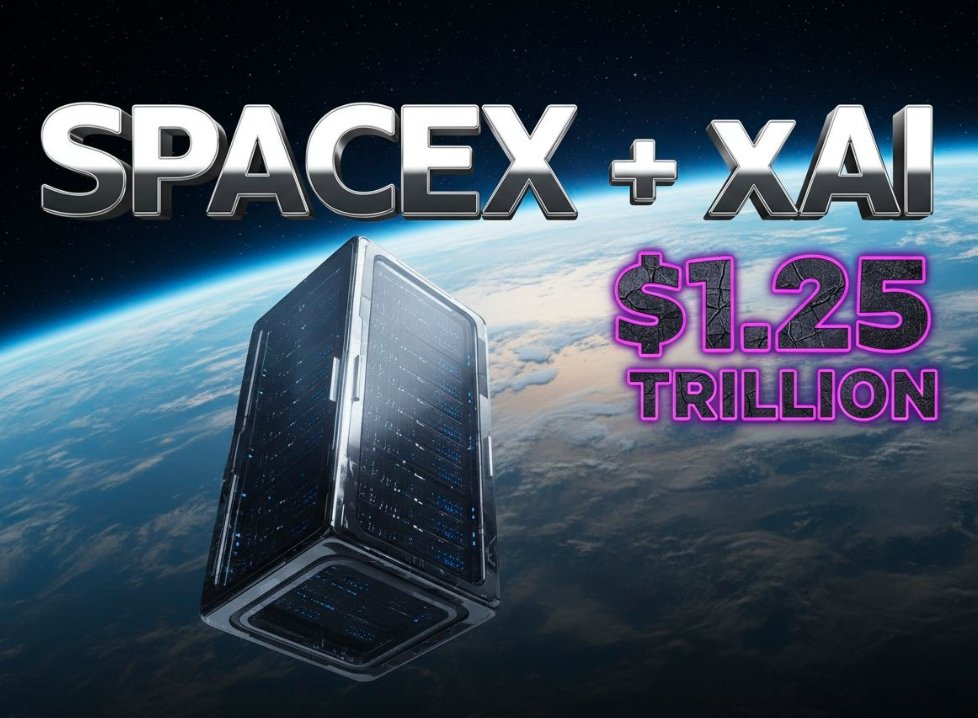
SpaceX Starship launching solar powered orbital data centers
Solving the Power Hungry AI Problem
Why merge a rocket company with a chatbot company? The answer lies in the power grid. Families across America are feeling the pinch of inflation. Food costs are up nearly 20 percent since 2022. Energy bills are climbing just as fast.
Artificial intelligence is a major part of that energy problem. AI models like Grok and ChatGPT are incredibly thirsty for electricity.
“One ChatGPT query uses almost ten times the electricity as one Google search. It is the same amount of electricity as lighting a lightbulb for 20 minutes.”
Data centers on Earth are pushing local power grids to the breaking point. They also consume millions of gallons of water for cooling. Communities are starting to push back against these loud and hot facilities in their neighborhoods.
Musk plans to solve this by launching these data centers into space.
The Rise of Orbital Data Centers
The concept sounds like science fiction. However, SpaceX has turned fiction into reality before with landing rockets. The plan involves using Starship to deploy a new network of satellites.
These are not just communication satellites like the early Starlink models. These are flying computers.
Benefits of Space-Based Computing:
- Unlimited Energy: The sun provides constant solar power without clouds or night interfering in certain orbits.
- Natural Cooling: Space is cold. Companies do not need water or massive fans to keep servers from overheating. Heat can simply be radiated away.
- Zero Land Use: These centers take up no space in crowded cities or valuable farmland.
SpaceX plans to launch up to one million of these solar-powered units. The company will begin using its massive Starship vehicle for these deployments starting later this year. This marks a shift away from the smaller Falcon rockets for heavy lifting.
A New Era for Computing and the Environment
This merger is a bet on the future of infrastructure. Critics say the technology is still a decade away. They argue that maintaining servers in zero gravity is too difficult.
Elon Musk disagrees with the timeline. He estimates that within two to three years, space will be the cheapest place to run AI programs.
The goal is to lower the cost of intelligence while saving Earth’s resources.
If successful, this could stabilize energy prices on Earth. It would remove the massive load of AI computing from our aging power grid. The merged company will use real-time data from the X platform to train these orbital minds.
We are watching the birth of a new industrial sector. It is no longer just about exploring space. It is about working there.
The boldest gamble in business history is now official. The success of this $1.25 trillion giant depends on whether Starship can deliver on its promises. If it works, the cloud will literally be in the clouds.