Parents tired of watching their children doom-scroll or struggle with boring text blocks finally have a smarter alternative. Three former Google innovators just unveiled Sparkli, a groundbreaking AI platform that transforms static answers into interactive, multimedia educational expeditions for children. This new tool promises to turn passive screen time into an active, curiosity-driven adventure.
Turning Curiosity Into Interactive Adventures
Most artificial intelligence tools available today are built for adults. When a child asks a complex question, standard chatbots usually spit out long, dense paragraphs of text. This often bores young minds and kills their curiosity instantly. Sparkli takes a completely different approach by using generative AI to create “expeditions” rather than just answers.
The platform instantly generates a multimedia journey combining audio, short videos, and games.
If a child asks about the solar system, they do not just read about Mars. They might watch a clip of a rover, play a mini-game to navigate an asteroid belt, and take a quick quiz. This variety keeps the brain engaged. The founders realized that children learn best when they can touch, listen, and interact with the material.
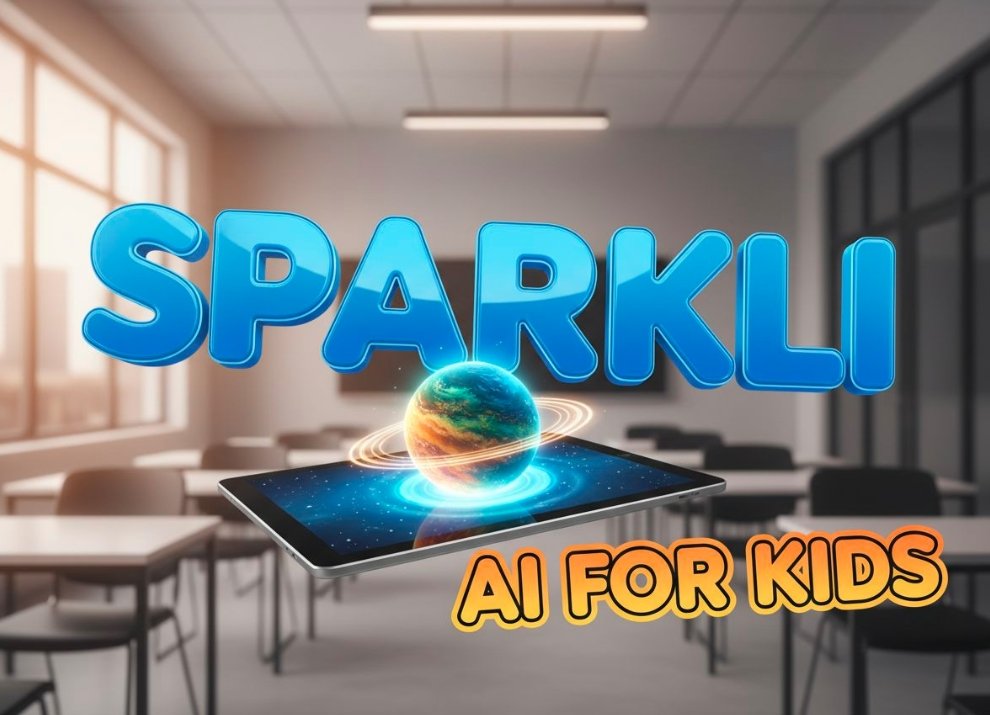
Sparkli AI learning app interface on tablet for kids education
“We wanted to move beyond the ‘search and read’ model. Kids need to explore ideas, not just memorize facts,” the team noted regarding their design philosophy.
This shift creates a safe environment where getting the “right” answer matters less than the journey of finding it. Children can choose their own paths through the content. They can skip sections that do not interest them and dive deeper into the parts that do. It mimics the natural way a child’s brain wanders and wonders.
Silicon Valley Veterans Tackle a Parenting Problem
The brains behind Sparkli are no strangers to building big tech products. Lax Poojary, Lucie Marchand, and Myn Kang spent years working at Google. Specifically, their time at Area 120, Google’s internal incubator for experimental projects, gave them a unique edge. They learned how to prototype ideas quickly and fail fast to find what truly works.
However, technical skills were not enough to solve this specific puzzle. Poojary and Kang claim their biggest inspiration came from their personal lives as parents. They watched their own children interact with existing technology and noticed a massive gap. The current digital tools could answer questions, but they could not hold a child’s attention.
Here is what the founders bring to the table:
- Rapid Prototyping: Experience from Area 120 allows for quick updates based on user feedback.
- Parental Insight: Real-world frustration with current ed-tech fueled the user interface design.
- Technical Scale: Knowledge of how to build robust systems that can handle thousands of concurrent users.
They realized that a lecture format does not work on a tablet. By combining their high-level engineering skills with the daily realities of parenting, they crafted a solution that feels less like homework and more like play.
Safety First Approach for Young Minds
Building AI for children requires much higher safety standards than building for adults. The internet is full of misinformation and inappropriate content. The Sparkli team knew that trust would be their most valuable currency. To ensure absolute safety, the startup hired a dedicated educational researcher and a professional teacher.
These experts help shape the content to be age-appropriate for children aged five to twelve. They ensure the AI stays within safe boundaries. The system is designed with strict guardrails to prevent it from generating harmful or confusing responses.
Key Safety Features:
| Feature | Function |
|---|---|
| Topic Restrictions | Blocks sensitive or age-inappropriate subjects automatically. |
| Pedagogical Review | Content is vetted to match learning standards for K-12. |
| Soft Skills Focus | Encourages empathy, curiosity, and critical thinking. |
The team is focusing heavily on pedagogy. This means the app does not just throw random facts at the child. It structures the information in a way that helps build long-term learning habits. The goal is to help kids develop soft skills and a genuine love for exploration. Parents can rest easy knowing the digital environment is curated and monitored.
Bringing AI Tools Directly to Classrooms
Sparkli is not just targeting the living room; it is heading for the classroom. The founders have already begun testing the tool in various educational institutes. This strategy allows them to see how the app performs in a group setting. Teachers can use the platform to assign specific expeditions and track student progress in real-time.
Educators often struggle to find resources that cater to every student’s learning style. Some kids are visual learners, while others prefer reading or listening. Sparkli covers all these bases automatically. By using in-app features, teachers can support discussion-based classes across diverse subjects.
The rollout plan involves two distinct phases:
- School Partnerships: Working closely with educators to refine the tools and ensure they meet curriculum needs.
- Consumer Access: Opening the platform to parents and families later this year.
This phased approach ensures that when the app finally hits the broader market, it will be battle-tested and educationally sound. The founders are betting that by winning over teachers first, they will gain the trust of parents. It is a classic strategy that emphasizes quality and utility over quick viral growth.
The feedback from early testing suggests that students stay focused longer when using Sparkli compared to traditional textbooks or standard web searches. This engagement is the key metric the team is watching. If they can keep a child interested in a history lesson for twenty minutes, they have already won half the battle.
In a world dominated by endless video feeds and distracting notifications, Sparkli attempts to reclaim that screen time for something productive. By merging the speed of AI with the structure of formal education, these former Google employees might just change how the next generation learns.
The future of education is interactive, personalized, and powered by safe AI.
Sparkli represents a significant step forward in EdTech. It addresses the twin problems of boredom and safety that have plagued digital learning for years. With a strong team of veterans and a clear focus on the user experience, this app is poised to make a major impact. Parents and teachers alike will be watching closely as the consumer launch approaches later this year.
Are you ready to let an AI guide your child’s education, or do you prefer traditional methods? Let us know your thoughts in the comments below. If you are excited about this new tech, share this story with the hashtag #SparkliLaunch on social media!