Hybrid readers might soon say goodbye to the frustration of losing their spot when switching formats. Leaked internal code reveals Spotify is actively building a system to sync your paperback progress directly with your audiobook. It uses your smartphone camera to bridge the gap between ink and audio in a way no other major platform currently offers.
Inside The Leaked Page Match Technology
This development comes from a discovery within the deeper layers of the Spotify application code. Tech enthusiasts and code sleuths spotted references to a function dubbed “Page Match.” This is not just a dormant file or a leftover idea. The code structure suggests active testing and recent updates by the development team.
The premise helps users who love to read physical books at home but listen to audiobooks during their commute. Currently, switching between the two requires memory and manual searching. You have to remember the chapter or phrase where you stopped reading and then scrub through the audio timeline to find that exact spot.
Spotify plans to solve this by using the camera on your mobile device.
Here is how the Page Match technology functions based on the discovered code:
- Visual Scan: The user opens the Spotify app and points their camera at the physical page they are reading.
- Text Recognition: The app uses Optical Character Recognition (OCR) to identify the specific sentences on that page.
- Database Sync: It matches that text against the digital transcript of the audiobook in the cloud.
- Instant Playback: The audio player jumps to that exact second so you can put the book down and start listening immediately.
This technology also appears to work in reverse. If you listen to a book on your drive home, the app could theoretically tell you which page number you are on. This allows you to pick up your hardcover edition and start reading exactly where the narrator left off.
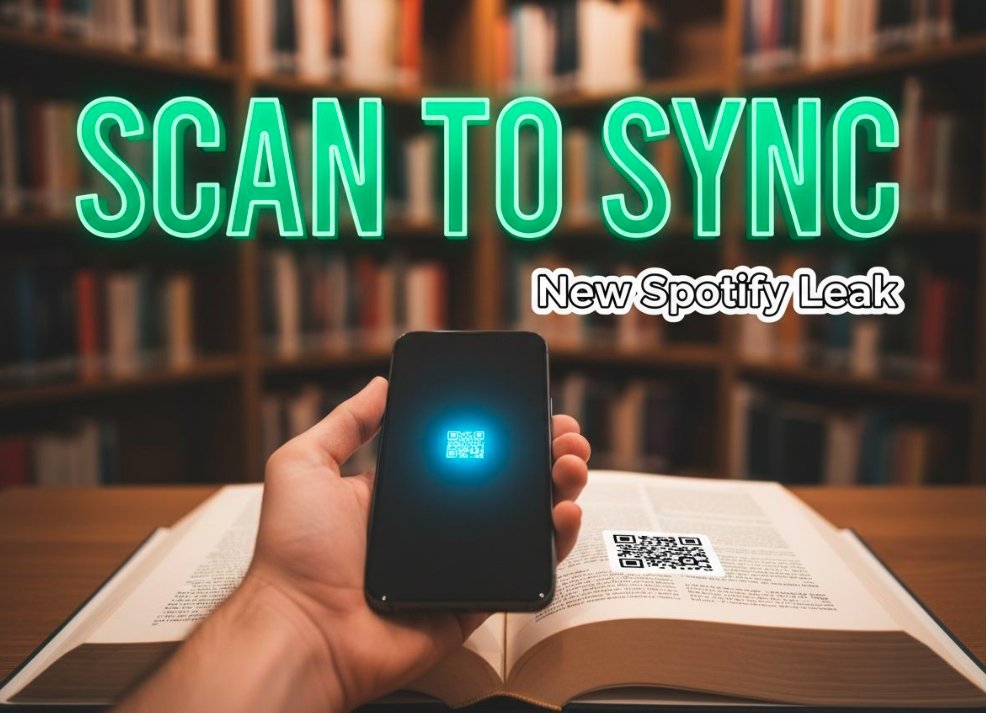
smartphone camera scanning open hardcover book page for spotify app
Solving The Hybrid Reading Problem
The audiobook market has exploded in popularity over the last five years. However, the industry has struggled to connect the different formats seamlessly. Amazon has a feature called Whispersync for Voice. This tool syncs your progress between a Kindle e-book and an Audible audiobook. It is a powerful feature, but it forces you to stay entirely within the digital ecosystem.
If you prefer the smell of paper and the feel of a hardcover book, you have been left behind until now.
Spotify seems to be targeting this specific gap in the market. Millions of readers still prefer physical copies for their main reading sessions. They only turn to audio when they are busy with chores, driving, or walking the dog. By acknowledging the physical book, Spotify is validating the habits of traditional readers rather than trying to force them onto a screen.
The “Page Match” feature indicates that Spotify understands user behavior better than some competitors. They know that audiobooks are often a companion to physical reading rather than a total replacement.
How This Impacts The Battle With Audible
Spotify has been aggressive in its push to dominate the spoken word market. After spending big money to acquire podcast networks, they turned their sights on audiobooks. They recently added 15 hours of listening time into their Premium subscription for many users. This move was a direct challenge to Audible, the long-time king of the sector.
We can look at how the two giants compare with this potential new update:
| Feature | Spotify (With Page Match) | Amazon / Audible |
|---|---|---|
| Sync Method | Camera Scan & Digital | Digital Only (Whispersync) |
| Formats Supported | Audio, Physical, E-book | Audio, Kindle E-book |
| User Effort | Low (Point and Shoot) | Zero (Automatic) |
| Subscription Model | Monthly Allowance (Time) | Credit System (Books) |
This table shows that while Amazon offers seamless automatic syncing, it requires you to buy the digital e-book. Spotify could allow you to borrow a book from the library or buy a used paperback and still sync it with your audio stream. That level of flexibility is a massive selling point for budget-conscious readers.
Premium Limitations And Future Rollout
While the excitement for this feature is high, we must look at the reality of its implementation. The discovered code does not guarantee a release date. Companies often test features that never make it to the public version of the app. However, the complexity of this code suggests it is more than just a brainstorm.
It is highly likely that Page Match will be locked behind a paywall.
Spotify has been looking for ways to add value to its Premium tiers as subscription prices rise across the United States and Europe. Gating this advanced AI tool behind the Premium subscription makes business sense. It would encourage free users to upgrade if they want the convenience of seamless syncing.
There are also questions about accuracy. OCR technology is fast, but it can struggle with different fonts, lighting conditions, or page layouts. Spotify will need to ensure the scanning process is nearly instant. If it takes ten seconds to scan a page and find the audio spot, users might just do it manually instead.
The catalog will also play a role. Spotify needs precise text-mapping data for every book. This might mean the feature only works on major bestsellers at launch. Niche titles or older books might not have the necessary metadata to support scanning right away.
Despite these hurdles, the concept represents a significant leap forward. It blends the old world of print with the modern convenience of streaming. If Spotify pulls this off, they will have a unique feature that even Amazon cannot currently match.