Wildfires in America are burning hotter and faster than ever before. A group of innovative students in California has developed a groundbreaking solution to stop these blazes before they spread. Their new system uses artificial intelligence and heavy-lift drones to detect and suppress fires within minutes. This technology offers a glimmer of hope as the country faces another dangerous fire season.
Innovative Student Tech Targets Rapid Fire Suppression
The fight against wildfires has historically been a battle against time. Students from Valley Christian Schools have partnered with industry experts to change this dynamic completely. They have created a system that removes the delay between spotting smoke and dropping water. This project is not just a science fair experiment. It is a sophisticated operation led by Ryan Honary. He is the young founder of Sensory AI.
The core of this technology relies on speed. Traditional firefighting methods often face delays due to rough terrain or lack of roads. This student-built system aims to put water on the fire while it is still small enough to manage. The team is working with Kaizen Aerospace to use massive drones for this task. These are not small photography gadgets.
These drones are industrial machines built for heavy lifting. The specific model used in this project measures an impressive 13 feet across. It is capable of carrying a payload of up to 1,000 pounds. This capacity allows the drone to carry a significant amount of water or fire retardant directly to the source of the heat.
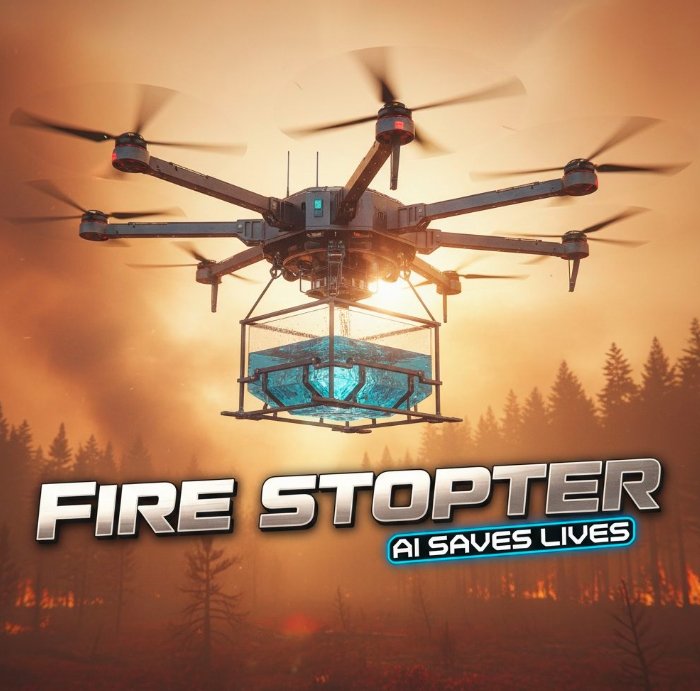
13 foot heavy lift firefighting drone carrying water payload
How the AI Detection System Stops Flames Early
The hardware is impressive, but the software is what makes this system revolutionary. The process begins long before the drone takes flight. A network of sensor towers acts as the eyes of the operation. These towers use artificial intelligence to scan the landscape constantly. They look for specific signatures that indicate a fire is starting.
Ryan Honary explains that the system detects three main things. It looks for smoke, heat plumes, and actual flames. Once the tower spots these signs, it does not just sound an alarm. It instantly calculates the precise location coordinates. This data is beamed directly to the drone.
Here is how the rapid response system functions:
- Detection: Ground towers spot smoke or heat signatures using AI sensors.
- Verification: The system confirms the fire signature to avoid false alarms.
- Dispatch: Coordinates are sent instantly to the standby drone.
- Action: The drone flies autonomously to the site and drops its payload.
This automation creates a seamless chain of events. Daniel Kim is the Vice President of Valley Christian Schools. He notes that the drone adjusts its path based on the live data. It arrives at the coordinates and releases its extinguishing agent immediately. This capability is vital for stopping a small spark from becoming a raging inferno.
Devastating Statistics Drive Urgency for New Solutions
The need for this technology has never been more urgent. The United States has suffered through horrific fire seasons recently. The statistics paint a grim picture of the escalating threat. In 2023 alone, the country saw 56,580 wildfires. That number jumped to 64,897 in 2024.
Recent Fire Impact Data:
| Year | Number of Wildfires | Notable Impact |
|---|---|---|
| 2023 | 56,580 | Widespread damage across multiple states. |
| 2024 | 64,897 | Significant increase in frequency. |
| 2025 | Major Regional Fires | Eaton and Palisades fires destroyed 37,000 acres. |
Residents in Los Angeles are still recovering from the events of January 2025. The Eaton and Palisades fires burned for weeks. They destroyed approximately 45 square miles of precious land. These disasters show how nature can overwhelm human resources.
Ginger Zee of ABC News highlights the logistical struggle. She points out that most fires start in places that are hard to reach. Fire trucks cannot drive up steep mountains without roads. A drone can fly over these obstacles and arrive in seconds rather than hours. This speed is the difference between a controlled incident and a catastrophe.
Expert Collaboration and the Road to XPrize 2026
The students are not working in a vacuum. They have the support of seasoned professionals who understand the stakes. Kevin Fetterman is a retired Division Chief for the Orange County Fire Authority. He sees these drones as a partner to human firefighters.
He envisions a future where drones launch at the same time as fire engines. The drones would arrive first to hold the fire in check. This buys valuable time for the helicopters, tankers, and ground crews to arrive. It is a strategy of minimization and containment.
This ambitious project is currently competing on a global stage. The team is a contender in a prestigious XPrize contest. The competition offers $3.5 million to teams that can develop new ways to tackle wildfires. The finals for this contest are scheduled for June 2026.
Winning the prize would be a major achievement. However, the real victory lies in the potential to save lives and property. This collaboration between bright young minds and veteran experts proves that technology can be a force for good. It offers a practical solution to one of the most destructive forces on the planet.
The battle against wildfires requires every tool we have. This student-led initiative represents a bold step forward in protecting our communities. It combines the raw power of heavy-lift drones with the precision of artificial intelligence. We can only hope that these innovations are deployed widely before the next major fire season begins.
What do you think about using AI drones to fight fires? Do you trust technology to handle such dangerous tasks? Let us know your thoughts in the comments below. If you want to support these students, share this story using #WildfireTech on social media.
