Millions of rail passengers across Britain secured a major victory today. The government officially confirmed that regulated rail fares will not rise next year. This marks the first total price freeze for commuters in over thirty years. It aims to protect household finances during uncertain economic times and encourage workers back to city centers.
Officials stated the freeze applies to almost half of all tickets sold nationwide. This includes annual season tickets used by commuters and many off-peak return tickets used for leisure. The decision breaks the long tradition of hiking prices every year based on inflation figures. Passenger groups have called this a vital intervention for struggling families.
Details Behind the Policy Shift
Regulated fares make up about 45 percent of all fares bought by passengers. For decades, the government determined these price caps based on the Retail Prices Index (RPI) from the previous July. This method often led to steep annual increases that outpaced wage growth.
Ministers decided to decouple ticket prices from high inflation rates to assist working families directly.
The Department for Transport usually announces the new rates in the summer or autumn. The changes then take effect the following January or March. By cancelling the increase entirely for the upcoming cycle, the government is absorbing a significant financial hit to support the public.
This move comes after years of contentious debate regarding the cost of travel. Data shows that rail fares have risen faster than fuel costs for private cars over the last ten years. This disparity often discouraged people from choosing eco-friendly public transport options.
- Regulated Fares: Season tickets, anytime day tickets, some off-peak returns.
- Unregulated Fares: Advance tickets, first-class tickets (set by train companies).
Train operators set the unregulated fares. However, they typically follow the government’s lead on regulated prices to maintain a consistent pricing structure.
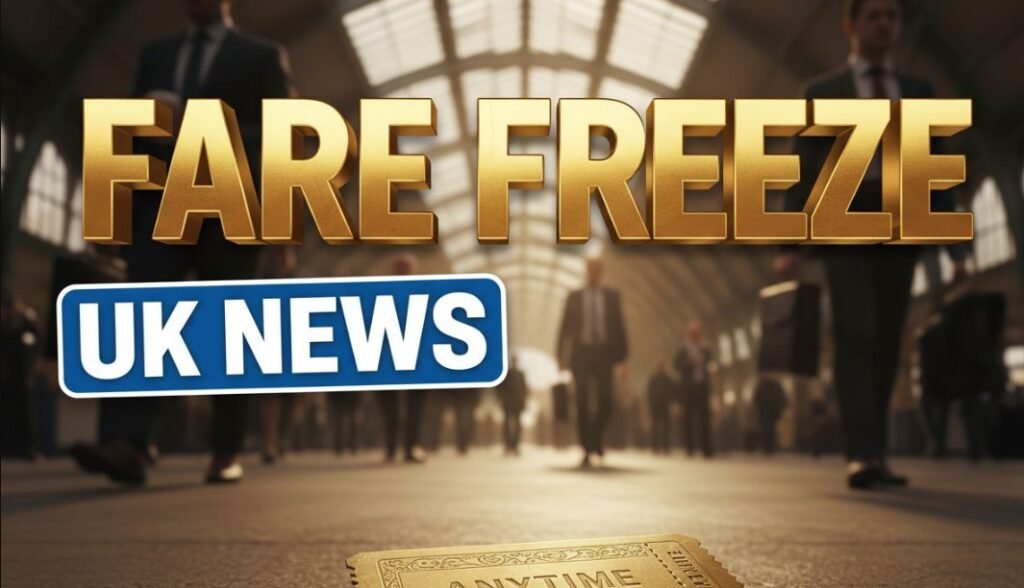
UK train station platform commuter crowd during rush hour
Financial Relief for Commuters
The freeze offers immediate clarity for workers planning their annual budgets. Commuters in the commuter belt around London and other major cities will see the biggest benefit. A typical season ticket can cost several thousand pounds a year. Even a small percentage increase would have added hundreds of pounds to that bill.
Cost of living pressures remain a top concern for voters. Energy bills and food prices have stabilized but remain high compared to historical averages. By locking fare prices, the government hopes to leave more disposable income in people’s pockets.
“This freeze is the most significant helping hand rail passengers have seen in a generation. It stops the annual dread of the January price hike.”
Many workers now split their time between home and the office. The cost of commuting is a major factor in deciding how often to visit the workplace. Stable fares could convince hybrid workers to travel by train more frequently.
We can look at the potential savings for average routes:
| Route Type | Average Annual Cost | Potential Rise (Avoided) | Total Saving |
|---|---|---|---|
| Short Commute | £1,500 | £75 (at 5%) | £75 |
| Medium Commute | £4,000 | £200 (at 5%) | £200 |
| Long Distance | £7,000 | £350 (at 5%) | £350 |
This table assumes a hypothetical 5 percent rise based on recent inflation trends. The zero percent change represents real cash saved for daily travelers.
Industry Reactions and Challenges
Passenger watchdog groups have welcomed the news with enthusiasm. Organizations like Transport Focus have long argued that passengers cannot pay more for services that are often delayed or cancelled. They view this as a necessary step to rebuild trust in the railway network.
However, the railway industry faces a complex financial reality. Passenger numbers have not fully recovered to pre-pandemic levels on many lines. The revenue gap created by freezing fares will likely need to be filled by taxpayer subsidies.
Analysts warn that keeping fares flat requires the government to cover rising operational costs for train companies.
Trade unions have also weighed in on the discussion. They generally support lower fares for working people. Yet they also worry that a lack of revenue could lead to budget cuts elsewhere.
Unions fear these cuts might affect:
- Staff wages and job security.
- Safety maintenance schedules.
- Investment in new rolling stock.
Rail operators argue that a steady stream of income is vital for upgrades. They will be looking to the Treasury for assurances that the network funding will remain secure despite the freeze on ticket income.
The Long Road for Public Transport
This decision highlights a shift in how the UK views its transport infrastructure. For years, the policy was to shift the burden of cost from the taxpayer to the passenger. This freeze suggests a swing back towards viewing rail as an essential public service that requires state support.
Environmental targets also play a huge role here. The UK has committed to stringent Net Zero goals. To achieve these, the country must reduce car usage and increase public transit ridership.
Price is the biggest lever the government can pull to change behavior. If trains are too expensive, people drive. If trains are affordable, people are more likely to leave their cars at home.
Critics point out that a one-year freeze is a short-term fix. They argue that the railway needs fundamental reform. This includes simpler ticketing systems and better reliability. A cheap ticket is of little use if the train does not arrive on time.
The coming year will serve as a test case. The government will monitor if lower fares actually lead to higher passenger numbers. If demand surges, the volume of tickets sold might offset the lower price per ticket. This would be the ideal outcome for both the Treasury and the traveler.
Millions will now travel to work knowing their commute will not cost a penny more next year. It is a rare moment of stability in a volatile economy.