Imagine a phone that cools down and boosts your internet speed at the exact same time. That is the futuristic promise behind a new patent from the smartphone giant Vivo. They have designed a system that merges cooling fans with antennas to solve two major problems at once. This wild innovation could end dropped calls and overheating phones forever.
The End of The Signal Death Grip
We have all been there during an important call or an intense gaming match. You grip your phone tightly and suddenly the signal bars drop. This is often called the “death grip.”
It happens because most phones use metal strips on the outside frame as antennas. Your hand blocks the signal path.
Vivo proposes moving the antenna inside the phone and attaching it directly to a cooling fan.
This smart placement means your hands will never touch the antenna again. The signal remains strong no matter how you hold the device.
But this system does more than just hide the antenna. It actively hunts for a better connection.
The patent suggests the fan can rotate the antennas to face the nearest cell tower. It works like a radar dish scanning the horizon. This is a massive upgrade over the static metal strips we use today.
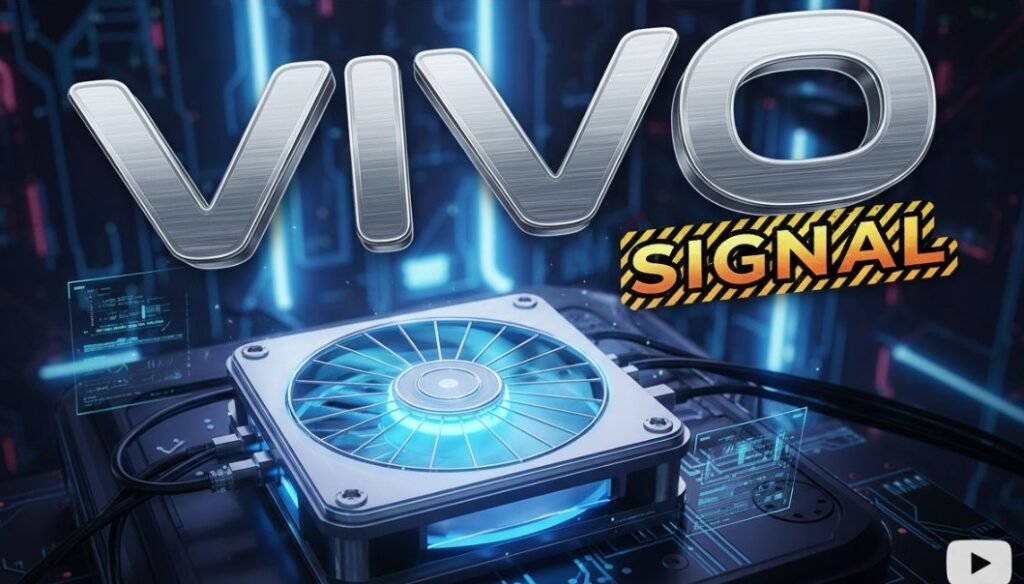
internal smartphone cooling fan with copper antenna blades
How The Magic Wireless Tech Works
You might be asking a very logical question right now. How do you connect wires to a fan blade that spins thousands of times a minute?
Wires would snap or tangle instantly in a normal setup. Vivo solved this with a clever engineering trick called “capacitive coupling.”
This technology allows the signal to jump across a tiny gap of air.
There is no physical contact between the spinning blade and the motherboard. It works almost like magic.
Here is why this wireless design is a game changer for durability:
- Zero Friction: No wires means nothing rubs together to wear out over time.
- High Speed: The fan can spin as fast as needed to cool the phone without breaking the connection.
- Consistent Data: The signal transfer remains stable even during high speed rotation.
This method ensures the phone stays reliable for years. It turns a mechanical weakness into a high tech strength.
Saving Space For Bigger Batteries
Smartphones are incredibly crowded on the inside. Every millimeter of space is a battleground for engineers.
They have to fit cameras, processors, batteries, and sensors into a tiny glass sandwich. Adding a dedicated cooling fan usually means sacrificing battery size.
Vivo fixes this by making one part do two different jobs.
When the fan doubles as an antenna, it removes the need for separate antenna hardware elsewhere. This frees up precious internal real estate.
Manufacturers can use this extra room for things we actually care about.
| Feature | Benefit for User |
|---|---|
| Larger Battery | Longer phone life on a single charge. |
| Better Sensors | Improved camera quality and zoom capabilities. |
| Slimmer Body | A phone that feels better in your pocket. |
This efficiency is crucial as phones get more powerful. We demand desktop level performance from these handheld devices.
A New Era For Gaming And Satellite Tech
This technology is not just for browsing social media. It is built for the heavy users.
Mobile gamers will likely see the biggest benefits first.
Games like “Genshin Impact” or “Call of Duty” push processors to their limits. This generates a massive amount of heat.
Thermal throttling usually kicks in to slow the phone down and save the chip. This ruins the gaming experience with lag.
Active cooling fans prevent this throttling. Now that same fan ensures your Wi-Fi or 5G connection does not lag either.
The patent also mentions using this for more than just cellular data.
The spinning blades can host antennas for GPS and even satellite communication.
This is huge for hikers or people in remote areas. A spinning satellite receiver could lock onto a signal much faster than a static one.
Drones could also use this tech to maintain control links over long distances. It creates a hub of connectivity that adapts to the environment.
Why This Matters Right Now
We are entering the age of Artificial Intelligence on phones. AI chips run very hot.
New devices will need active cooling to handle tasks like live translation and video editing. By 2026, many “Pro” model phones will likely have fans inside.
Vivo is thinking ahead of the curve. They know fans are coming back to phones.
They simply decided to make that fan the smartest part of the device.
This is a perfect example of problem solving. They took a clumsy mechanical necessity and turned it into a sleek communication tool.
While this is still just a patent, it shows us where the industry is heading.
We might soon stop looking at fans as just air movers. They are about to become the secret engine behind our digital lives.