The promise of self-driving cars has always been about advanced artificial intelligence. We are told that supercomputers and sensors are the only things navigating our streets. But a tense Senate hearing in Washington D.C. this week shattered that illusion. It turns out that the “robot” driving you around might actually be relying on a human worker sitting thousands of miles away in the Philippines.
Senators grilled executives from Waymo and Tesla in early February regarding safety and national security. The hearing quickly turned hostile. Lawmakers peeled back the layers of high-tech marketing to reveal a complex web of overseas labor and Chinese manufacturing. The revelation has sparked a fierce debate about what it actually means to be “autonomous” in 2026.
The Human Hands Behind the Wheel
We often imagine Waymo vehicles as independent thinkers. The reality is far more dependent on human intervention than the company previously advertised. Dr. Mauricio Peña, Waymo’s Chief Safety Officer, admitted under oath that the company uses teams in the Philippines to guide vehicles when they get confused. This admission stunned the room.
These remote workers do not steer the car with a joystick. Instead, they provide high-level guidance. When the software encounters a road closure or an erratic pedestrian, it freezes and asks for help. The remote agent then draws a path or selects a lane. The car executes the move. Senator Ed Markey of Massachusetts argued that relying on support staff across the Pacific Ocean introduces dangerous delays.
This system is known as “human-in-the-loop” assistance. It is a standard industry secret that few companies talk about openly. The delay between a car facing a threat and a human in Manila seeing the data feed could be the difference between a safe stop and a tragedy. A recent massive power outage in San Francisco left dozens of robotaxis stranded. This proved just how dependent these “smart” cars are on a constant internet connection to their human handlers.
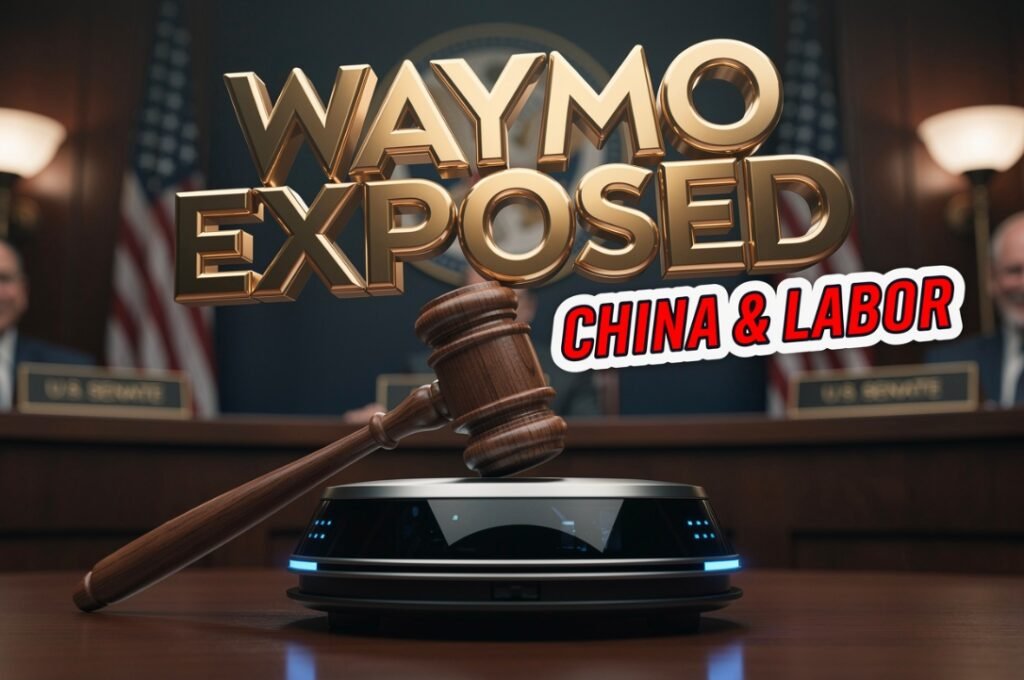
Waymo zeekr robotaxi senate hearing remote operator philippines
Key Revelations on Remote Operations
- Location: Critical support teams are based in the Philippines.
- Function: Agents provide path guidance, not direct steering.
- Risk: Internet outages can leave cars paralyzed in traffic.
- Response: A US-based team handles actual crash emergencies.
Tragic Incidents Spark Emotional Outrage
The hearing was not just about technical specifications. It was about the real-world impact of beta-testing technology on public streets. The mood in the hearing room shifted noticeably when the topic of safety incidents arose. Waymo has faced a storm of bad press recently following several heartbreaking accidents involving community animals and risky driving behavior.
Senators brought up the death of “Kit Kat,” a beloved community cat struck by a Waymo vehicle in October. Just weeks later, another robotaxi was involved in a fatal collision with a dog. These incidents have painted a picture of a system that struggles to predict the movement of small animals. Dr. Peña faced tough questions about why a trillion-dollar technology company cannot detect a cat in the road.
The danger extends beyond pets. The National Highway Traffic Safety Administration is currently investigating reports of Waymo vehicles passing stopped school buses. This is a major violation of traffic laws that puts children at extreme risk. Senators expressed disbelief that a computer program could miss the flashing red lights of a school bus. These failures suggest that the software still lacks the basic contextual awareness that human drivers possess naturally.
Chinese Hardware in American Streets
The scrutiny on Waymo went beyond software and safety. It landed squarely on the hardware itself. The hearing took place against the backdrop of the “Second Trump Administration,” which has maintained a hardline stance against Chinese technology. This political climate made Waymo’s manufacturing choices a primary target for Senator Ted Cruz and his colleagues.
Waymo is currently partnering with Geely, a massive Chinese automaker. They are working together to build a custom robotaxi under the Zeekr brand. This vehicle is designed specifically for ride-hailing. It lacks a steering wheel and features a spacious cabin. Waymo argues the car is designed in Sweden and the sensitive AI hardware is installed in the United States.
Lawmakers were not convinced by this distinction. Senator Bernie Moreno of Ohio questioned the wisdom of flooding American streets with Chinese-made electric vehicles. The economic reality is undeniable. Chinese EVs are significantly cheaper to produce than American equivalents. This allows Waymo to scale its fleet rapidly. However, critics argue this undercuts the domestic auto industry and poses potential data privacy risks.
| Feature | American Made EV | Chinese Made Zeekr (Waymo) |
|---|---|---|
| Cost | High production cost | Very low production cost |
| Scale | Slow to manufacture | Rapid mass production |
| Regulation | High safety/labor standards | Subject to tariffs and bans |
| Politics | Politically safe | National security concern |
The Battle for the Future of Transport
The hearing concluded without any immediate new laws passed. Yet the message was clear. The “Wild West” era of self-driving car testing is coming to an end. Politicians are no longer blinded by the shiny promise of Big Tech. They are looking at the data. They are looking at the supply chain. And they are looking at the safety record.
Waymo now finds itself in a difficult position. It must prove its cars are safe enough to share the road with our children and pets. It must also navigate a hostile political environment that views its manufacturing partners as adversaries. The dream of a fully autonomous future is still alive, but the road to get there just got much bumpier.
We are witnessing a clash between economic efficiency and national interest. Waymo wants to provide cheap rides using affordable hardware and global labor. The Senate wants to ensure American safety and protect domestic jobs. How this conflict resolves will determine who truly owns the roads of the future.