A quiet winter stroll along the Assateague Island National Seashore turned into a high stakes bomb squad operation just days before the New Year. Park rangers and military explosives experts raced to secure two vintage “Super Bazooka” rockets that washed ashore from the World War II era. One munition was lying exposed on the sand while the other had already been unknowingly carried into a family home nearby.
Rockets Discovered on Popular Beach
The drama began early in the morning on a stretch of coast known for its wild horses and pristine dunes. National Park Service staff spotted a rusted metal object protruding from the sand shortly after 8:30 a.m. and immediately recognized it as potential ordnance. They cordoned off the area and alerted local authorities to the danger lurking near the tide line.
The situation escalated quickly when investigators realized a second device was missing from the beach.
Reports indicated that a beachgoer had picked up a similar object earlier that day and transported it to a residence in Ocean Pines. This triggered an urgent response from the Worcester County Fire Marshal and the Ocean Pines Police Department. Officers rushed to the home on Greenwood Lane to intercept the hazardous souvenir before it could cause any harm to the residents or neighbors.
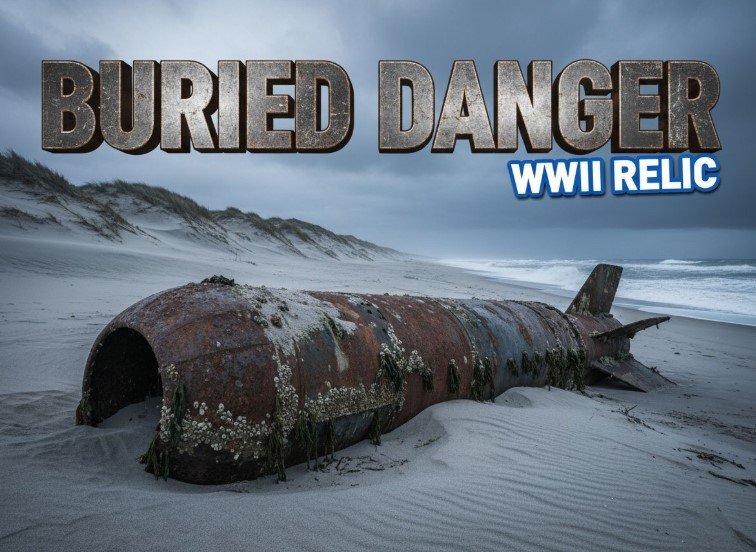
rusted unexploded military ordnance on sandy beach coast
Bomb Squad Secures Dangerous Explosives
Local authorities called in the heavy hitters to handle the volatile situation. The explosive ordnance disposal team from the 436th Civil Engineer Squadron at Dover Air Force Base arrived to assess the devices. These specialists are trained to handle everything from modern improvised devices to unstable chemical weapons from decades past.
The technical analysis revealed interesting details about the munitions:
- Model: M29A1 Practice Rockets
- Launcher: M20 “Super Bazooka”
- Origin: Korean War era design utilized in late WWII training
- Caliber: 3.5 inches
- Status: Unexploded and potentially unstable
Although these were designated as practice rounds, officials stressed that they were far from harmless toys.
The propellant inside rocket motors can degrade over eighty years of exposure to salt water and elements. This chemical breakdown often makes the device highly sensitive to friction or shock. The Air Force team successfully rendered both rockets safe without any injuries or property damage.
Island Used for Military Training
These discoveries shine a light on the hidden military history of the Maryland and Virginia coastline. Assateague Island was not always the peaceful sanctuary for wildlife and campers that it is today. The United States Navy and Army Air Forces utilized this remote barrier island as a live bombing and gunnery range during the height of World War II.
Pilots practiced strafing runs and ground troops drilled with heavy weapons to prepare for combat in Europe and the Pacific.
“The barrier islands were ideal for target practice because they were uninhabited and offered clear sightlines for pilots and gunners,” said a local military historian.
Thousands of rockets, bombs and machine gun rounds were fired into the dunes between 1944 and 1947. While the military conducted cleanup operations after the war, it is impossible to find every single round buried deep in the shifting sands. Coastal erosion and powerful winter storms churn up the ocean floor and cut away at the dunes.
This natural process exposes forgotten layers of history. Items that have been buried for generations suddenly appear on the surface where tourists walk and children play.
Officials Warn Against Souvenir Hunting
The recovery of the rocket from the Ocean Pines home highlights a critical gap in public safety awareness. Bringing a piece of unexploded ordnance into a residential neighborhood poses a catastrophic risk to the entire community. Fire Marshal officials issued a stern warning to the public following the incident.
Follow these safety steps if you find a suspicious object:
- Recognize: Assume the item is live ordnance and do not touch it.
- Retreat: Carefully leave the area immediately without creating vibrations.
- Report: Call 911 and describe the location to authorities.
Many beachcombers mistake these deadly items for harmless scrap metal or crab trap weights.
The outer casing of these rockets often corrodes to match the color of the sand or looks like driftwood from a distance. However, the internal mechanisms can remain lethal even after spending nearly a century underwater. Moving the item can trigger the firing mechanism or ignite unstable explosives inside.
Ordnance Disposal Procedures Explained
When the Air Force EOD team arrives on a scene like this, they follow a strict protocol to ensure safety. They first use portable X-ray systems to look inside the rusted casing to determine the condition of the fuse and the main charge.
If the item is too dangerous to move, they will perform a “blow in place” operation.
This involves placing a small charge of C4 plastic explosive next to the item to detonate it safely on the beach. In this specific case, the experts determined they could safely neutralize the rockets without a massive explosion. They carefully transported the items to a disposal range where they could be destroyed in a controlled environment.
The M20 “Super Bazooka” launcher that fired these rockets was a significant upgrade over the smaller weapons used early in the war. It fired a larger 3.5 inch rocket capable of penetrating the thick armor of heavy tanks. Finding two of these specific practice rounds suggests a heavy weapons team was likely drilling on that specific section of the beach decades ago.
This incident serves as a stark reminder that the remnants of global conflict can surface in the most unexpected places. The swift action of the park rangers and the technical skill of the Air Force EOD team prevented what could have been a tragic start to the new year. As erosion continues to reshape the coast, it is likely that the sands of Assateague will yield more explosive secrets in the future.
We want to hear from you about this discovery. Have you ever found something strange or dangerous while walking on the beach? Share your stories in the comments below using the hashtag #AssateagueDiscovery to join the conversation with other readers.
