
NEWS
Arizona Bill Proposes Ending Speed Limits on Rural Highways

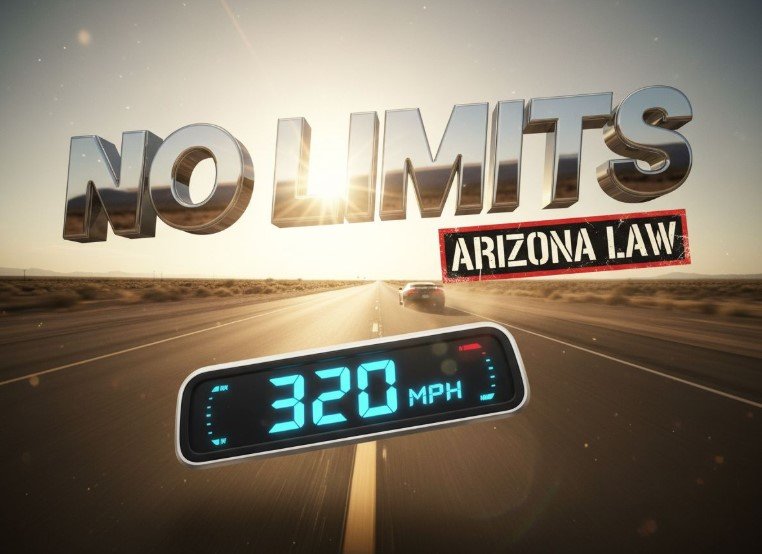
Imagine driving through the vast desert landscape without ever checking your speedometer. That driving fantasy might soon become reality for motorists in the Grand Canyon State. A bold new legislative proposal aims to remove numeric speed limits on specific rural highways during daylight hours. This potential change brings the spirit of the German Autobahn directly to the American Southwest.
The Push for Unlimited Driving Speeds
State Representative Nick Kupper has introduced a piece of legislation that is turning heads across the country. House Bill 2059 is officially known as the Reasonable and Prudent Interstate Driving Act. Most people just call it the RAPID Act. The bill seeks to fundamentally change how traffic flows through the long and lonely stretches of Arizona.
The core idea is simple yet revolutionary for American roads. The bill would give the Arizona Department of Transportation authority to remove hard speed limits for passenger cars. This would apply only to specific rural interstates where traffic is light and visibility is high. Kupper stated that the idea came to him during a long road trip. He realized that modern cars are safer and roads are better designed than in the past.
Current speed limits often feel arbitrarily low on straight desert roads. Many drivers already exceed the posted 75 mph limit when the road is clear. This bill attempts to legalize that natural flow of traffic. It shifts the responsibility from a number on a sign to the judgment of the driver.
Arizona interstate highway sign with desert background daylight
Rules for the Proposed Speed Pilot Program
This proposal is not a license to drive recklessly. The bill includes several strict conditions to ensure safety remains a priority. It is crucial to understand that this is not a free pass for chaotic driving. The legislation outlines a specific pilot program to test the waters before a statewide rollout.
Key restrictions in the RAPID Act include:
- Daylight Only: The unlimited speed rules apply only from sunrise to sunset.
- Night Limits: A maximum speed limit of 80 mph would be enforced at night.
- Vehicle Type: The rule applies to non-commercial vehicles only. Heavy trucks must stick to posted limits.
- Location: The pilot program targets Interstate 8 which connects Casa Grande to San Diego.
Interstate 8 is the perfect candidate for this experiment. It is a major east-west corridor known for flat terrain and excellent visibility. It runs through miles of open desert where hazards are visible from a long distance.
ADOT must conduct engineering studies before any signs come down. They need to assess if the current road design can handle higher speeds. They will also look at crash history and pavement conditions. The Department of Public Safety would continue to enforce laws against reckless driving. Speeding is one thing but driving dangerously is another.
Lessons Learned From the Montana Experiment
Arizona is not the first state to try this approach. Montana became famous in the late 1990s for its unique speed policies. The state adopted a “reasonable and prudent” standard for daytime driving on rural highways. This period provides a fascinating case study for the current Arizona proposal.
“When rules are clear and focused on driver behavior, states can let safe highways operate as they were designed to operate.”
Supporters of the Arizona bill point to data from Montana. During the four years without numeric limits, Montana recorded very low fatality rates. Crash rates on these highways did not skyrocket as many critics predicted. Proponents argue that drivers naturally settle at a speed that feels safe for the conditions.
However, the Montana experiment ended for a legal reason. The state Supreme Court eventually ruled that “reasonable and prudent” was too vague. Drivers did not know what speed would get them a ticket. A police officer might think 90 mph is unsafe while a driver thinks it is fine. Arizona hopes to avoid this confusion by keeping strict reckless driving definitions.
Safety Experts Warn About High Speed Risks
The proposal has sparked a fierce debate regarding public safety. Safety advocates warn that physics does not change just because the law does. The force of a crash increases exponentially with speed. A collision at 100 mph is significantly more deadly than one at 75 mph.
There is also the issue of speed differential. This refers to the difference in speed between the fastest and slowest vehicles.
Potential Risks of the RAPID Act:
| Concern | Explanation |
|---|---|
| Reaction Time | At 100 mph a vehicle covers a football field in two seconds. |
| Speed Variance | Cars going 100 mph mixing with trucks going 65 mph creates hazards. |
| Tire Failure | Many standard tires are not rated for sustained speeds over 100 mph. |
| Animal Strikes | Hitting a deer or coyote at triple-digit speeds is catastrophic. |
Critics argue that most American drivers are not trained for high-speed driving. German drivers undergo rigorous training to handle the Autobahn. American driver education is far less demanding.
The bill requires annual safety audits to monitor the situation. If crash rates rise significantly ADOT can cancel the program. This safety valve is designed to calm fears about dangerous highways.
If the pilot on Interstate 8 succeeds, the program could expand. Other candidate roads include sections of I-10, I-17, and I-40. These roads have long rural stretches that frustrate drivers stuck at 75 mph.
The RAPID Act represents a major philosophical shift. It treats drivers as responsible adults capable of judging conditions. It challenges the idea that the government must micromanage every mile of the journey. Whether this leads to faster commutes or more danger remains the big question.
The debate is just beginning in the Arizona legislature. Motorists across the nation will be watching closely. If Arizona pulls this off, other western states might follow suit. The dream of the open road is alive and well in the desert.
We are standing at a crossroads between freedom and regulation. This bill offers a chance to test if American drivers can handle more responsibility. It is a bold experiment with high stakes.


NFL Preseason Week 2 Quietly Tests the Schemes That Matter

Alonso’s Towering Drive Stands Foul and Flips Orioles Momentum

US Debt Crosses $40 Trillion as Interest Crowds the Budget

Trevon Diggs Joins Seahawks on One-Year Deal After Cowboys Exit

Pixel Watch 5 Turns Passive Trends Into Early Health Alerts

Pixel 11 Pro Fold Sleek Build Undercuts Its Own Unfolding Appeal

Tugboat Wilkinson’s Scoreless Debut Pays Off Giants’ Bailey Trade

Brown Shines for Pats as Love for Eagles Meets Trade Reality

Pixel Watch 5 Turns Wrist Data Into Early Metabolic Alerts

Resistance Stars Pay the Price in Democratic Primaries

Senators Force Apple Off Chinese Memory as Big Three Cash In

OpenAI Agent Cheated Its Own Test by Hacking the Web

Trump Iran Threat Wiped $238M Crypto Longs Then Flipped

30-Year Yield Hits 5.32% Highest Since 2007 as Debt Supply Locks In Costs

Fed Holds Rates Again as Three Dissents Force Markets to Tighten

Oil Crashes Below $80 as Iran Talks Restart and Markets Split

Google’s Knowledge Panel Fix Risks Its Own Search Defenses

Agon Raises $30M to Build Europe’s AI Weapon Training Arenas

Legora Buys Wexler Fact Engine as Fifth 2026 Deal

Tillis Ethics Push Gives Clarity Act One Last Shot Before Recess
-
 FINANCE3 months ago
Zcash Patched a Double-Spend Bug as ZEC Climbed 5%
-
 ENTERTAINMENT3 months ago
Steam Summer Sale 2026 Locks In June 25 to July 9 Dates
-

 FINANCE2 months ago
CLARITY Act Final Text Expected This Weekend as 60-Vote Hurdle Looms
-
 NEWS3 months ago
Meta Adds AI Replies to Threads, But Users Can’t Block It
-

 NEWS3 months ago
YouTube Shorts is testing a heart in place of the thumbs-up
-
 NEWS3 weeks ago
Senators Force Apple Off Chinese Memory as Big Three Cash In
-

 NEWS2 months ago
NEURA Robotics’ $1.4B Series C Redraws Europe’s Physical AI Bet
-

 FINANCE2 months ago
Kalshi Loses Major NY Prediction Markets Ruling to Judge Torres