
NEWS
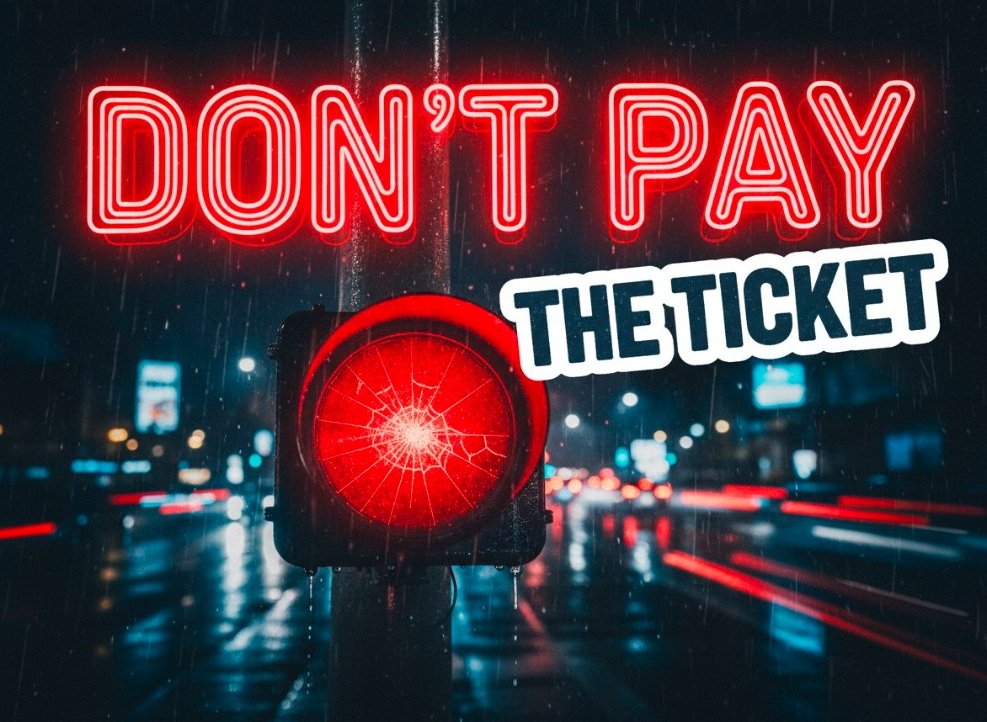
Why Experts Urge Californians to Fight Red Light Tickets

You see the blinding flash in your rearview mirror and your heart sinks. A few days later a thick envelope arrives in the mail demanding hundreds of dollars. Most drivers panic and pay the fine immediately to avoid trouble. But legal experts are now warning Californians to stop and think before they pay. A complex web of legal loopholes and new legislation suggests that fighting the ticket might be the smarter financial move.
The Legal Gray Area of Automated Enforcement
The rise of automated traffic enforcement has sparked a fierce debate across the Golden State. Cities claim these cameras save lives by reducing T-bone collisions at dangerous intersections. However, consumer advocates argue they are often just revenue generators that lack proper oversight. The core of the argument against paying immediately lies in how these violations are processed compared to traditional traffic stops.
Jay Beeber regarding the National Motorists Association argues that these systems lack the human discretion required for fair justice.
When an officer pulls you over, they verify your identity and hand you a citation personally. A camera cannot do this. It simply captures an image of a vehicle and a license plate. This creates a significant legal hurdle for the state. The prosecution must prove beyond a reasonable doubt that the registered owner was the one driving the vehicle at that exact moment.
Many tickets sent out are actually “snitch tickets” rather than legal “Notices to Appear.” These look like official citations but are often just fishing expeditions used by police departments. They ask the registered owner to identify the driver. Experts advise that if the document does not have a court date or a file number filed with the Superior Court, you are under no legal obligation to respond.
red light camera traffic signal lens close up blurred background
How Credit Reporting Rules Protect Drivers
Fear of a ruined credit score is the primary reason people pay these tickets without contest. This fear is now largely unfounded thanks to shifts in financial reporting regulations. A landmark settlement involving the three major credit reporting agencies changed the game for traffic debt.
Equifax, Experian, and TransUnion no longer report unpaid traffic tickets or debts arising from them.
This means that even if a red light camera ticket goes to a collection agency, it technically cannot hurt your credit score. This removes the biggest lever the state has to force payment. In Los Angeles County specifically, the Superior Court does not report unpaid red light camera tickets to the DMV.
Here is a breakdown of the risks involved in non-payment for LA County specifically:
| Consequence | Risk Level | Explanation |
|---|---|---|
| License Suspension | None | The court does not notify the DMV of a “failure to appear” for these specific camera tickets. |
| Credit Score Drop | None | Credit bureaus are prohibited from listing debts from traffic citations. |
| Fines Increasing | High | The court can add a civil assessment of $300 or more if you ignore it. |
| Harassment | High | Collection agencies will call and send letters frequently. |
This unique situation creates a standoff. The court wants the money but lacks the teeth to take your license or ruin your credit in certain jurisdictions. This reality is why groups like Ticket Snipers suggest fighting the citation rather than folding immediately.
The Impact of The Safer Streets Act
The recently implemented Safer Streets Act has changed the landscape by allowing municipalities to treat these violations as civil offenses rather than criminal ones. This shift was intended to streamline the process. However, it also opened new avenues for defense.
The burden of proof still rests on the accuser.
Since these are now often civil matters, the standard of proof is lower than a criminal case. Yet the equipment itself is often the weak link. Cameras and sensors require rigorous maintenance logs and calibration records. If a municipality cannot produce up to date maintenance records for the specific device that ticketed you, the case can be dismissed entirely.
Jorian Goes of Ticket Snipers notes that electronic violations lack a human witness. A police officer can testify to what they saw. A camera cannot testify. It cannot explain if the sun was in your eyes or if you crossed the limit line to avoid an accident. An employee of the camera company usually reviews the footage. They are not sworn law enforcement officers. This disconnect provides a strong angle for legal defense teams to exploit in court.
Steps to Take Before You Open Your Wallet
Experts agree that ignoring a ticket entirely carries risks outside of Los Angeles County. However, blind payment is never the best first step. You have options that can save you money and keep points off your driving record.
Always request the photographic evidence immediately.
Review the photos and video carefully. Is the driver clearly visible? If the driver is wearing sunglasses or the sun visor is down, the identity might be obscured. If the court cannot positively identify the driver from the photo, they often cannot uphold the ticket against the registered owner.
Consider these strategic moves:
- Check the “Yellow Interval”: California law mandates specific yellow light timings based on speed limits. If the yellow light was too short by even a fraction of a second, the ticket is invalid.
- Trial by Written Declaration: This allows you to fight the ticket by mail. If the officer or camera clerk does not respond in writing, the case is dismissed.
- Verify the Location: Ensure the ticket was issued in a jurisdiction that actually enforces these fines with DMV holds.
The automated system relies on volume and compliance. They bank on drivers feeling guilty and paying up without asking questions. By pausing and examining the evidence, you force the system to prove its case.
Weighing the Moral and Financial Cost
The decision to pay or fight involves both ethical and financial considerations. Safety advocates insist that strict enforcement is necessary to stop dangerous driving. The Governor’s Highway Safety Association data shows a correlation between automated enforcement and reduced fatalities in intersection crashes.
However, the financial penalty for a red light ticket in California is among the highest in the nation.
A base fine of $100 quickly balloons to nearly $500 or more once state and county penalty assessments are added. For many working families, this is a devastating blow. This high cost is exactly why experts suggest utilizing every legal avenue available.
The system is designed to process payments efficiently. It is not necessarily designed to ensure perfect justice in every instance. When you receive a citation in the mail, you are entering a legal negotiation. You have the right to review the evidence. You have the right to face your accuser. And you have the right to ensure that the equipment used to accuse you was functioning correctly.
In the era of automated policing, being a passive citizen can be expensive. While running a red light is dangerous and illegal, paying a ticket for a violation that cannot be legally proven is a choice you do not have to make. Check your local laws, review the footage, and decide if the fight is worth your time.


Conor Oberst’s Trump Writer’s Block Exposes a Bigger Crisis

Siemens Wires Its Chip Software Into NVIDIA’s Quantum Agents

Pixel 11 Price Hikes Reveal Memory Chipmakers’ Record Profits

Charles Schwab Backs the CLARITY Act as Odds Collapse

Nodes Upgrading to XRP Ledger’s xrpld 3.2.0 Fall Out of Sync

Trump Halts Iran Strikes as Bitcoin Stays Stuck Near $64K

ChatGPT’s Health Push Repeats a Bet That Killed Two Rivals

Crypto Rallies on Iran Truce While Fed Hike Odds Triple

Samsung’s New Lockout Rule Targets Thieves and Police Forensic Tools

Gemini Daily Brief Tests Custom Prompts, a Year Behind Samsung

CLARITY Act Final Text Expected This Weekend as 60-Vote Hurdle Looms

Kalshi Loses Major NY Prediction Markets Ruling to Judge Torres

Fed Minutes Cite AI Demand as Inflation Risk, Put a 2026 Hike Back on the Map

Marker AI Writing Startup Lands $13M Seed Led by Index Ventures

Dota 2 Esports World Cup 2026: Spirit Defends $2M Title In Paris

Meta’s Muse Spark 1.1 Beats Rivals on Price, Trails on Coding

CS2 Premier Season 5 Lands With Cache and a C4 Damage Rework

Trump Calls Iran ‘Islamic Republic of Japan’ as Ceasefire Ends

ARC Intelligence Closes €4M Seed Round in Roughly a Week

Finto Picks Munich Over Silicon Valley After YC, Raises $3.4M
-
 FINANCE2 months ago
Zcash Patched a Double-Spend Bug as ZEC Climbed 5%
-
 ENTERTAINMENT2 months ago
Steam Summer Sale 2026 Locks In June 25 to July 9 Dates
-
 NEWS3 months ago
Meta Adds AI Replies to Threads, But Users Can’t Block It
-
 FINANCE3 weeks ago
CLARITY Act Final Text Expected This Weekend as 60-Vote Hurdle Looms
-
 ENTERTAINMENT2 months ago
‘Widow’s Bay’ Review: Apple TV’s Sleeper Horror-Comedy Earns Its Fog
-
 NEWS7 months ago
FolderFresh Review: This Free Tool Automates Windows File Organizing
-
 NEWS4 months ago
U.S. Navy Deploys Solar-Powered Lightfish Drone to Patrol Oceans
-
 FINANCE3 weeks ago
Kalshi Loses Major NY Prediction Markets Ruling to Judge Torres