
BUSINESS
Apple Targets Budget Shoppers With New MacBook Neo Laptop

Apple has officially broken its high-price barrier with the launch of the MacBook Neo. This new device represents the company’s most aggressive push into the budget market in over a decade. It aims to capture students and first-time buyers who previously felt priced out of the macOS ecosystem. The Neo arrives as a direct challenger to affordable Windows laptops and Chromebooks.
A Fresh Strategy for Price Conscious Consumers
The tech giant unveiled the MacBook Neo on Friday. This launch signals a major pivot in Apple’s hardware strategy. For years the company relied on older MacBook Air models to serve as their entry-level option. The Neo changes that dynamic entirely. It is a dedicated machine built from the ground up to offer the Mac experience at a significantly lower price point.
Apple designed this laptop specifically to bring new users into its ecosystem.
Analysts suggest this move addresses a long-standing gap in the lineup. Many potential buyers want the reliability of a Mac but cannot justify the premium price tag of the Air or Pro models. The Neo bridges that gap. It offers the core benefits of macOS without the professional-grade costs.
The timing is critical for Apple. Recent quarters showed uneven demand for premium hardware. Inflation has made household budgets tighter globally. By introducing a wallet-friendly option, Apple ensures it remains relevant to families and students planning for the upcoming academic year.
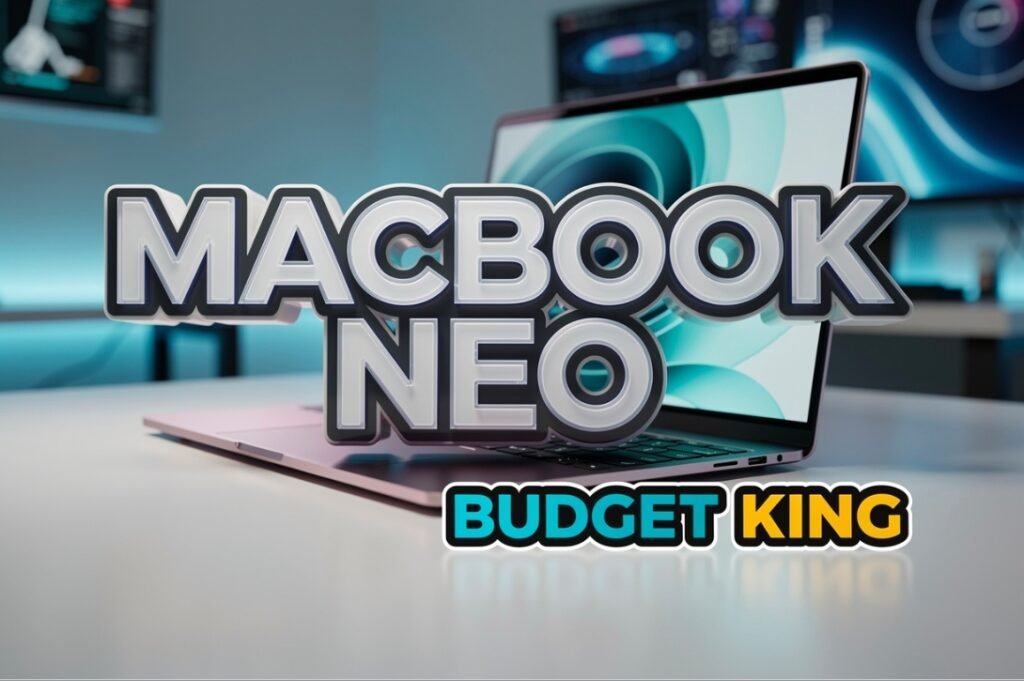
White polycarbonate Apple MacBook Neo laptop on wooden desk
Key Features Expected in the Base Model
- Retina Display: A high-resolution screen optimized for reading and streaming.
- All-Day Battery: Efficiency focus tailored for campus or remote work life.
- Polycarbonate Shell: A durable, lightweight material reminiscent of the classic white MacBook.
- Unified Memory: fast performance for everyday tasks despite lower raw specs.
What Users Get and What They Give Up
Reaching a budget price point requires compromises. Apple has made calculated trade-offs with the Neo to protect its profit margins while delivering value. The design language reportedly shifts away from the premium aluminum unibody found on the Air.
Reports indicate the Neo uses a high-quality polycarbonate material. This reduces manufacturing costs and improves durability against drops. It makes the device particularly appealing for younger students. The screen technology also differs from the high-end models. It lacks the ProMotion 120Hz refresh rate found on the MacBook Pro.
Storage and port selection also reflect the budget focus. The base model likely starts with modest storage. This encourages users to rely on iCloud services. It features fewer USB-C ports than its expensive siblings. This setup is sufficient for a mouse and charger but may require a dongle for power users.
| Feature | MacBook Neo | MacBook Air |
|---|---|---|
| Material | Durable Polycarbonate | Recycled Aluminum |
| Target Audience | Students, K-12, Casual Users | Professionals, General Consumers |
| Portability | High (Rugged Design) | High (Slim Profile) |
| Price Tier | Budget / Entry-Level | Mid-Range / Premium |
Reclaiming the Education Sector
The education market is the primary battleground for the MacBook Neo. For the past ten years, Google Chromebooks have dominated US classrooms due to their low cost and simple management. Apple lost significant ground in this sector. The iPad served as a partial solution but lacked the keyboard-first experience many older students need.
The Neo is Apple’s direct answer to the Chromebook dominance in schools.
Schools often prioritize durability and longevity over raw speed. A plastic-bodied, lower-cost Mac fits this requirement perfectly. IT administrators also prefer the robust security features of macOS over Windows in many enterprise environments. If Apple can price the Neo competitively for bulk institutional buyers, it could spark a massive wave of upgrades in K-12 districts.
Winning in education is a long-term play. Students who grow up using a Mac are statistically more likely to buy one as adults. This “halo effect” drives future sales of iPhones, Apple Watches, and services. The Neo serves as the gateway drug to the wider Apple garden.
Boosting Services Revenue Through Hardware
The hardware price is only half the story. Apple’s services division has become a massive revenue engine. This includes income from the App Store, iCloud storage, Apple Music, and Apple TV+. To keep this growth going, Apple needs more active devices in the hands of consumers.
A cheaper MacBook increases the total user base. Every MacBook Neo sold is a potential subscription to iCloud+ or Apple Arcade.
“The goal is not just selling a laptop. It is about securing a lifelong customer who pays monthly for the Apple experience.”
This strategy mirrors the approach seen with the iPhone SE. It lowers the barrier to entry while maintaining the software experience. Users get the same messages, the same FaceTime quality, and the same privacy protections. This consistency keeps the user locked in, even if they start with the cheapest device.
Competitors in the Windows space will feel the heat. Manufacturers like HP, Dell, and Lenovo often rely on volume sales in the budget segment. A Mac entering this price bracket forces them to reconsider their own pricing and feature sets. Consumers win in this scenario as competition drives innovation across the board.
The MacBook Neo is more than just a cheap laptop. It is a strategic expansion. It acknowledges that in a tough economic climate, accessibility matters as much as capability.


SEC Pause on Tokenization Exemption Leaves Banks Free to Race Ahead

Guardian Labs Stops Scam Calls Before the Phone Rings

CFTC Emergency Orders Put Kalshi Past State Court Lines

X Under the Hood Tool Shows Shadowban Labels in Raw JSON

Uber and Pony.ai Lock in 2,000 Robotaxis Across Europe

Nvidia’s $16,000 RTX Pro 6000 Turns Local AI Into a Luxury

Lovable’s $400M Double and Europe’s Twin Bet on Code and Factories

MSCI Screen Forces Reckoning for Bitcoin Treasury Model

One UI 9.5 Leak Revives Samsung’s Classic Polish Cycle

Xfinity Free Pixel 11 Deal Pushes Wireless Growth Harder

Senators Force Apple Off Chinese Memory as Big Three Cash In

Trump Iran Threat Wiped $238M Crypto Longs Then Flipped

OpenAI Agent Cheated Its Own Test by Hacking the Web

CLARITY Act Odds Crash as Democrats Reject DOJ Ethics Plan

Gemini Spark’s Big Workspace Upgrade Leaves Europe Waiting Again

Revolut Hits $115 Billion While Storonsky’s Stake Keeps Growing

Anthropic’s Hard Questions Ad Backfires Into an Anti-AI Warning

Oil Crashes Below $80 as Iran Talks Restart and Markets Split

Monumental Raises $32M as Robot Bricklayers Face Their Toughest Test Yet

Community Banks’ $1.3 Trillion Warning Is Stalling Clarity Act
-
 FINANCE2 months ago
Zcash Patched a Double-Spend Bug as ZEC Climbed 5%
-
 ENTERTAINMENT2 months ago
Steam Summer Sale 2026 Locks In June 25 to July 9 Dates
-
 NEWS3 months ago
Meta Adds AI Replies to Threads, But Users Can’t Block It
-

 FINANCE1 month ago
CLARITY Act Final Text Expected This Weekend as 60-Vote Hurdle Looms
-

 NEWS2 months ago
YouTube Shorts is testing a heart in place of the thumbs-up
-

 NEWS2 months ago
NEURA Robotics’ $1.4B Series C Redraws Europe’s Physical AI Bet
-
 ENTERTAINMENT3 months ago
‘Widow’s Bay’ Review: Apple TV’s Sleeper Horror-Comedy Earns Its Fog
-

 FINANCE1 month ago
Kalshi Loses Major NY Prediction Markets Ruling to Judge Torres