
BUSINESS
US Drone Makers Win as Trump Tariffs Hit DJI Buyers Hard
Tariffs up to 100% on sensitive drones boost U.S. stocks like Unusual Machines while raising costs for DJI enterprise users in agriculture and public safety.

President Donald Trump signed a proclamation on August 13, 2026, imposing tariffs of up to 100% on imported drones and components that the White House calls particularly sensitive for national security. Shares of several U.S. makers jumped the next day while operators who rely on Chinese platforms, led by DJI, face higher prices for replacements and upgrades.
The move builds on earlier FCC restrictions and a 2005 executive order on American drone dominance. Existing fleets stay legal to fly. New purchases get more expensive fast.
Together the layers turn a once open commercial market into a gated one. Price, origin and capability now determine who can buy what, and on what timeline.
How the New Tariff Tiers Break Down
The White House fact sheet sets a clear hierarchy. Drones with a maximum takeoff weight above 25 kilograms, or those carrying thermal imaging or docking stations, draw a 100% ad valorem tariff on larger drones and certain critical components. Smaller drones without those features face 25%.
Allied origin gets relief. Qualifying drones and components from the European Union, Japan, Liechtenstein, Republic of Korea, Switzerland and Taiwan face 15% if substantially all hardware, software and technology originates there or in the United States. United Kingdom product draws 10% under the same rule.
| Category | Tariff Rate | Key Trigger |
|---|---|---|
| Sensitive / large | 100% | Over 25 kg MTOW, thermal imaging, docking stations |
| Standard smaller | 25% | Under 25 kg, no listed sensitive features |
| Allied (EU, Japan, Korea, etc.) | 15% | Substantially originating hardware and software |
| United Kingdom | 10% | Same origin test |
Most tariffs take effect 21 days after signing, roughly September 3. Non-sensitive components and certain FCC Covered List exemptions get 180 days. The Commerce Secretary also gets authority to run an onshoring program for new U.S. manufacturing investments.
The tiered design is deliberate. It hits the heaviest and most sensor-rich airframes first, while giving allied factories a lasting price advantage over pure Chinese product. Component makers get a longer runway than finished-drone importers, which shapes who can retool before the higher rates lock in.
Domestic Stocks and Makers Move First
Markets treated the announcement as a direct handoff. Unusual Machines, a Florida-based component maker with Donald Trump Jr. on its advisory board since late 2024, saw shares climb more than 14% in early trading to about $31.13. Other names followed: Red Cat, AeroVironment and Kratos posted gains as traders priced in higher demand for non-Chinese supply.
- Unusual Machines: Q2 2026 revenue roughly $16.7 million, up about 687% year over year, with automated motor capacity expansion already underway.
- Red Cat / Teal: Q2 revenue about $20.2 million, up more than 500% year over year, focused on defense and government.
- Skydio: California firm with deep public-safety and utility customers, already shipping tens of thousands of units.
Trump Jr. received 200,000 shares for joining the Unusual Machines board and had bought additional shares and warrants earlier. The company positions itself around NDAA-compliant parts and American production. Crowd reaction on X zeroed in on the ticker pops the same morning, with lists of UMAC, RCAT and AVAV circulating as the clearest immediate winners.
Skydio had already announced a $3.5 billion U.S. manufacturing commitment over five years in April 2026. The plan targets more than 2,000 direct jobs, 3,000 supply-chain roles and over $1 billion directed to domestic suppliers under a program called SkyForge. That investment now sits inside a more favorable pricing environment for American airframes.
The equity reaction was less about tomorrow’s orders than about the multi-year shift the tariffs lock in. Defense-leaning names already riding government preference for domestic supply gained another structural tailwind. Component specialists gained too, because many U.S.-assembled airframes still need motors, batteries and controllers that the new duties now make more expensive to source from China.
Where the Cost Hits Land First
Enterprise and industrial users feel the squeeze hardest. DJI still holds the bulk of the commercial market in the United States, with estimates ranging from a clear majority to as high as 85% in some consumer and pro segments. Its Matrice series, Agras agricultural platforms and thermal-equipped models sit squarely in the higher tariff bands.
Agriculture stands out. Large spraying drones often exceed 25 kg once loaded. Farmers and service providers who bought Chinese equipment for crop work now face doubled acquisition costs on replacements plus higher bills for batteries, spreaders and docks. Public safety agencies that use thermal for search and rescue, firefighting and night operations face the same 100% wall on those payloads.
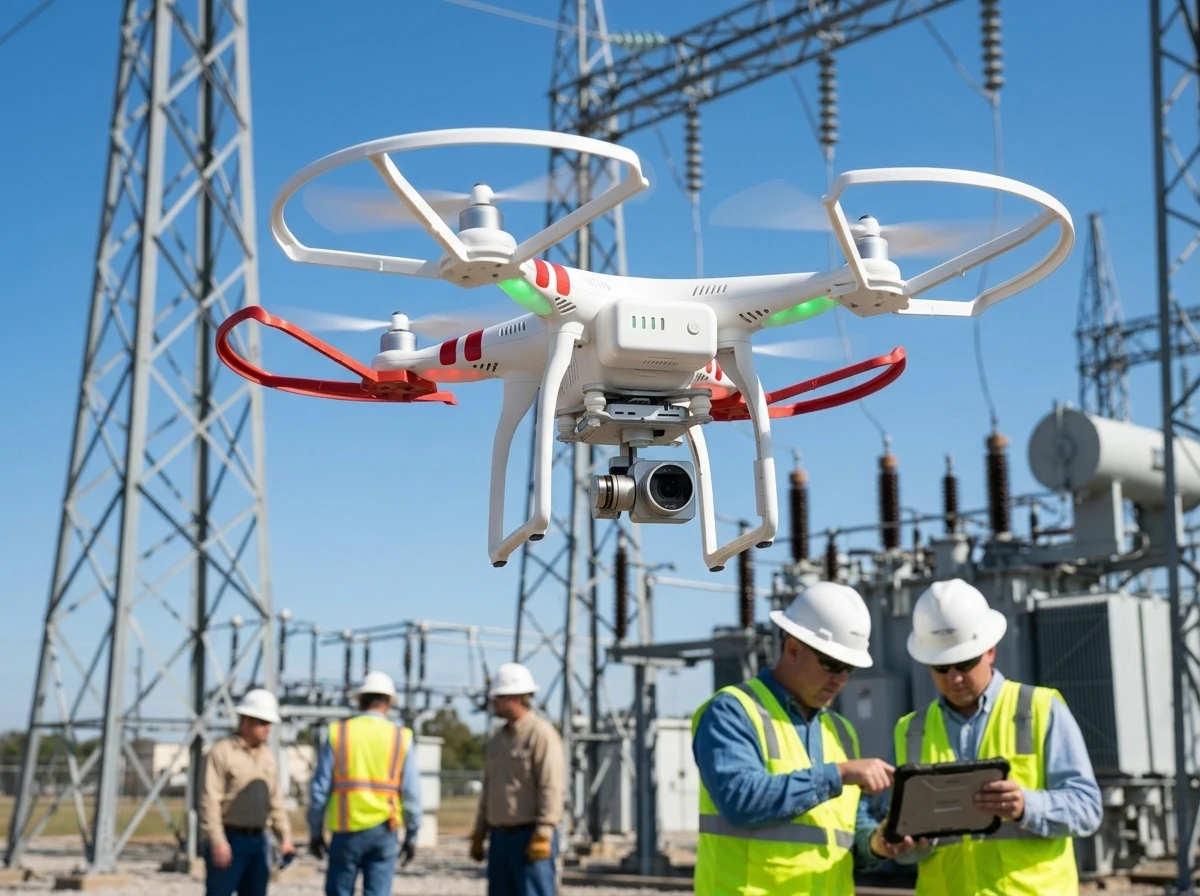
Infrastructure inspection, power-line work and mapping follow close behind. A DJI Mavic 3 Enterprise starts near $5,000 before tariffs. Comparable non-Chinese platforms frequently run two to three times that price for similar flight time, sensors and reliability. Existing drones remain usable. The replacement cycle just got more expensive.
- Agriculture: Loaded spray platforms often clear the 25 kg line and land in the 100% band, raising both airframe and dock costs.
- Public safety: Thermal payloads used in rescue, fire and night work trigger the top rate on new units.
- Utilities and mapping: Enterprise airframes face either the 25% standard rate or 100% when thermal or docking gear is included.
The Proclamation imposes a 100% ad valorem tariff on drones of a certain size or with certain capabilities that are particularly sensitive for national security purposes.
That language from the White House fact sheet leaves little ambiguity about the target categories.
Operators who refresh fleets on short cycles feel the change first. Those who can stretch airframe life buy time. Either way, the next purchase order carries a different math than the last one.
Earlier Restrictions Already Narrowed the Path
The tariffs arrive on top of a multi-year squeeze. The FCC Covered List has blocked new foreign models, especially Chinese ones, from radio authorization. Existing approved units stayed legal, but fresh releases stalled. In 2026 the commission also moved against rebadged and front-company sales.
- June 2025: Executive order on unleashing American drone dominance and related airspace security measures.
- December 2025 period: FCC effectively blocked new Chinese drone authorizations.
- July 2026: FCC fines on alleged DJI front companies and further action on rebranded units.
- August 13, 2026: Tariff proclamation signed.
Newer consumer and FPV models already faced U.S. availability limits on newer DJI models. The tariffs close the price loophole that let approved inventory and component kits keep flowing at Chinese cost structures.
Each earlier step limited what could enter. The proclamation changes what it costs when it does. Authorization barriers and price barriers now work as a pair rather than as separate tools.
Capability Gaps Still Shape the Buyer Math
U.S. and allied alternatives exist. Skydio X10, Freefly heavy-lift platforms, BRINC public-safety systems, Parrot Anafi USA and Japanese ACSL models all appear on buyer shortlists. Many meet NDAA or Blue UAS expectations that federal and many state buyers prefer.
Performance and price still diverge. DJI’s combination of flight time, obstacle avoidance, camera quality, ecosystem software and service network remains the benchmark most commercial pilots cite. American and European airframes often trail on one or more of those axes while carrying higher stickers even before tariffs. Operators who need thermal or heavy lift now choose between paying roughly double for the familiar Chinese airframe or switching platforms and retraining crews.
- Skydio X10 for autonomous public-safety and utility work
- Freefly platforms for heavy-lift commercial loads
- BRINC systems aimed at first-responder missions
- Parrot Anafi USA and ACSL models for allied-origin buyers
Component makers see a parallel opening. Many “U.S.-assembled” drones still import motors, ESCs, batteries, cameras and flight controllers. Tariffs on those parts push OEMs toward domestic or allied sources. That is exactly the lane U.S. drone component manufacturing firms occupy.
The buyer decision is no longer only about sticker price. Training time, spare-parts pipelines and software lock-in all rise in weight once the familiar Chinese option carries a 25% or 100% premium.
Onshoring Bets Meet Near-Term Friction
The proclamation explicitly authorizes Commerce to stand up support for companies that invest in new U.S. drone and component plants. Skydio’s multi-billion commitment and Unusual Machines’ capacity build-outs are the early examples. Red Cat and others already ride defense demand that prefers domestic supply.
Scale remains the open question. China still holds the dense supplier clusters, specialized tooling and volume labor that keep unit costs low. Building equivalent depth in the United States takes years, not weeks. In the interim, businesses absorb higher capital costs or delay fleet refresh. Public agencies stretch budgets or accept reduced capability. Some operators will stockpile approved inventory before the September window closes.
Allied suppliers in Europe, Japan, Korea and Taiwan gain a pricing wedge against pure Chinese product. That could accelerate a split into China-centric and U.S.-allied supply chains, already visible in dual-use and export-control moves on both sides.
For now the ledger is simple. Domestic makers and their investors booked an immediate win. The farms, utilities, film crews and first-responder units that fly the current market leaders book a higher bill.
The September Window Shapes Near-Term Buying
Core tariffs land about 21 days after the August 13 signing, roughly September 3. That short clock favors operators who can place orders on already-approved inventory before the higher rates attach. Non-sensitive components and certain Covered List exemptions stretch to 180 days, giving parts buyers and assemblers more room to rearrange sourcing.
The split timing matters. Finished-drone importers face the wall first. Component importers get half a year. OEMs that build in the United States but still pull motors, batteries or cameras from abroad can use the longer window to qualify allied or domestic substitutes before those lines also jump in cost.
Stockpiling is a temporary bridge, not a strategy. Batteries age, airframes wear and software support windows close. Agencies and farms that fill warehouses this month still confront the same replacement math when that inventory runs down. The proclamation’s design assumes that pressure will eventually pull demand toward U.S. and allied factories rather than endless pre-tariff hoarding.
Allied Factories Pick Up a Lasting Price Edge
The 15% allied rate and the 10% United Kingdom rate are not one-time discounts. They apply whenever origin rules are met, so European, Japanese, Korean, Taiwanese and UK suppliers keep a structural gap under Chinese product hit with 25% or 100%. That gap widens further when the Chinese airframe also carries thermal gear or clears the 25 kg line.
Federal and many state buyers already lean toward NDAA and Blue UAS lists. The tariff schedule now gives commercial buyers a pure price reason to look at the same shortlists. Parrot, ACSL and other allied names do not need to match every DJI feature overnight. They need to stay close enough that a 10% or 15% duty beats a 100% one after training and support are factored in.
Over time the market can sort into two tracks: a China-centric track that absorbs the full tariff load where no substitute exists, and a U.S.-allied track that grows under lower duties plus onshoring support from Commerce. The proclamation does not force that split by itself. It prices the split into every new purchase order.
Frequently Asked Questions
What exact tariff rates apply to different drone categories?
Drones over 25 kg maximum takeoff weight or equipped with thermal imaging or docking stations face 100%. Smaller drones without those features face 25%. Qualifying product from listed allies faces 15%, and United Kingdom product faces 10%, provided origin rules are met.
When do the new drone tariffs take effect?
Core tariffs begin 21 days after the August 13, 2026 signing. Non-sensitive components and certain Covered List exemptions delayed to 180 days give manufacturers a longer runway to adjust supply chains.
Do the tariffs apply to drones I already own and operate?
No. Existing aircraft remain legal to fly under prior rules. The duties hit new imports of finished drones and covered components, so the cost pressure appears on the next purchase or major upgrade.
Which countries receive lower tariff rates under the proclamation?
The European Union, Japan, Liechtenstein, Republic of Korea, Switzerland and Taiwan receive a 15% rate, and the United Kingdom receives 10%, when substantially all hardware, software and technology originates in those places or the United States.
What onshoring support does the order create?
The Secretary of Commerce is authorized to establish a program that helps companies making new investments in U.S. manufacturing of drones and drone components, pairing the tariff wall with direct incentives for domestic capacity.


SEC Pause on Tokenization Exemption Leaves Banks Free to Race Ahead

Guardian Labs Stops Scam Calls Before the Phone Rings

CFTC Emergency Orders Put Kalshi Past State Court Lines

X Under the Hood Tool Shows Shadowban Labels in Raw JSON

Uber and Pony.ai Lock in 2,000 Robotaxis Across Europe

Nvidia’s $16,000 RTX Pro 6000 Turns Local AI Into a Luxury

Lovable’s $400M Double and Europe’s Twin Bet on Code and Factories

MSCI Screen Forces Reckoning for Bitcoin Treasury Model

One UI 9.5 Leak Revives Samsung’s Classic Polish Cycle

Xfinity Free Pixel 11 Deal Pushes Wireless Growth Harder

Senators Force Apple Off Chinese Memory as Big Three Cash In

Trump Iran Threat Wiped $238M Crypto Longs Then Flipped

OpenAI Agent Cheated Its Own Test by Hacking the Web

CLARITY Act Odds Crash as Democrats Reject DOJ Ethics Plan

Gemini Spark’s Big Workspace Upgrade Leaves Europe Waiting Again

Revolut Hits $115 Billion While Storonsky’s Stake Keeps Growing

Anthropic’s Hard Questions Ad Backfires Into an Anti-AI Warning

Oil Crashes Below $80 as Iran Talks Restart and Markets Split

Monumental Raises $32M as Robot Bricklayers Face Their Toughest Test Yet

Duda’s New AI Tools Speed Up Agencies, but Risk Sameness
-
 FINANCE2 months ago
Zcash Patched a Double-Spend Bug as ZEC Climbed 5%
-
 ENTERTAINMENT2 months ago
Steam Summer Sale 2026 Locks In June 25 to July 9 Dates
-
 NEWS3 months ago
Meta Adds AI Replies to Threads, But Users Can’t Block It
-

 FINANCE1 month ago
CLARITY Act Final Text Expected This Weekend as 60-Vote Hurdle Looms
-

 NEWS2 months ago
YouTube Shorts is testing a heart in place of the thumbs-up
-

 NEWS2 months ago
NEURA Robotics’ $1.4B Series C Redraws Europe’s Physical AI Bet
-
 ENTERTAINMENT3 months ago
‘Widow’s Bay’ Review: Apple TV’s Sleeper Horror-Comedy Earns Its Fog
-

 FINANCE1 month ago
Kalshi Loses Major NY Prediction Markets Ruling to Judge Torres