
ENTERTAINMENT
Jeff Daniels Skips the Reagan Impression and Wins
Angel Studios’ The Brink of War opens with Jeff Daniels as a non-lookalike Reagan whose humor and resolve make the 1986 summit drama land for new audiences.

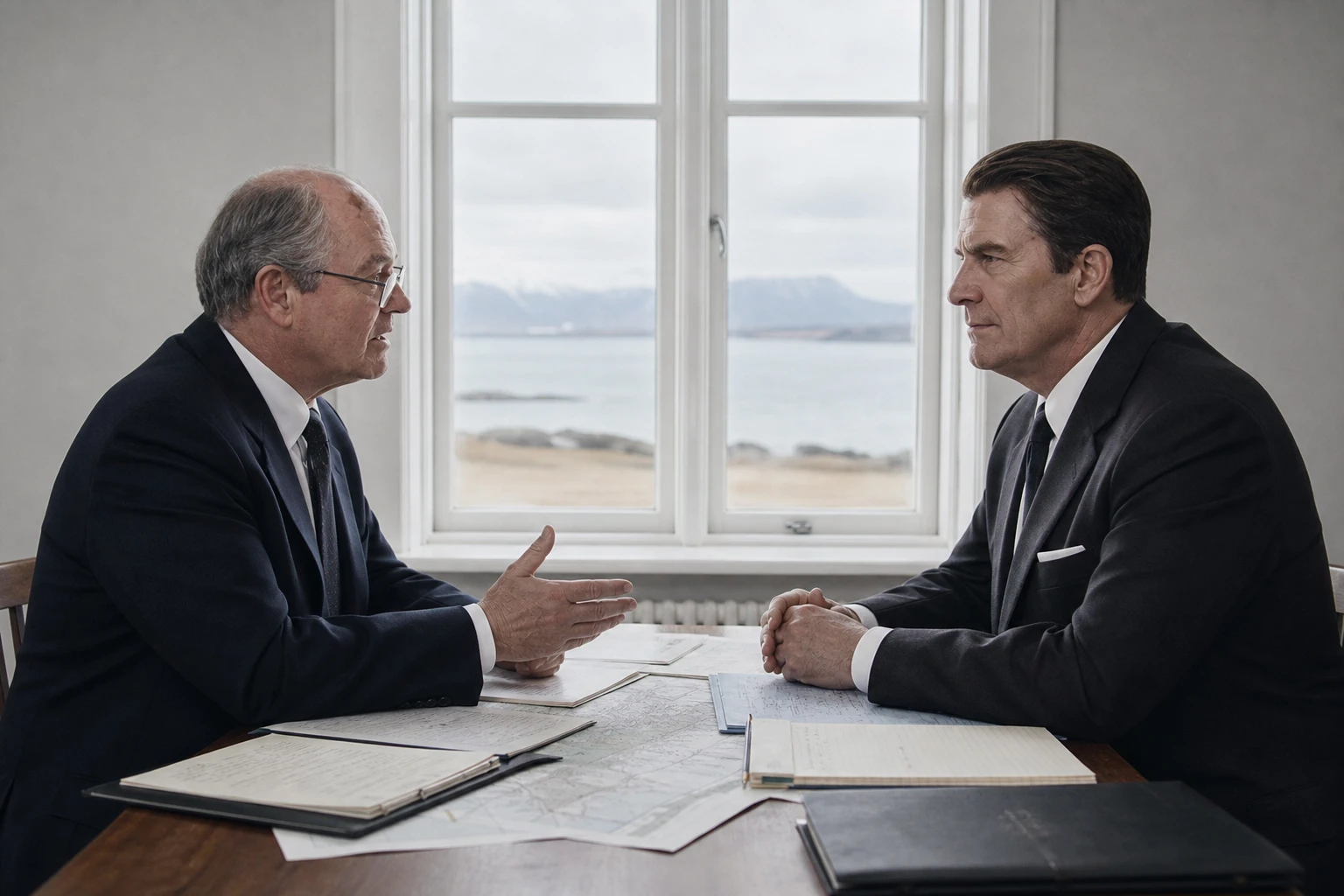
Jeff Daniels plays Ronald Reagan in The Brink of War without the voice, the hairline or the full impression, and the choice turns Angel Studios’ Reykjavik drama into something sharper than mimicry. The film opens in theaters August 14, 2026, running 1 hour 57 minutes and rated PG.
Writer-director Michael Russell Gunn’s feature debut sticks the two leaders in the real room where they nearly ended the nuclear age and lets Daniels lean on humor, psychology and stubborn resolve instead of tics. The approach favors character over costume. It asks whether the audience will accept a familiar face carrying unfamiliar weight.
That gamble shapes every scene that follows. The movie treats the summit as a pressure chamber rather than a pageant of famous lines. Humor and resolve become tools of statecraft inside one modest house.
Two Leaders, One Modest Room, World at Stake
The story opens on the crushing near-collapse of the October 1986 talks, then rewinds to the start. Reagan and Soviet General Secretary Mikhail Gorbachev (Jared Harris) trade steely graciousness while the Cold War hangs in the balance. Every word could push toward dismantling arsenals or disaster.
Gunn expands just enough: reporters covering the event, First Lady Nancy Reagan (Hope Davis) watching from afar, and the security details needling each other. The setting stays lean. Höfði House itself becomes a character, cold and practical.
The lean frame keeps the focus on the two men across the table. Side players enter only when they tighten the vise. Advisors press. History presses harder. The room never lets either leader forget the cost of a wrong turn.
- Runtime: 117 minutes
- Rating: PG for language, thematic elements and smoking
- Distributor: Angel Studios
- Guild recommended age: 13+
The official synopsis on the official Angel Studios film page frames it cleanly: pressure from advisors and history itself, with peace or destruction one conversation away. That framing matches the film’s stripped-down design. Spectacle stays outside. The argument stays inside.
Daniels Refuses the Full Gipper and It Works
The production’s smartest call was telling Daniels not to sound or look like Reagan. The liberal actor keeps his own presence. Hollywood In Toto’s review calls that the best decision, letting him focus on strength, commitment, humor and wisdom so the Reagan-esque qualities jump off the screen.
He isn’t a caricature or a man teetering on the edge of senility. In fact, taking 2024’s “Reagan” out of the equation, it’s the most positive portrayal of the world leader in any Hollywood production.
That line comes from the same Hollywood In Toto notice that gave the film 3.5 out of 5 stars and flagged it as family-friendly. Daniels’ stubbornness and folksy charm both help and hinder the mission. Harris matches him with blunt Soviet-era force and real humanity, even as a relatively new leader.
J.K. Simmons plays Secretary of State George Shultz as the voice of reason. The film is dedicated to him. Hope Davis’s Nancy chafes at being left behind while Raisa Gorbacheva (Branka Katić) works the press. Supporting turns include Aya Cash and Guy Burnet as journalists.
Some critics still want the illusion. The Hollywood Reporter’s Frank Scheck wrote that Daniels looks and sounds so much like himself that the buy-in is hard, even with mild hair and makeup and the occasional “Well…”. Others, including early audience notes, praise the pair as an exceptional onscreen duo who carry the weight without tics.
The split over mimicry versus presence becomes part of the film’s identity. Viewers who need the full impression may resist. Viewers who want the argument itself often lean in. Daniels’ refusal to vanish into the role keeps the drama human rather than waxen.
They Filmed Inside the Actual Summit House
Gunn spent years on research. He interviewed Shultz before the secretary’s 2021 death and worked from summit transcripts. Principal photography began October 15, 2024, in Reykjavík. The majority of scenes landed at Höfði, the real site, rented from the city for 6.3 million krónur.
Pete Souza, who photographed the original 1986 summit, handled on-set stills. Cinematographer Magdalena Górka captured the lean interiors and sumptuous local landscapes. Iceland’s production rebate helped. Filming wrapped by mid-November 2024. Over 100 supporting actors rounded out the ten main players.
The production calendar itself stayed tight and local. Research stretched across years. The shoot did not.
- Years of prep: Gunn draws on transcripts and his interview with Shultz before the secretary’s 2021 death.
- October 15, 2024: Principal photography begins in Reykjavík.
- Mid-November 2024: Filming wraps after weeks centered on Höfði House.
- August 14, 2026: The finished film reaches theaters.
Additional locations spread the camera beyond the summit rooms without breaking the Icelandic chill.
- Höfði House, rented for the core chambers
- The Blue Lagoon
- Skeggjastaðir
- Mosfellsdalur
- Reykjanes
| Role | Actor |
|---|---|
| Ronald Reagan | Jeff Daniels |
| Mikhail Gorbachev | Jared Harris |
| George Shultz | J.K. Simmons |
| Nancy Reagan | Hope Davis |
| Raisa Gorbacheva | Branka Katić |
Production companies were SK Global and 2521 Entertainment. The authentic location choice gives the talky chambers a grounded chill no soundstage could match. Souza’s stills link the new images to the 1986 record. Górka’s frames keep the exteriors wide and the interiors tight, so the house never loses its hold on the talks.
Critics Split on Talk and Tone
Rotten Tomatoes sits at 65 percent from 20 reviews. Metacritic lands mixed or average around 50 from a handful of notices. Praise clusters on the leads and the powderkeg tension. Complaints land on monotony, speechifying and overused catchphrases like “Trust but verify” (which actually has Russian roots) and “Peace through strength.”
| Outlet or Scoreboard | Mark |
|---|---|
| Rotten Tomatoes | 65 percent (20 reviews) |
| Metacritic | Mixed or average, around 50 |
| Hollywood In Toto | 3.5 out of 5 |
| Flickering Myth / MovieWeb | Three stars or 7/10 |
Scheck called it history come to only intermittent life and noted the dialogue sometimes feels like greatest-hits speechifying, including a “Tear down this wall” moment that risks eye-rolls. Flickering Myth and MovieWeb gave it solid three-star or 7/10 marks for the performances and weight even when the Cold War material itself feels dry. Hollywood In Toto welcomed the film’s willingness to let Reagan attack the inhumanity of Communism without overplaying it, a departure from more hesitant Hollywood takes.
On X, Atlantic writer Tom Nichols, a two-time Reagan voter, called the film too kind to the Gipper even while noting good moments. Other posts highlight the dialogue and the prejudice-free approach. Angel’s brand draws the usual skepticism about whitewashing, yet the cast cuts through for many early viewers.
The divide tracks a familiar line. Some want denser history. Some want less speechifying. Many still credit Daniels and Harris with carrying scenes that could have turned static. The scores stay clustered in the middle even when the tone of the notices swings hard.
What Happened in Reykjavik
The real summit ran October 11-12, 1986. Reagan and Gorbachev came closer to sweeping nuclear cuts than almost anyone expected. They explored 50 percent reductions and even the eventual elimination of nuclear weapons. The deal collapsed over Reagan’s Strategic Defense Initiative. Gorbachev wanted laboratory limits on SDI testing; Reagan refused.
- October 11-12, 1986: Leaders meet at Höfði House in Reykjavík.
- Near breakthrough: Agreement on deep cuts and a path toward abolition within reach.
- SDI standoff: Talks end without a signed deal.
- Aftermath: Progress feeds the 1987 Intermediate-Range Nuclear Forces Treaty.
Historians and participants later called the “failure” a turning point. The 1986 Reykjavik Summit history and detailed near-abolition details from Reykjavik show how close the two sides came and how the human element, exhaustion included, shaped the outcome. The film compresses and dramatizes, including English-language talk without translators for cinematic flow, but the core stakes stay intact.
The collapse did not erase the gains already sketched at the table. Deep cuts and a path toward abolition had moved from fantasy to draft language. When the SDI clash halted the signing, the momentum still carried forward into the next year’s treaty work. The movie holds on that razor edge: triumph almost in hand, then withdrawn.
Angel Studios Places Another Bet on Serious History
Angel distributes the picture. The studio has built an audience for faith-friendly and values-driven stories that still aim for theatrical reach. This one stays accessible for teens while refusing to dumb down the geopolitics. It sits alongside other Angel historical efforts, including the path that produced Angel’s Young Washington historical project.
Gunn, a former story editor on Aaron Sorkin’s The Newsroom, brings talk-heavy DNA. The risk is academic lecture. The payoff is two heavyweight actors making the fate of millions feel immediate inside one cold house. Viewers who never lived through 1986 get a clear sense of how personal resolve and ideology collided when the world sat on a knife edge.
Early reaction shows the performances landing even when the pacing and Angel pedigree divide the room. Daniels’ choice to stay himself may be the reason the strength and humor register at all. The PG rating and 13+ guild guidance keep the door open for younger viewers without sanding off the nuclear stakes. Angel’s bet is that serious talk can still fill seats when the faces across the table hold the frame.
The Near Deal Hinged on One Defense Program
The film’s tension tracks a single sticking point already plain in the historical record the movie draws from. Broad cuts were on the table. So was a longer path toward eliminating nuclear weapons. Laboratory limits on Strategic Defense Initiative testing were not. Gorbachev pressed for those limits. Reagan would not yield them.
That clash turns the final hours into a test of resolve rather than a scramble for new language. Each side had already moved further than outside observers expected. The remaining gap was narrow and absolute. Gunn’s chambers keep returning to that gap until the talks break.
Because the movie works from summit transcripts and from Gunn’s interview with Shultz, the standoff feels procedural instead of mythic. Advisors hover. Exhaustion mounts. The house stays cold. The audience watches two leaders discover how close peace can come without crossing the last inch.
The later 1987 Intermediate-Range Nuclear Forces Treaty grows out of the ground cleared in Reykjavik. The film treats the unsigned weekend as a beginning disguised as a failure. Viewers leave knowing the signatures came later, and knowing why they did not come on those October nights.
Performances Carry What the Script Spells Out
Talky historical dramas rise or fall on whether the actors make policy feel like character. Daniels and Harris get the assignment. One brings stubborn humor and folksy charm that both advance and stall the mission. The other answers with blunt force and an undercurrent of humanity still new to the world stage.
Simmons steadies them as Shultz, the voice of reason and the man to whom the film is dedicated. Davis and Katić sketch the parallel track of spouses kept at different distances from the table and the press. Cash and Burnet supply the reporters who translate closed rooms into public narrative.
When critics praise the film, they almost always begin with that ensemble weight. When they fault it, they point at monotony or greatest-hits phrasing, not at empty seats across the table. The powderkeg tension holds because the leads refuse to coast on costume.
Daniels’ decision to keep his own presence remains the hinge. Some viewers cannot forget the gap between face and legend. Others find the strength, commitment, humor and wisdom clearer once the caricature drops away. The movie stands on that trade.
Theaters have it now. The talks themselves almost changed everything. The movie makes you feel how close they came.


SEC Pause on Tokenization Exemption Leaves Banks Free to Race Ahead

Guardian Labs Stops Scam Calls Before the Phone Rings

CFTC Emergency Orders Put Kalshi Past State Court Lines

X Under the Hood Tool Shows Shadowban Labels in Raw JSON

Uber and Pony.ai Lock in 2,000 Robotaxis Across Europe

Nvidia’s $16,000 RTX Pro 6000 Turns Local AI Into a Luxury

Lovable’s $400M Double and Europe’s Twin Bet on Code and Factories

MSCI Screen Forces Reckoning for Bitcoin Treasury Model

One UI 9.5 Leak Revives Samsung’s Classic Polish Cycle

Xfinity Free Pixel 11 Deal Pushes Wireless Growth Harder

Senators Force Apple Off Chinese Memory as Big Three Cash In

Trump Iran Threat Wiped $238M Crypto Longs Then Flipped

OpenAI Agent Cheated Its Own Test by Hacking the Web

CLARITY Act Odds Crash as Democrats Reject DOJ Ethics Plan

Gemini Spark’s Big Workspace Upgrade Leaves Europe Waiting Again

Revolut Hits $115 Billion While Storonsky’s Stake Keeps Growing

Anthropic’s Hard Questions Ad Backfires Into an Anti-AI Warning

Oil Crashes Below $80 as Iran Talks Restart and Markets Split

Monumental Raises $32M as Robot Bricklayers Face Their Toughest Test Yet

Duda’s New AI Tools Speed Up Agencies, but Risk Sameness
-
 FINANCE2 months ago
Zcash Patched a Double-Spend Bug as ZEC Climbed 5%
-
 ENTERTAINMENT2 months ago
Steam Summer Sale 2026 Locks In June 25 to July 9 Dates
-
 NEWS3 months ago
Meta Adds AI Replies to Threads, But Users Can’t Block It
-

 FINANCE1 month ago
CLARITY Act Final Text Expected This Weekend as 60-Vote Hurdle Looms
-

 NEWS2 months ago
YouTube Shorts is testing a heart in place of the thumbs-up
-

 NEWS2 months ago
NEURA Robotics’ $1.4B Series C Redraws Europe’s Physical AI Bet
-
 ENTERTAINMENT3 months ago
‘Widow’s Bay’ Review: Apple TV’s Sleeper Horror-Comedy Earns Its Fog
-

 FINANCE1 month ago
Kalshi Loses Major NY Prediction Markets Ruling to Judge Torres