
NEWS
Pixel 11 Cases Force Magnets and Recycled Claims Center Stage
After the $899 Pixel 11 launch, official Pixelsnap and third-party cases show magnets plus recycled materials are now required, splitting buyers across price tiers.

Google launched the Pixel 11 series on August 12 with the base model starting at $899 for 256 GB. Two days later the accessory shelves are already full, and the cases tell a clearer story than the roundups alone. Magnets for Pixelsnap and Qi2 charging, plus recycled-material claims, now sit in almost every serious option. Buyers still split hard between $15 clear shells and $70 aramid or leather ones.
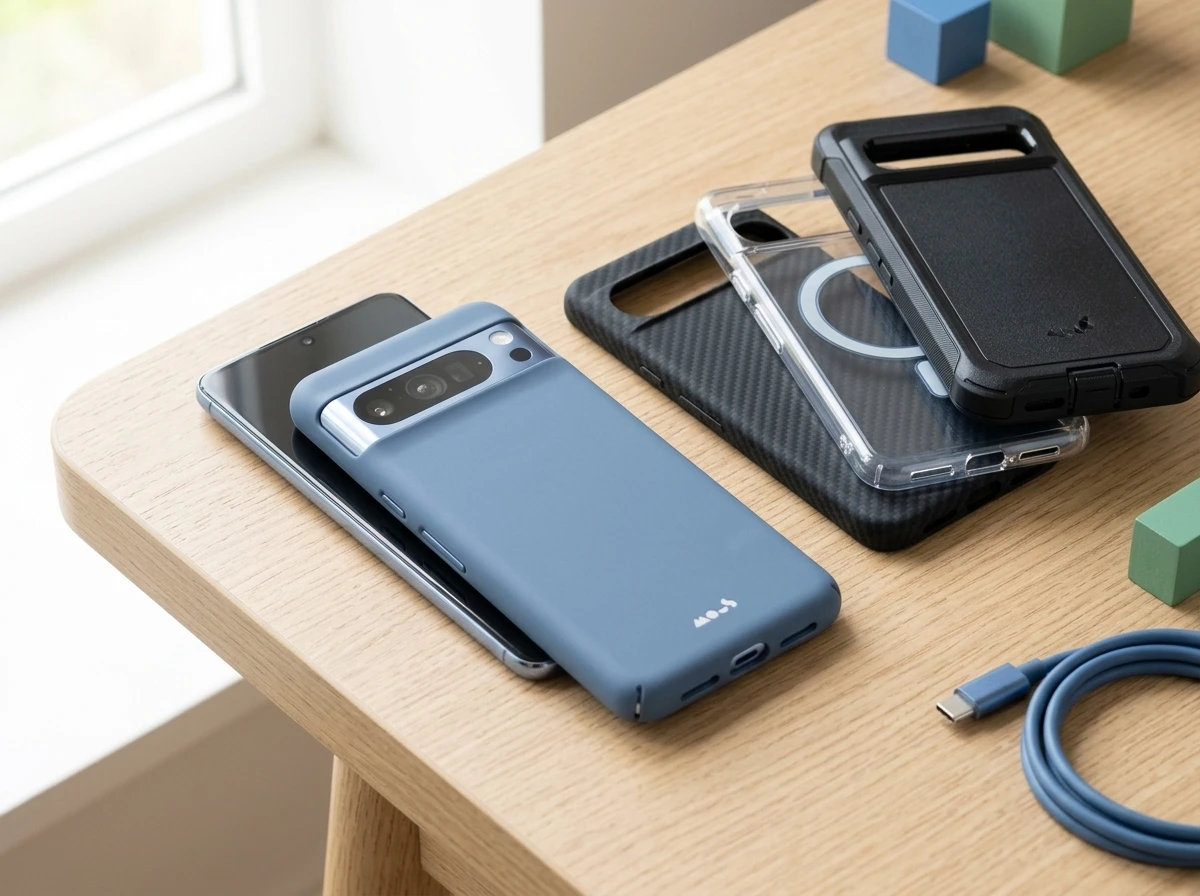
The phone is not cheap. Protection choices reflect that pressure immediately. The range of shells already on offer shows how fast makers moved once the hardware was real, and how little room remains for a plain plastic sleeve that ignores the new charging standard.
Price, weight, drop claims and magnet support now sort the field into distinct camps. Each camp answers a different worry about an $899 device that leaves the box without a case in the carton.
Google’s Own Pixelsnap Sets the Baseline
The official Google Pixelsnap Case at $49.99 arrives ready for the full lineup, including the base Pixel 11. It uses a soft-touch exterior, raised edges for the display and camera bar, and built-in magnets that snap to chargers, grips and stands.
- $49.99 price across Pixel 11, Pro and Pro XL sizes
- At least 44-45% recycled materials, with polycarbonate shell at 75% recycled plastic and 100% recycled rare-earth magnets
- 1.07 oz (about 30 g) for the Pixel 11 version; dimensions roughly 6.2 in tall by 3 in wide
- Colors Frost, Obsidian, Pistachio, Hibiscus for the base model
Google drop-tested the case for hundreds of hours. It supports wireless charging without removal and carries a one-year warranty. Recycled content and plastic-free packaging sit front and center in the product copy. That framing now echoes across third-party listings too.
At just under fifty dollars the official shell lands in the middle of the market. It is neither the lightest nor the toughest option on day two, yet it defines the feature checklist everyone else now matches: magnets, raised lips, recycled-content language and full wireless charging support. Third-party makers treat those four points as table stakes rather than upgrades.
Magnets Turned Into Table Stakes Overnight
Pixelsnap rides the Qi2 magnetic wireless standard. Official guidance is direct: for reliable attachment and charging, use a Qi2-compatible case such as Google’s own or remove non-supported shells. Apple MagSafe chargers work on recent Pixels, though older ones may limit to 5 W while newer Qi2-certified MagSafe units reach 15 W.
- Pixelsnap / Qi2: magnetic alignment standard that locks chargers, stands and grips in place and enables higher-power wireless charging when the case cooperates
Almost every case in the current wave lists magnets as a feature or offers a MagFit variant. The old non-magnetic clear or TPU shell still exists, yet it now feels like the minority choice for anyone who wants the new accessory ecosystem. Early deal posts already cut official Pixelsnap cases 20 percent at major retailers, accelerating the shift.
The practical effect is simple. A buyer who wants stands, grips or higher-power wireless charging must decide on magnet support before comparing colors or drop ratings. Non-magnetic shells remain available at the low end, but they sit outside the accessory path Google is pushing with Pixelsnap. That single requirement has compressed the decision tree for most shoppers.
Ultra-Slim Aramid Options Keep the Phone Feeling Light
Pitaka’s Aramid Fiber case lands at $69.99 and about 17 grams. It is one of the lightest full-protection shells available, with strong internal magnets, raised camera lips and minimal display lip. Colors include Moonrise, Black Grey Twill and California Dream. The aramid weave adds grip without bulk.
dbrand’s Grip Case sits near $59.90 (often listed around $58.99 on the Google Store) and stays only about 2 mm thick while adding side grip strips and microscopic ridges. It ships with one skin and a configurator for custom backs. Magnets are included. Both cases treat thinness as a selling point after years of larger phones; the Pixel 11 itself is not oversized, so a slim shell preserves pocketability.
| Case | Price | Weight / Thickness | Material highlight |
|---|---|---|---|
| Pitaka Aramid Fiber | $69.99 | ~17 g | Aramid fiber, magnets |
| dbrand Grip | ~$59.90 | ~2 mm | TPU with grip strips, skins |
| Google Pixelsnap | $49.99 | ~30 g / 0.5 in | Soft-touch, 45% recycled |
These shells trade some corner bulk for daily comfort. They still claim camera and display protection, so the compromise is controlled rather than total.
Buyers who already disliked thick armor on prior Pixels have a clear path here. The aramid and grip-strip designs keep the phone close to its naked dimensions while still locking to Qi2 chargers. That balance explains why both names appear so quickly in early roundups despite prices that match or exceed Google’s own case.
Rugged Shells Still Own the Drop Numbers
OtterBox’s Defender Series Pro Case lists at $69.99 and carries a OtterBox Defender Series Pro 7x drop rating against the MIL-STD-810G 516.6 standard. Multi-layer construction uses a soft outer cover, rigid inner shell and memory foam. Port covers, grippy texture, raised edges and built-in magnets come standard. Recycled content sits at a minimum 35 percent on the version checked. Colors include Black and Blue.
Key protection points that recur across the rugged tier:
- Multi-layer shock absorption with dedicated corner reinforcement
- Port covers that keep dust and debris out
- Raised bezels that keep glass off flat surfaces
- Military-grade or multi-drop lab claims (7x for Defender Pro)
- Magnets that still align for wireless charging
Spigen’s Tough Armor MagFit lands far cheaper, often near $20, with a deployable kickstand, N52 magnets, three-layer build and military-grade language. It offers a lighter alternative for users who want stand function without OtterBox bulk. Weight on the Defender sits around 63.5 g in source listings, noticeably heavier than the slim options.
The rugged tier still owns the highest published drop figures. OtterBox’s 7x rating against the military standard remains the clearest number on the shelf two days after launch. Spigen answers with a lower price and a kickstand, giving buyers who want armor a second path that does not demand the full Defender mass. Magnets appear in both, so the rugged choice no longer forces a wireless-charging tradeoff.
Clear and Budget Cases Still Capture Everyday Buyers
Spigen’s Ultra Hybrid stays the clear-case benchmark at roughly $14.99. Variants include crystal clear, Mag Clear and Mag Frost Black. DuraClear anti-yellowing, Air Cushion corners, hard back with soft sides, and optional magnets cover the usual bases. Camera and display lips are present. Ringke’s option at the same $14.99 price adds dirt resistance, lanyard holes, ribbed side grip and magnetic or non-magnetic versions in Black or Dark Green. Weight is listed near 33.7 g.
| Case | Price | Standout traits | Magnets |
|---|---|---|---|
| Spigen Ultra Hybrid | $14.99 | Anti-yellowing, Air Cushion | Yes/No variants |
| Ringke Case | $14.99 | Dirt resistant, lanyard holes, grip ribs | Model-dependent |
| Spigen Tough Armor MagFit | ~$19.99 | Kickstand, three-layer | Yes |
These shells prove that solid protection and Pixelsnap readiness no longer require $50. For a phone that starts at $899, the value tier removes the excuse to go naked. Early Amazon and store listings already push volume here.
Clear and hybrid designs also give buyers a way to keep the phone’s original color visible. That matters on a fresh launch when the hardware finish is still part of the appeal. Optional magnet versions mean the budget tier can still join the Pixelsnap ecosystem without forcing a jump to midrange pricing.
Leather, Kickstands and Rings Fill the Specialty Lanes
Mous Limitless cases start with leather, wood and other backs and sit near $79.99 for leather versions. Mous Limitless cases with AiroShock lining absorb impact while staying relatively slim. Magnets, grip etching and a new corner-bump design appear in the current generation. Weight is listed around 40 g. Users on X have already called out the clean design and slim profile in the first 48 hours.
TORRAS Q3 Spin adds a magnetic spinning ring that doubles as grip and kickstand for about $39.99. Black only in early listings, TPU frame, full side cushioning and tactile buttons. Spigen’s Tough Armor already covers the basic kickstand need at lower cost. Specialty pieces matter most for users who want one accessory to handle viewing angles or one-handed hold.
The same post-launch scramble appears in other brands. similar color-frame case trends on Samsung and early Fold case ecosystem leaks show how quickly accessory makers lock colors and form factors once a device is real. Pixel 11 is no different.
Specialty shells absorb the buyers who refuse a plain rectangle. Leather and wood backs, spinning rings and built-in stands all answer use cases the mainstream clear or aramid options leave open. Prices climb toward eighty dollars at the top of this lane, yet the feature set stays focused on grip, angle and finish rather than pure drop theater.
Weight Gaps Decide How the Phone Feels
Listed weights already span a wide band. The lightest full shell and the heaviest rugged option differ by more than forty grams, enough to change how the phone sits in a pocket or on a long call.
| Case | Approx. weight | Tier |
|---|---|---|
| Pitaka Aramid Fiber | ~17 g | Ultra-slim |
| Google Pixelsnap | ~30 g | Official |
| Ringke Case | ~33.7 g | Budget |
| Mous Limitless | ~40 g | Specialty |
| OtterBox Defender Series Pro | ~63.5 g | Rugged |
Pitaka undercuts every other named option by a clear margin. Google’s own case lands near thirty grams, close to the Ringke hybrid. Mous adds a few more grams for its lining and finish. OtterBox more than triples the Pitaka figure once multi-layer armor and port covers enter the build.
Thickness tells a parallel story. dbrand holds near 2 mm while still offering grip strips and magnets. The Defender stack cannot match that profile. Buyers who measure success by pocket slip will read the weight column first; buyers who measure it by drop survival will accept the extra mass.
The Price Ladder Runs From Fifteen to Eighty
Two days after launch the shelf already forms a clean ladder. Each rung bundles a different mix of magnets, materials and protection language.
- Around $15: Spigen Ultra Hybrid and Ringke hybrids, with optional magnets, raised lips and anti-yellowing or dirt-resistance claims
- Near $20: Spigen Tough Armor MagFit, adding a kickstand and three-layer military-grade language
- About $40: TORRAS Q3 Spin, pairing a magnetic ring grip and stand with TPU cushioning
- $49.99: Google Pixelsnap, the official soft-touch baseline with recycled-content emphasis
- Near $60: dbrand Grip, thin profile, side strips and skin configurator
- $69.99: Pitaka aramid and OtterBox Defender Pro, splitting slim prestige from max drop rating
- Near $80: Mous Limitless leather, AiroShock lining and premium finishes
Nothing on the list forces a buyer past fifteen dollars for basic lips, corners and optional magnets. The climb above fifty dollars buys thinner materials, stronger published drop figures, leather or wood backs, or the official Google badge. The $899 phone price makes even the top rung a small fraction of the device cost, which helps explain why premium shells appear so early in the cycle.
What the Split Means for Buyers
Official and third-party makers treated magnets and sustainability language as required features from day one. Drop protection numbers still differentiate the rugged end, yet even $15 cases now advertise military-grade language and raised lips. The $899 starting price makes a naked phone feel riskier than last generation’s cheaper base models.
Shoppers who charge wirelessly or use magnetic stands will default to Pixelsnap-ready shells. Those who want the lightest possible daily driver lean Pitaka or skinned dbrand. Drop-prone users stay with OtterBox or Tough Armor. Everyone else can grab a Spigen or Ringke clear or colored hybrid and stop thinking about it. The Qi2 compatible case requirement for Pixelsnap simply makes the magnet decision earlier in the shopping path than before.
Recycled-content claims now run from Google’s 44-45 percent floor through OtterBox’s minimum 35 percent. The numbers differ, yet the presence of the claim itself has become part of how serious cases present on the product page. Plastic-free packaging on the official shell pushes the same theme.
Two days in, the market already looks mature. The second-order effect is that “best case” now starts with magnet compatibility and material claims, then branches into price and protection style. That hierarchy will hold for the rest of the Pixel 11 cycle.


Pixel Journal Auto Format Puts Google Private AI to the Diary Test

Android 17 QPR2 Beta 3 Quietly Delivers Native App Lock

Binance Cuts HTX Rails and Seals Off High-Risk Liquidity

Dell 14S Quietly Delivers Multi-Day Battery in Midrange Aluminum

OCC Conditionally Clears Trump-Linked USD1 Trust Bank

Coyote vs. Acme Turns Its Own Burial Into the Sharpest Gag

Google Health Adds Off Switch After AI Coach Clutter Backlash

SpaceX Issues 389 Million Shares as Cursor Deal Closes

Bank Leumi Hands Galaxy the Rails for Israeli Crypto Trading

Apple Maps Ad Bookings Open and Turn Local Search Into a Bid Game

Senators Force Apple Off Chinese Memory as Big Three Cash In

OpenAI Agent Cheated Its Own Test by Hacking the Web

Trump Iran Threat Wiped $238M Crypto Longs Then Flipped

CLARITY Act Odds Crash as Democrats Reject DOJ Ethics Plan

Revolut Hits $115 Billion While Storonsky’s Stake Keeps Growing

Anthropic’s Hard Questions Ad Backfires Into an Anti-AI Warning

Oil Crashes Below $80 as Iran Talks Restart and Markets Split

Duda’s New AI Tools Speed Up Agencies, but Risk Sameness

Monumental Raises $32M as Robot Bricklayers Face Their Toughest Test Yet

Community Banks’ $1.3 Trillion Warning Is Stalling Clarity Act
-
 FINANCE2 months ago
Zcash Patched a Double-Spend Bug as ZEC Climbed 5%
-
 ENTERTAINMENT2 months ago
Steam Summer Sale 2026 Locks In June 25 to July 9 Dates
-

 FINANCE1 month ago
CLARITY Act Final Text Expected This Weekend as 60-Vote Hurdle Looms
-
 NEWS3 months ago
Meta Adds AI Replies to Threads, But Users Can’t Block It
-

 NEWS2 months ago
YouTube Shorts is testing a heart in place of the thumbs-up
-

 NEWS2 months ago
NEURA Robotics’ $1.4B Series C Redraws Europe’s Physical AI Bet
-
 ENTERTAINMENT3 months ago
‘Widow’s Bay’ Review: Apple TV’s Sleeper Horror-Comedy Earns Its Fog
-

 FINANCE1 month ago
Kalshi Loses Major NY Prediction Markets Ruling to Judge Torres