
FINANCE
Trump Iran Threat Wiped $238M Crypto Longs Then Flipped
Trump’s very hard Iran warning flushed $238M mostly long crypto positions, then the strike cancel and Hormuz outline reversed the tape for patient holders.

Crypto liquidations hit roughly $238 million after President Donald Trump warned of “very hard” strikes on Iran, with longs taking the bulk of the damage per CoinGlass data. Within a day he canceled the planned attack on an outline deal, flipping oil lower and giving Bitcoin a relief bounce.
The sequence turned a classic risk-off flush into a two-leg forced-flow event that punished overleveraged bulls twice over.
Camp David Warning That Hit Leveraged Longs
Trump spoke Friday at a cabinet meeting at Camp David. He said he was “losing faith” in Tehran, accused Iran of lying and misrepresenting, and stated the goal was simply “to win.”
“We’ll be hitting them very hard,” he said. “And you know at some point, they’re going to say, ‘We just can’t take it anymore.’”
Wall Street Journal and CBS reports said officials discussed completing strikes before Monday’s market open to limit economic fallout. White House Press Secretary Karoline Leavitt said the US “will win, and Iran will not have a nuclear weapon.” Pentagon spokesman Sean Parnell said the Department was “locked and loaded.”
No final order had been issued when the rhetoric alone hit the 24/7 crypto market. Bitcoin and major alts slipped as oil and equities also reacted.
- Friday July 31: Trump delivers “very hard” warning at Camp David cabinet meeting.
- Weekend: Leveraged positions unwind; $238 million liquidated, longs dominant.
- Early Sunday August 2: Trump posts that he canceled the attack after requests from Iran and regional countries.
The timeline left little room for leveraged traders to adjust once headlines hit.
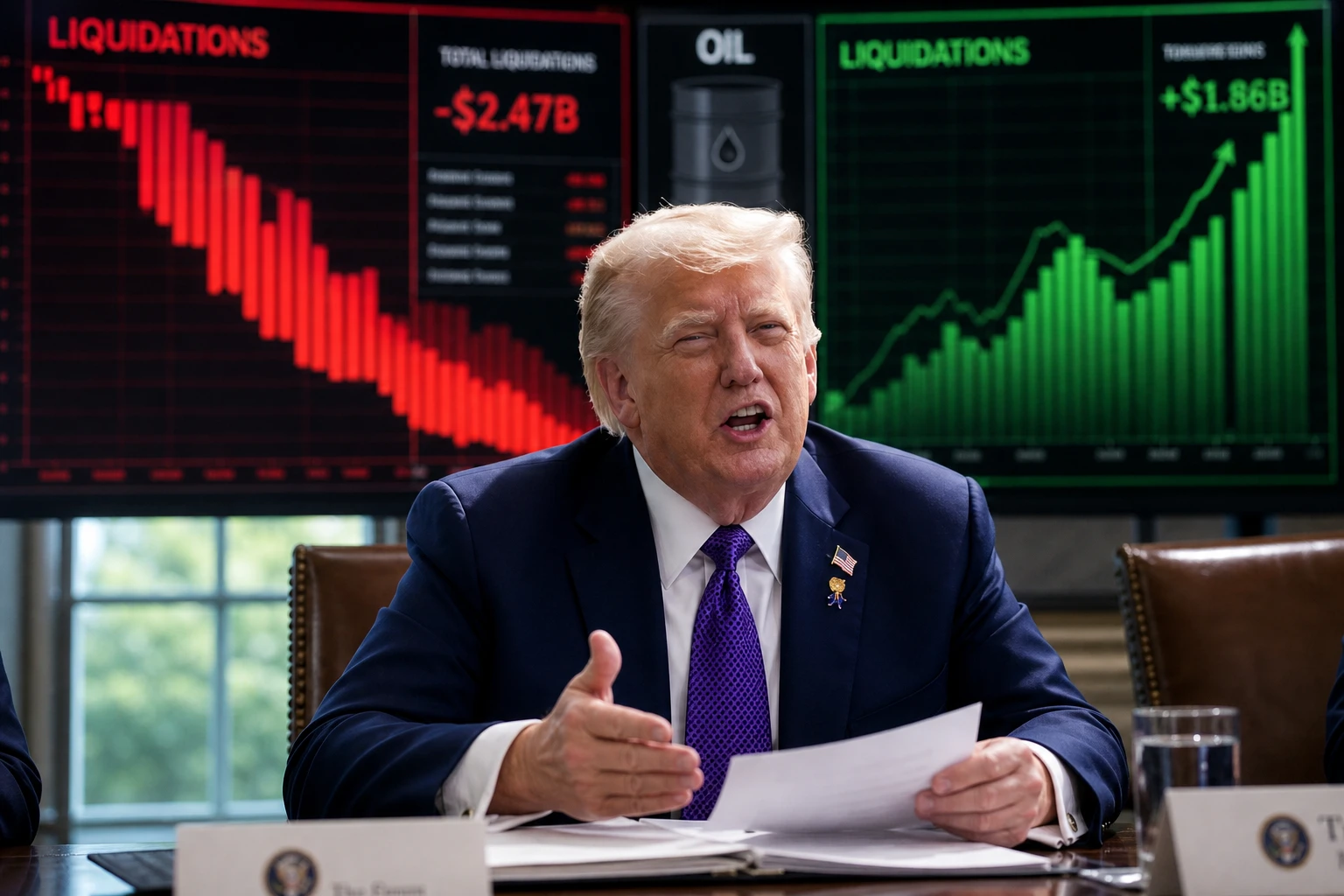
Longs Ate Nearly All of the $238 Million
CoinGape reported the figure from CoinGlass. Long positions absorbed the large majority as traders cut risk exposure over the weekend.
- $238 million total crypto liquidations tied to the threat window
- Longs took the bulk; shorts saw far smaller damage
- Bitcoin and major altcoins led the price slips on the risk-off move
- Open interest and funding rates reset lower after the cascade
Traders watching CoinGlass liquidation totals and heatmaps saw the familiar red cascade that has marked every major US-Iran headline this year. Position sizes that looked fine on Thursday became forced sales by Saturday.
The flush was smaller than some earlier 2026 waves, yet it still removed a meaningful layer of leveraged long supply in thin weekend books.
Strikes Called Off Within Hours
Early Sunday Trump posted that Iran and other Middle Eastern countries had asked the US to hold off. He said “the perimeters of a deal has been agreed to.”
The outline, per his Trump’s Truth Social cancellation post, would include the “Immediate, Complete, and Total OPENING OF THE HORMUZ STRAIT, and an end to Iran’s nuclear threat.” He added that Israel joined the commitment and that the US remained “locked and loaded.”
- Immediate full opening of the Strait of Hormuz
- End to Iran’s nuclear threat
- Attack canceled subject to rapid deal-making
- US and Israel remain ready to strike if talks fail
Iran’s response was cautious to dismissive. Fars News Agency called the demands a “wish list.” Acting Defense Minister Seyyed Majid Ibn Al-Reza said every threat is taken seriously even if statements form part of psychological warfare. Later reports noted Iranian denial of any Hormuz reopening agreement, which briefly lifted oil again before Monday’s broader de-escalation move.
Talks were set to resume Monday afternoon.
Oil Swung Hard While Bitcoin Priced Both Legs
Oil had risen more than 1% Friday on the threat, with WTI closing near $84.67 and Brent near $90.12. After the cancel post and subsequent mixed signals, Monday trading saw WTI drop nearly 6% toward $79.66 and Brent lose over 5% toward $83.39 as risk premiums were pared.
Bitcoin moved faster in both directions. It slipped with the initial risk-off flush, then popped on the cancellation headlines. One widely seen X post noted a roughly 3% bounce within the hour of the cancel news, with futures rallying across the board. Later Iran denial chatter left BTC relatively flat near the low $63,000s while oil jumped temporarily, underscoring that crypto traders now treat pure rhetoric as fadeable until physical supply is actually threatened.
The contrast is the second-order point. Traditional markets still wait for equity opens and futures settlements. Crypto prices the entire bluff-to-relief arc in real time, turning every escalation headline into a short-term forced transfer between leveraged longs and whoever sits on the other side.
The 2026 Liquidation Waves Stack Up
This episode sits inside a year-long pattern. Joint US-Israeli strikes in late February first rattled markets. Subsequent truces, MoUs, breakdowns and fresh threats have each produced liquidation spikes.
| Period | Trigger | Approx. Liquidations | Notes |
|---|---|---|---|
| May 2026 | US strikes near Hormuz | ~$959 million | Longs ~93%; BTC led losses |
| June 2026 | Deal talks stall | $192 million | Diplomatic ambiguity enough |
| July 2026 | MoU collapse | $450 million | Trump “MoU is over” |
| Aug 1-2 2026 | “Very hard” threat then cancel | $238 million | Longs bulk; rapid reversal |
Earlier single-day events have approached or topped $1 billion. The earlier $1.86B Iran-war liquidation wave and a separate prior billion-dollar crypto flush with Iran showed how ETF flows can compound the geo shock. Each cycle has followed the same script: headline hits, longs liquidate first in the 24/7 market, then de-escalation or talk of talks produces a squeeze or relief rally.
Position sizing and lower leverage have been the only consistent hedges named by observers across these waves.
Dip Buyers and Cash Holders Collected
The second-order transfer is clear once both legs are priced. Overleveraged longs paid the $238 million tuition on the threat. Those who reduced size, held cash, or faded the panic then captured the bounce when Trump walked the strike back. Shorts who covered into the cancel also banked.
We have just been asked by Iran, and other Middle Eastern Countries, to hold off any attack in that the perimeters of a deal has been agreed to.
Trump wrote that in the Sunday post that reversed the immediate military risk premium. Market participants who treated the Friday rhetoric as the entire story got run over on the flip. Those who remembered the full 2026 pattern, including the Bitcoin rebound after earlier Iran talks reopen, were positioned for both the flush and the recovery.
Exchanges collected liquidation fees either way. Oil traders faced their own two-way volatility. But the cleanest winners sat outside the highest-leverage crypto books.
Crowd chatter on X framed it as the hedge thesis proving itself again: geopolitical risk flares, crypto sells first and hardest, then snaps back fastest when the flare is walked back. The boredom some traders expressed at the repeated back-and-forth is itself a signal that the market has internalized the cycle.
Until a durable settlement or a sustained physical disruption of Hormuz oil flows arrives, every new “very hard” warning will likely run the same two-leg play. The $238 million figure is the visible cost of ignoring that structure. The quieter cost is the repeated transfer of capital from the overlevered to the patient every time the tape flips.
Disclaimer: This article is for informational purposes only and does not constitute investment advice. Cryptocurrency trading involves substantial risk of loss.


Bitget BGBTC Upgrade Turns Idle Bitcoin Into Daily Yield

FFXIV Switch 2 Port Brings Portability With a Second Bill

MacBook Air Delays Reveal AI Memory Crunch Repricing Laptops

Bitcoin BIP-110 Soft Fork Dies on Tiny Miner Support

CXMT LPDDR6 Push Locks In Mobile DRAM Split

Snapchat Hands Spotlight Priority to Human Creators Over AI Farms

Sheriffs Hold Out as Trump Weighs Ethics Deal on CLARITY Act

Apple Upgrade Turns Flagship Buys Into Monthly Leases With Klarna

Trump Iran Threat Wiped $238M Crypto Longs Then Flipped

Blanche Fund Deal Clears Path as DOJ Power Decides CLARITY Fate

Kalshi Loses Major NY Prediction Markets Ruling to Judge Torres

Fed Minutes Cite AI Demand as Inflation Risk, Put a 2026 Hike Back on the Map

Marker AI Writing Startup Lands $13M Seed Led by Index Ventures

Dota 2 Esports World Cup 2026: Spirit Defends $2M Title In Paris

Meta’s Muse Spark 1.1 Beats Rivals on Price, Trails on Coding

ARC Intelligence Closes €4M Seed Round in Roughly a Week

CS2 Premier Season 5 Lands With Cache and a C4 Damage Rework

Finto Picks Munich Over Silicon Valley After YC, Raises $3.4M

Backrooms Returns to Theaters as the Everything Must Go Edition

Trump Calls Iran ‘Islamic Republic of Japan’ as Ceasefire Ends
-
 FINANCE2 months ago
Zcash Patched a Double-Spend Bug as ZEC Climbed 5%
-
 ENTERTAINMENT2 months ago
Steam Summer Sale 2026 Locks In June 25 to July 9 Dates
-

 FINANCE1 month ago
CLARITY Act Final Text Expected This Weekend as 60-Vote Hurdle Looms
-
 NEWS3 months ago
Meta Adds AI Replies to Threads, But Users Can’t Block It
-
 ENTERTAINMENT3 months ago
‘Widow’s Bay’ Review: Apple TV’s Sleeper Horror-Comedy Earns Its Fog
-
 NEWS5 months ago
U.S. Navy Deploys Solar-Powered Lightfish Drone to Patrol Oceans
-
 NEWS8 months ago
FolderFresh Review: This Free Tool Automates Windows File Organizing
-
 FINANCE4 weeks ago
Kalshi Loses Major NY Prediction Markets Ruling to Judge Torres