
FINANCE
Blanche Fund Deal Clears Path as DOJ Power Decides CLARITY Fate
Todd Blanche rescinded the anti-weaponization fund to unlock his Senate vote, locking DOJ control over CLARITY Act ethics and lighter crypto enforcement before.

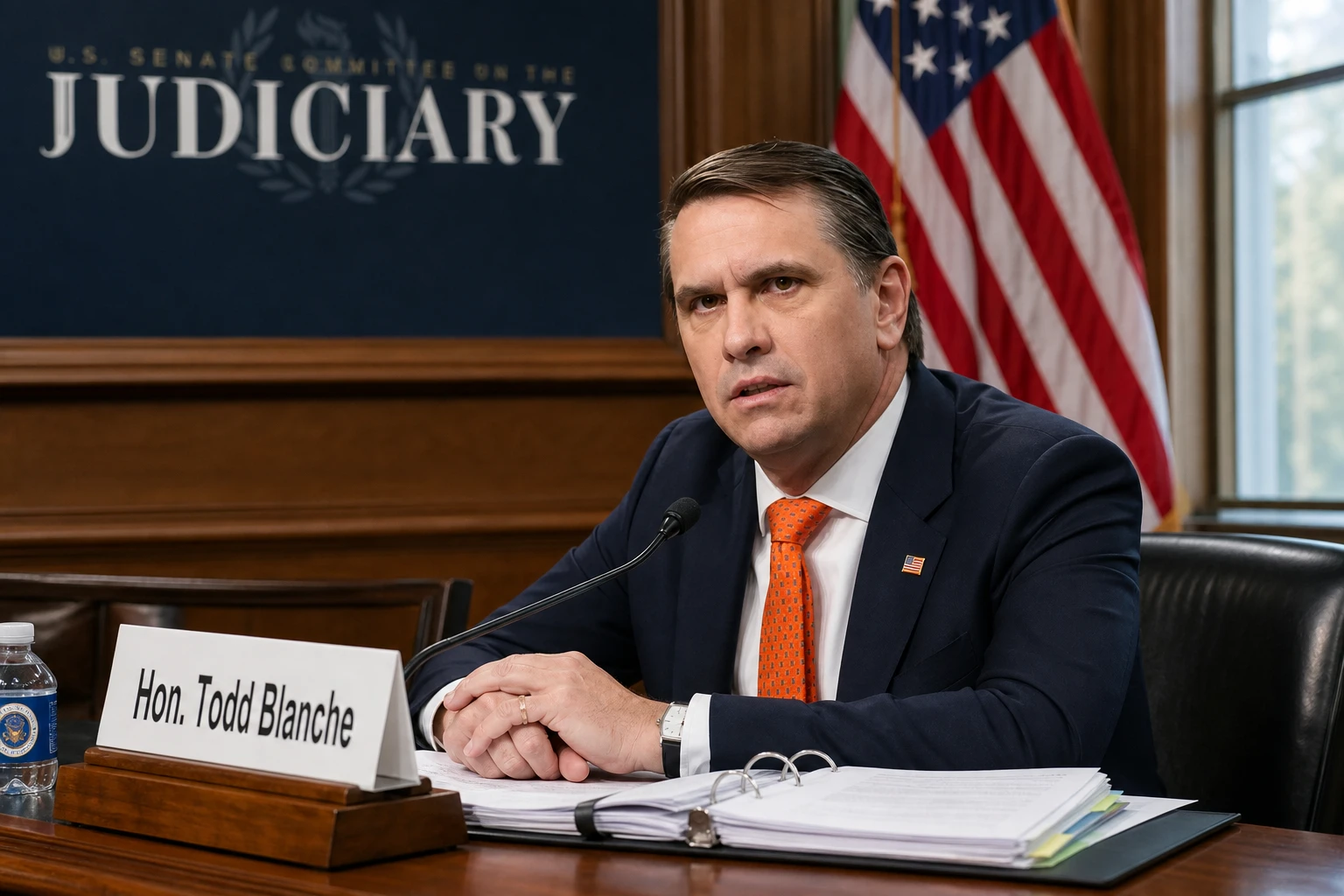
Acting Attorney General Todd Blanche formally rescinded the nearly $1.8 billion anti-weaponization fund late Sunday, clearing the way for a Senate Judiciary Committee vote on his permanent nomination Tuesday. The move ends a weekslong standoff with Republican holdouts and locks in both a lighter DOJ approach to crypto and the department’s central role in policing ethics under the stalled CLARITY Act.
Crypto desks are treating the dual clocks as one story. Confirmation would cement the enforcement posture Blanche set last year. It would also leave the Justice Department as the sole gatekeeper for rules meant to bar federal officials from crypto deals, a structure Democrats still call too weak.
The Fund Fight That Nearly Sank the Nomination
Senators John Cornyn of Texas and Thom Tillis of North Carolina refused to green-light the markup until they saw the fund killed in writing. Both are lame ducks. Cornyn lost his primary. Tillis is not running again. That status let them force the issue when other Republicans shared the same private doubts but stayed quiet.
The fund grew out of a settlement of President Trump’s lawsuit against the IRS. It created a pot of money, reported at $1.776 billion to $1.8 billion, that critics said could pay people who claimed government weaponization against them, including some linked to January 6. A companion memo also limited future tax audits of Trump, his family and businesses.
Blanche told lawmakers the fund was already dead and never funded. They wanted the order. Trump floated pulling the nomination rather than yield. On Sunday night Blanche posted the signed order: the May 18 establishment of the Anti-Weaponization Fund “is rescinded and shall have no force or effect.” “This order establishes, beyond any doubt, that there is no fund,” it stated.
- May 18, 2026: Order creates the Anti-Weaponization Fund tied to the Trump-IRS settlement.
- July 15, 2026: Blanche confirmation hearing; Cornyn presses him on the fund’s status.
- July 29-30, 2026: Planned Judiciary markup postponed after Cornyn and Tillis withhold support.
- August 2, 2026: Blanche issues rescission order after White House and senator talks; Tuesday vote reset.
Committee Chair Chuck Grassley had already warned he lacked the votes. Blanche can lose zero Republicans in committee. The deal removes that barrier for now.
Blanche’s Crypto Memo Still Stands
While the fund fight grabbed headlines, markets kept watching the April 7, 2025 Ending Regulation By Prosecution memo Blanche issued as deputy attorney general. It remains DOJ policy.
The memo declares the department “is not a digital assets regulator.” It ends “regulation by prosecution,” stops targeting exchanges, mixers and wallets for user actions or non-willful regulatory breaches, and disbands the National Cryptocurrency Enforcement Team. Prosecutors must focus on investor fraud, rug pulls, hacks, and the use of crypto by cartels, terrorists, fentanyl traffickers and sanctions evaders.
- NCET disbanded effective immediately; Market Integrity unit told to cease crypto enforcement.
- Priority shift to victim cases and illicit finance by criminal groups, not platform regulatory status.
- Charging limit on pure regulatory counts such as unlicensed money transmission or unregistered securities unless willfulness is clear.
- Working Group role for DOJ in Trump’s digital asset markets group and future recommendations.
Democratic senators flagged conflict concerns. Financial disclosures showed Blanche held crypto, mainly Bitcoin, Ethereum and Solana, valued between roughly $159,000 and $485,000 around the time of the memo. He later transferred the holdings to family members and sold related investments after an ethics agreement. ProPublica and ethics experts called the sequence a clear conflict; Blanche’s office did not comment.
A confirmed AG keeps that lighter stance at the top of the department just as digital asset markets seek statutory clarity.
Why DOJ Power Is the CLARITY Hinge
The same senators and the same narrow pre-recess window also control the fate of the CLARITY Act, the market-structure bill that would split SEC and CFTC oversight of digital assets. Its ethics package is the sticking point.
The White House and GOP draft gives the attorney general sole power to enforce bans on federal officials issuing or sponsoring digital assets. Democrats and some bipartisan negotiators, including Tillis working with Sen. Ruben Gallego, want state attorneys general able to act as well. They argue a Trump DOJ cannot credibly police the president’s own crypto ties or those of appointees.
| Enforcement Option | Who Acts | Main Objection |
|---|---|---|
| DOJ sole (current draft) | U.S. Attorney General | Too dependent on executive branch loyalty |
| State AGs added (Tillis-Gallego counter) | Federal plus states | White House and some GOP call it overreach |
| Private rights of action | Individuals or groups | Risk of flood of lawsuits |
Galaxy Research has cut 2026 passage odds to 30 percent, citing the 60-vote Senate threshold and shrinking calendar. Earlier Galaxy Research CLARITY passage estimates had stood at 50-60 percent. The CLARITY Act odds crash over ethics tracks the same standoff now entangled with Blanche.
Treasury Secretary Scott Bessent has pushed for a floor vote now. August 10 starts the state work period that most analysts treat as the practical 2026 cutoff. The current Senate draft of the CLARITY Act still carries the DOJ-centric ethics language that Democrats reject.
Markets Price the Dual Clock
Bitcoin and XRP traders already treat the Blanche vote and CLARITY status as linked overhang. Confirmation would signal continuity of the lighter DOJ posture. A stall or messy floor fight would keep both questions open past recess.
- Galaxy’s 30 percent CLARITY odds leave most institutional capital on the sidelines until statutory lines are drawn.
- Standard Chartered’s conditional $8 XRP target and JPMorgan’s $4.3-$8.4 billion first-year XRP ETF inflow range both rest on CLARITY passage unlocking larger buyers.
- Existing XRP ETFs have drawn roughly $1.4-$1.5 billion; the banks’ upside cases assume three to six times that once legal risk drops.
- The same Republican disputes slowing Blanche have helped freeze the CLARITY Act path through law enforcement buy-in.
A clean committee advance and quick floor confirmation would remove one variable. It would also hand the ethics enforcement role to the same official who wrote the industry-friendly memo, exactly the credibility problem Democrats cite.
Who Holds Leverage Now
Cornyn and Tillis extracted the written kill order. Other Republicans, including Lisa Murkowski and Jon Husted, had voiced parallel concerns about the fund’s scope and the tax-immunity language. Democrats on Judiciary used the delay to highlight Blanche’s crypto holdings and broader DOJ shifts.
Trump’s threat to withdraw the nomination and wait out the lame ducks raised the stakes. Blanche’s Sunday order and the reset Tuesday vote show the White House chose confirmation over preserving the fund in its original form. Whether the tax-settlement protections survive in narrowed form remains under discussion.
For crypto, the practical outcome is continuity. The memo stands. The enforcement team is gone. Platforms face less risk of criminal cases built on regulatory gray areas. Fraud, hacks and illicit finance remain targets.
The Recess Window Closes Fast
Tuesday’s committee vote is the immediate test. If Blanche advances, floor timing collides with the CLARITY calendar and the August 10 practical deadline. Bessent’s public urging and bipartisan ethics counter-offers show both sides still want a deal. The 30 percent odds reflect how little floor time remains and how hard the 60-vote hurdle is without broader Democratic buy-in on enforcement.
Markets will parse the vote language, any written side agreements on the IRS settlement, and whether ethics talks produce a text both chambers can accept. A confirmed Blanche who controls DOJ enforcement of the ethics package gives the administration the structure it prefers. It also leaves the regulatory overhang question only half-resolved until CLARITY itself moves or dies for the year.
The fund is gone on paper. The nomination fight is no longer blocked. The larger second-order question, who polices crypto conflicts inside government while DOJ runs a lighter docket, now sits in the same narrow window.


CXMT LPDDR6 Push Locks In Mobile DRAM Split

Snapchat Hands Spotlight Priority to Human Creators Over AI Farms

Apple Upgrade Turns Flagship Buys Into Monthly Leases With Klarna

Trump Iran Threat Wiped $238M Crypto Longs Then Flipped

Blanche Fund Deal Clears Path as DOJ Power Decides CLARITY Fate

S26 FE Cases Repeat the Silver Frame Playbook From Last Year

One UI 9.5 Hits S27 Ultra Servers as Fold 8 Ships Its First Patch

Capital Clusters and the Dual Tracks of European Tech Finance

Microsoft Shrinks Windows 11 Memory for 8GB PCs

XRP Ledger Brings Back Bugged Features Fixed for Institutions

Kalshi Loses Major NY Prediction Markets Ruling to Judge Torres

Fed Minutes Cite AI Demand as Inflation Risk, Put a 2026 Hike Back on the Map

Marker AI Writing Startup Lands $13M Seed Led by Index Ventures

Dota 2 Esports World Cup 2026: Spirit Defends $2M Title In Paris

Meta’s Muse Spark 1.1 Beats Rivals on Price, Trails on Coding

CS2 Premier Season 5 Lands With Cache and a C4 Damage Rework

Backrooms Returns to Theaters as the Everything Must Go Edition

ARC Intelligence Closes €4M Seed Round in Roughly a Week

Finto Picks Munich Over Silicon Valley After YC, Raises $3.4M

Trump Calls Iran ‘Islamic Republic of Japan’ as Ceasefire Ends
-
 FINANCE2 months ago
Zcash Patched a Double-Spend Bug as ZEC Climbed 5%
-
 ENTERTAINMENT2 months ago
Steam Summer Sale 2026 Locks In June 25 to July 9 Dates
-

 FINANCE1 month ago
CLARITY Act Final Text Expected This Weekend as 60-Vote Hurdle Looms
-
 NEWS3 months ago
Meta Adds AI Replies to Threads, But Users Can’t Block It
-
 ENTERTAINMENT2 months ago
‘Widow’s Bay’ Review: Apple TV’s Sleeper Horror-Comedy Earns Its Fog
-
 NEWS5 months ago
U.S. Navy Deploys Solar-Powered Lightfish Drone to Patrol Oceans
-
 NEWS8 months ago
FolderFresh Review: This Free Tool Automates Windows File Organizing
-
 FINANCE4 weeks ago
Kalshi Loses Major NY Prediction Markets Ruling to Judge Torres