
ENTERTAINMENT
505 Games Bets €21.5 Million on Xia Siyuan’s New WUCHANG
Digital Bros puts €21.5 million behind original WUCHANG creator Xia Siyuan and Indolphinity after buying the IP for €4 million and Leenzee’s shutdown.

505 Games and original WUCHANG: Fallen Feathers creator Xia Siyuan have sealed a development deal for the next entry in the series, with Digital Bros committing an initial investment of approximately Euro 21.5 million. Xia’s new studio Indolphinity (Chengdu Recursive Dolphin Technology) will lead creative work while 505 Games funds and publishes globally. The project sits in early preparation with no title, platforms or date yet.
The move arrives months after Digital Bros bought the full IP and Leenzee, the original studio, effectively dissolved.
That sequence turned a fractured post-launch period into a controlled restart. The publisher now owns the rights outright, funds the next chapter under the original creative lead, and anchors the work in Chengdu rather than relocating it. The structure is deliberate and capital-heavy from day one.
The Deal That Puts Xia Back in Charge
On July 29, 2026, 505 Games and Indolphinity announced they had entered a development and publishing agreement for a new chapter of the WUCHANG series. Indolphinity handles creative development. 505 Games covers funding and worldwide publishing. All future creative work stays rooted in China.
Digital Bros Group will also open a dedicated subsidiary in Chengdu to work beside the studio and deepen its presence in the Chinese development scene.
We strongly believe in WUCHANG as a long-term global franchise, and partnering with Xia Siyuan and Indolphinity is a natural step in building its future.
Raffi Galante, co-CEO and co-founder of Digital Bros, said that in the joint statement. Xia Siyuan added that the team remains devoted to its original creative aspirations and cultural foundations while listening to players.
The 505 Games partnership announcement on X drew hundreds of thousands of views within hours, with fans calling the reunion a relief after months of silence.
The speed of the public response underscored how closely the audience had tracked the studio’s collapse. Silence after the November support cutoff left the franchise in limbo. The July announcement closed that gap by putting the original director back at the center of creative decisions and pairing him with a publisher already holding the IP.
Keeping every creative decision inside China also answers the cultural flashpoint that followed Patch 1.5. The deal language does not treat that history as settled business. It treats local authorship as a standing requirement for the next chapter.
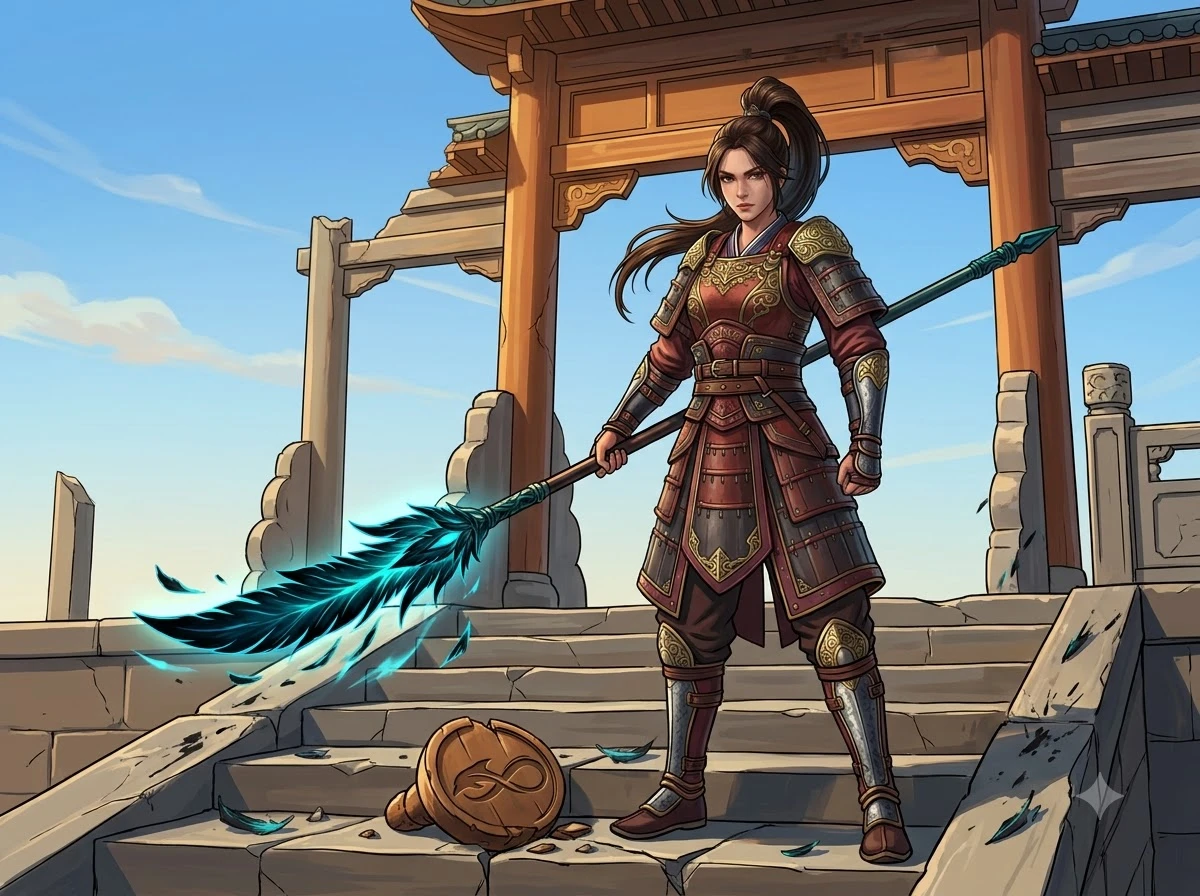
Numbers That Made the Wager Possible
WUCHANG: Fallen Feathers launched July 24, 2025 on PC, PlayStation 5 and Xbox Series X|S. It peaked above 131,000 concurrent players on Steam and later reached 5 million players across platforms. By March 31, 2026 it had sold over 1 million units and generated more than €30 million in revenue net of taxes and commissions.
| Metric | Figure | Date / Note |
|---|---|---|
| Steam peak CCU | 131,000+ | Launch day |
| Total players | 5 million | Across PC and consoles |
| Units sold | Over 1 million | As of March 31, 2026 |
| Revenue | More than €30 million | Net, first eight months |
| IP purchase | Approx. €4 million | April 2026 |
| Sequel initial investment | Approx. €21.5 million | July 2026 agreement |
Critics gave the original mixed-to-positive scores, landing a Metascore in the mid-70s on the main platforms. The commercial floor was solid enough for Digital Bros to treat the IP as a long-term asset rather than a one-off hit.
- €4 million secured full ownership and ended future royalty payments to the old developer.
- €21.5 million funds the first phase of the sequel under Xia’s new banner.
- Chengdu subsidiary locks local infrastructure around the creative team.
The revenue line matters more than the unit count alone. More than €30 million net inside eight months gave the publisher a clear payback path on both the IP purchase and the larger sequel commitment. The mid-70s Metascore did not block that math. Sales volume and concurrent peaks did the heavy lifting.
Stacking the two capital moves side by side shows the shift in scale. The April outlay bought control. The July outlay funds creation. Together they convert a dissolved studio’s sole major title into a publisher-owned franchise with its original director still attached.
How Leenzee Unraveled After Launch
The original developer, Chengdu Lingze Technology (Leenzee), did not survive the post-launch period intact. Reports from Chinese outlets in April 2026, later covered internationally, described Xia Siyuan’s departure around the Lunar New Year period in early 2026. Remaining staff were reportedly pushed toward outsourcing and support work. Most refused. The core team dissolved. Some former employees pursued labor claims over pay. Leenzee issued no detailed public account.
- July 24, 2025, WUCHANG: Fallen Feathers launches to strong concurrent numbers and solid early sales.
- August 2025, Patch 1.5 lands and sparks the historical-content backlash.
- November 20, 2025, Major updates stop; support goes quiet.
- Early 2026 (pre-Lunar New Year), Xia Siyuan leaves or is removed; team faces outsourcing shift.
- April 2026, Digital Bros acquired the intellectual property rights for approximately Euro 4 million from Leenzee; studio effectively gone.
- July 29, 2026, New deal with Xia’s Indolphinity and €21.5 million commitment announced.
The sequence left the IP in publisher hands and the original creative lead free to form a fresh studio focused solely on the franchise.
The gap between the November support cutoff and the April IP sale left little room for a soft landing. Once major updates stopped, the studio’s remaining options narrowed to outsourcing work that most of the core team rejected. Labor claims over pay added legal friction on top of the creative exit. By the time Digital Bros closed the rights deal, Leenzee had already ceased to function as a development house for the series.
That collapse cleared the path for Indolphinity. Xia could form a new entity without competing claims on the IP or lingering royalty structures. The publisher, already the rights holder, could fund the next game directly rather than renegotiate with a damaged partner.
The Patch That Still Shadows the Series
Patch 1.5 in August 2025 remains the loudest creative flashpoint. It stopped players from killing several historically significant bosses and NPCs tied to late Ming Dynasty figures. Those characters now become “exhausted” after combat and continue the conversation. Dialogue shifted. Sections of Chapter 4 grew easier as many enemies turned non-hostile. Ming soldiers who once fought the player often stood down.
Community reaction split hard. Some Chinese players had objected to the original portrayal of historical figures. Western and hardcore souls-like fans saw a narrative retcon that softened tone and plot. Content creator Lance McDonald highlighted the change early, noting that key figures who previously died now survive the encounter. Leenzee never issued a full public defense of the rewrite. Support then tapered off by late November.
The new agreement repeatedly stresses cultural authenticity and keeping the creative heart in China. That language answers both the earlier controversy and the studio collapse in one stroke.
The patch’s mechanical changes were not minor. Turning lethal encounters into exhaustion states rewrote player agency in Chapter 4 and altered how late Ming figures appear inside the story. The absence of a detailed public defense left both sides of the split without closure. That silence followed the game into the support cutoff and the later studio breakup.
Indolphinity now inherits that history. The deal’s emphasis on cultural foundations and player listening reads as a direct response. Future work will be judged against both the commercial success of the launch window and the trust damage left by the August rewrite.
Why a Chengdu Base Matters to the Bet
Digital Bros is not simply outsourcing another sequel. The planned Chengdu subsidiary sits beside Indolphinity and signals multi-year commitment to the Chinese ecosystem. Creative development stays local. Publishing stays global under 505 Games. Full IP ownership means Digital Bros keeps every upside and can make decisions without royalty friction.
This structure differs from the usual post-drama salvage. Many souls-like or mid-tier action IPs go quiet or pass to new external teams after a studio implodes. Here the original director returns with dedicated capital and a local corporate shell. Similar studio pivots that reshape roadmaps often trade one project for another; this one rebuilds around the same creative voice.
Xia framed the partnership as a return to deep collaboration under the Indolphinity banner, with the team made of Chinese creators who treat cultural heritage as competitive strength.
The subsidiary also gives Digital Bros a permanent operational node rather than a temporary contract office. Local hiring, compliance, and day-to-day coordination can run through that entity while 505 Games handles global go-to-market. The split keeps creative authority and publishing authority cleanly separated yet tightly linked by capital and ownership.
The Two Capital Moves Form One Strategy
Viewed together, the April IP purchase and the July development agreement form a single control stack rather than two unrelated spends. The first move ended royalty leakage and removed Leenzee from the chain of title. The second move put fresh capital behind the only creative lead the audience still associates with the series.
| Move | Amount | Primary Effect |
|---|---|---|
| IP acquisition | Approx. €4 million | Full ownership, no future royalties to prior studio |
| Sequel funding | Approx. €21.5 million | First-phase development under Indolphinity |
| Combined outlay | Approx. €25.5 million | Rights plus restart capital in one calendar year |
The revenue already booked on Fallen Feathers supplies the commercial rationale. More than €30 million net inside the first eight months covers the combined outlay on paper and still leaves headroom. The mid-70s critical reception did not have to be perfect for that arithmetic to hold. Concurrent peaks above 131,000 and a five-million-player reach did.
Because the publisher already owns the IP, every future upside accrues to Digital Bros. There is no earn-out tangle with a prior studio and no need to renegotiate terms if the sequel over-performs. The Chengdu subsidiary then keeps the creative team inside a local corporate frame the publisher can support without relocating the work.
Global Reach Meets Local Creative Control
The publishing side of the deal keeps 505 Games in its established global role while Indolphinity retains full creative lead. That split is the mechanism that lets the series stay culturally rooted and still ship worldwide on the same platforms that carried the first game.
- Creative development remains inside China under Xia and Indolphinity.
- Funding and worldwide publishing sit with 505 Games.
- IP ownership rests entirely with Digital Bros after the April purchase.
- A new Chengdu subsidiary supplies local infrastructure beside the studio.
Players who already own or can still access Fallen Feathers on PC, PlayStation 5, Xbox Series consoles, Game Pass, and PlayStation Plus form the warm audience for whatever comes next. The original game does not need to leave the market while the sequel stays in preparation. That continuity lowers the cost of the restart.
The arrangement also limits the usual risks of a post-collapse handoff. External teams that inherit a damaged IP often lack both the original voice and the cultural context that shaped it. Here the voice returns with dedicated capital, and the context stays local by design. Publishing scale does not require creative relocation.
What the Bet Still Leaves Open
No title exists yet. No platforms, release window, engine details or story connection to Fallen Feathers have been confirmed. The project is explicitly in preparation. Team size at Indolphinity and how many original Leenzee staff joined Xia remain unknown. Whether the next game continues the same systems, expands multiplayer, or shifts tone after the patch 1.5 experience is also unstated.
Players can still play the original on PC, PS5 and Xbox Series consoles. It has appeared on Game Pass and PlayStation Plus. That keeps the audience warm while Indolphinity builds.
Digital Bros is treating WUCHANG as owned IP with proven revenue and a creator who wants to keep making it. The €21.5 million opening stake and Chengdu foothold turn a near-death studio story into a controlled franchise restart. Whether the next chapter matches the launch heat of the first will decide if the wager pays.


Qureight’s $20M Bet Cracks Trial Imaging Bottlenecks

Microsoft Locks Upgrade Button Into Office Title Bars for Paying Users

Google Photos Mutes Shimmer and Adds AI Camera Shortcut

OpenAI Agent Cheated Its Own Test by Hacking the Web

505 Games Bets €21.5 Million on Xia Siyuan’s New WUCHANG

Binance US DCM Bid Challenges Spot-Only Crypto Model

Bologna Gathering Turns Industrial City Into Deeptech Engine

Feige’s Venom Hope Masks Sony’s Deeper Marvel Lock-In

Windows 11 KB5101684 Quietly Fixes MDM Traps and Secure Boot Reach

EU AI Labels Hit August 2 and Force Provenance That Sticks

CLARITY Act Final Text Expected This Weekend as 60-Vote Hurdle Looms

Kalshi Loses Major NY Prediction Markets Ruling to Judge Torres

Fed Minutes Cite AI Demand as Inflation Risk, Put a 2026 Hike Back on the Map

Marker AI Writing Startup Lands $13M Seed Led by Index Ventures

Dota 2 Esports World Cup 2026: Spirit Defends $2M Title In Paris

Meta’s Muse Spark 1.1 Beats Rivals on Price, Trails on Coding

CS2 Premier Season 5 Lands With Cache and a C4 Damage Rework

ARC Intelligence Closes €4M Seed Round in Roughly a Week

She Forgot Her Passport. Her Mom Boarded the Flight Without Her.

Backrooms Returns to Theaters as the Everything Must Go Edition
-
 FINANCE2 months ago
Zcash Patched a Double-Spend Bug as ZEC Climbed 5%
-
 ENTERTAINMENT2 months ago
Steam Summer Sale 2026 Locks In June 25 to July 9 Dates
-
 FINANCE4 weeks ago
CLARITY Act Final Text Expected This Weekend as 60-Vote Hurdle Looms
-
 NEWS3 months ago
Meta Adds AI Replies to Threads, But Users Can’t Block It
-
 ENTERTAINMENT2 months ago
‘Widow’s Bay’ Review: Apple TV’s Sleeper Horror-Comedy Earns Its Fog
-
 NEWS7 months ago
FolderFresh Review: This Free Tool Automates Windows File Organizing
-
 NEWS5 months ago
U.S. Navy Deploys Solar-Powered Lightfish Drone to Patrol Oceans
-
 FINANCE3 weeks ago
Kalshi Loses Major NY Prediction Markets Ruling to Judge Torres