
FINANCE
Tillis Ethics Push Gives Clarity Act One Last Shot Before Recess
Senator Tillis and Gallego aim to deliver a bipartisan ethics package by Friday, the last realistic window for Clarity Act momentum before the August recess.

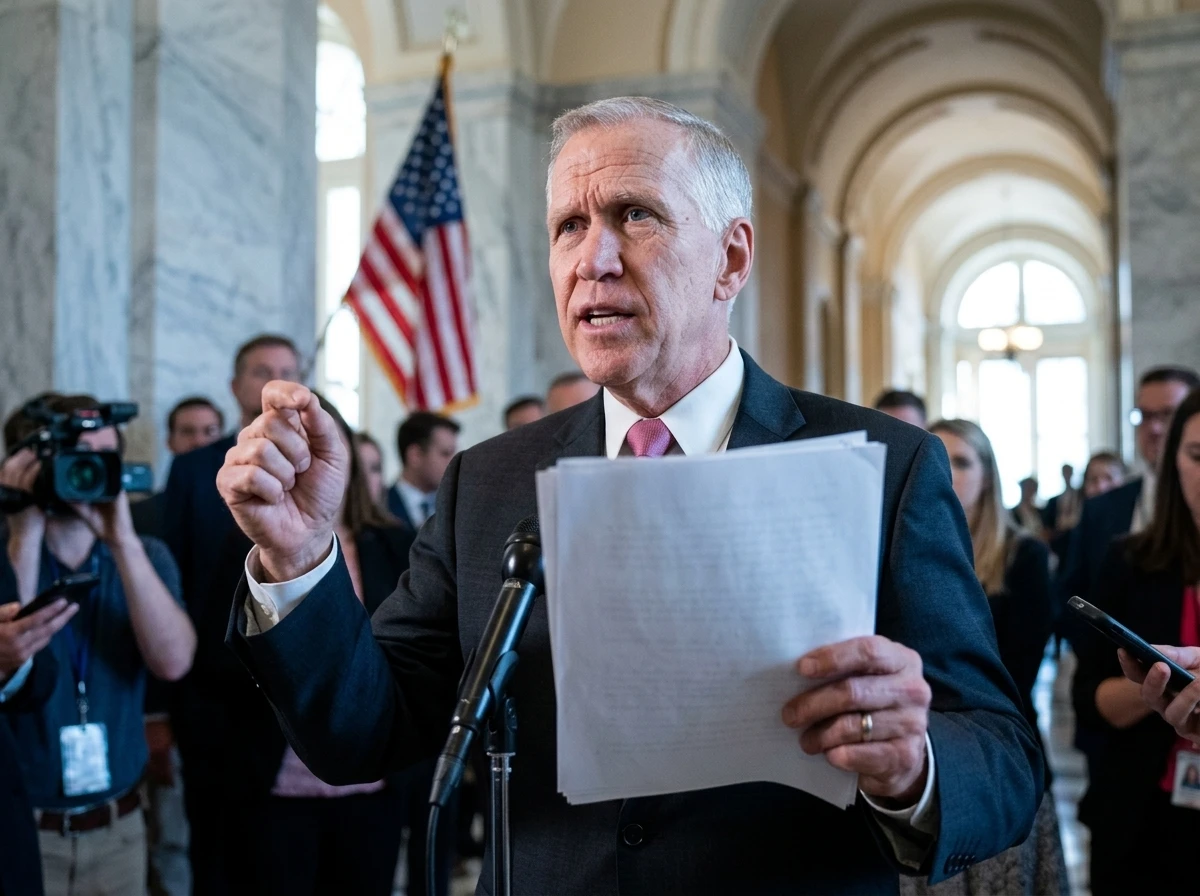
Senator Thom Tillis said a bipartisan ethics package for the Clarity Act could reach the White House for vetting as early as Friday after he and Democratic Senator Ruben Gallego struck preliminary common ground. The North Carolina Republican wants that baseline locked so he can back a procedural vote next week.
“That language is probably gonna get vetted with the admin Friday, maybe,” Tillis told reporters. He added that without the ethics floor he will not vote on the back end.
What Tillis and Gallego Put on the Table
The two senators took over the ethics rewrite after most Democrats rejected the earlier White House-approved version. That draft limited senior officials’ direct ties to crypto projects but left Democrats unconvinced it would bind President Donald Trump’s own ventures or face real enforcement from a loyal Justice Department.
Sources briefed on the talks say Tillis and Gallego have finished their initial approach and hope the tougher language draws enough Democratic yes votes. Details remain private. Crypto lobbyists are watching closely because they see the ethics section as the final domino that could unlock the rest of the bill.
The underlying measure is the Digital Asset Market Clarity Act framework, which gives the CFTC primary oversight of digital commodities on mature blockchains while carving limited SEC roles and applying Bank Secrecy Act rules.
Tillis has framed the ethics baseline as a procedural gate, not a side issue. Without it locked, he withholds his vote on the back end. That stance turns a drafting exercise into the condition for any cloture motion next week. Gallego’s participation gives the rewrite a bipartisan stamp that the earlier White House draft never secured from most Democrats.
Lobbyists treat the section as decisive because the rest of the market-structure text already cleared committee. Once ethics language clears the White House and enough Democratic offices, the remaining disputes become negotiable floor amendments rather than reasons to block debate entirely.
Seven Days and a Crowded Floor Calendar
The Senate has roughly one week of business left before the August recess. Cloture on a contentious bill eats multiple days of exclusive floor time plus a 30-hour debate clock. Russia sanctions and a package of Trump nominations already sit ahead of Clarity.
- July 29-30: Democrats meet again on crypto reforms; Tillis signals Friday White House delivery.
- Friday target: Ethics language vetted with the administration.
- Next week: Possible first cloture motion if Democrats signal support; otherwise a forced vote that locks in opposition.
- August 7: Recess begins. Unfinished work shifts to a short September window before midterms.
Majority Leader John Thune said the Senate will “probably have a vote on the Clarity Act” but added the caveat that Democrats must supply the votes. Industry voices on X treat the Friday package as the last clean on-ramp; many already price a September scramble or worse.
The calendar math is unforgiving. A cloture motion consumes floor time that cannot run in parallel with other business. With Russia sanctions and nominations already queued, any delay in Democratic signals pushes Clarity past the recess deadline. That is why the Friday vetting target matters more than a typical drafting checkpoint.
Ethics Language Aimed Straight at Official Crypto Holdings
The provision targets conflicts of interest for senior government officials who hold or promote crypto assets. Trump accepted a narrow version earlier, which the White House called an unprecedented constraint on the president himself. Democrats called it toothless.
Gallego, who voted the bill out of committee in May alongside Angela Alsobrooks, has since joined a group of seven Democrats saying the July draft still falls short on ethics, consumer protection and illicit finance. Tillis has made clear he will not advance further without a baseline that satisfies enough of those concerns.
If the new text lands and wins White House sign-off, the bill’s remaining path still requires 60 votes in a 53-Republican chamber. Roughly seven Democratic crossovers remain the math problem.
The earlier White House-approved draft tried to draw a line around senior officials and direct project ties. Democrats judged that line too narrow to cover presidential ventures or to survive enforcement choices at a Justice Department they view as loyal to the administration. The Tillis-Gallego rewrite aims to close that gap without losing the Republican votes already counted.
Enforcement credibility sits at the center of the dispute. A rule that looks strong on paper but depends on prosecutors who will not act fails the Democratic test. Tillis needs language that clears that bar for enough of the seven while still winning White House acceptance by Friday.
Three Other Fights Still Blocking Cloture
Ethics is the brightest spotlight, yet three other disputes keep the bill from a clean floor run.
| Issue | Core Demand | Key Players |
|---|---|---|
| Stablecoin rewards | Ban interest-like yield, incentives or balance-tied rewards that substitute for bank deposits | 134+ bankers via ABA state associations; Patrick Witt counters the ban already works |
| DeFi / developer liability | Shield non-custodial developers from money-transmitter treatment | Industry advocates; some law-enforcement groups eased earlier opposition |
| Illicit-finance rules | Tougher AML and market-integrity language | Senator Catherine Cortez Masto still pushing; White House crypto adviser says position already clear |
A bankers letter on stablecoin yield rules dated July 28 warns that loosely written rewards could pull hundreds of billions from local deposits that fund mortgages, farm loans and small-business credit. The letter asks for a “substantially similar” standard that blocks evasion through creative incentives.
Each of the three fights carries its own coalition and its own risk of a floor delay. Stablecoin rewards draw the broadest institutional pressure through the ABA state associations. Developer liability pits industry safe-harbor demands against residual law-enforcement caution. Illicit-finance language keeps Cortez Masto engaged even as the White House adviser insists the administration position is already set.
None of these three must be fully resolved before a cloture petition is filed. They can be fought as amendments once debate begins. Ethics is different: Tillis has made it the precondition for his own procedural support. That ranking explains why lobbyists call ethics the final domino.
Industry Voices Line Up While Banks Dig In
Jack Dorsey’s Block sent Senate leaders a letter urging floor consideration, citing the need for regulatory clarity and legal protections for developers and self-custody. Coinbase CEO Brian Armstrong posted that “clear rules are almost here” and “we’re at the one yard line.”
On the other side, White House crypto adviser Patrick Witt has grown openly frustrated with both Democratic holdouts and the banking lobby. He posted that the stablecoin concern was already addressed and asked critics to “make it make sense.”
- Block letter: strong support for floor vote and developer safe harbors.
- Armstrong: one-yard-line optimism shared widely across crypto accounts.
- Bank coalitions: demand tighter Section 10404 language before final passage.
- Tom Lee and other market voices: passage would “open the floodgates” for institutional capital.
After nearly 11 months of giving almost everything asked of us, I genuinely don’t know what else my Democrat colleagues need before we act.
Senator Cynthia Lummis posted that line Wednesday alongside a longer defense of the bill’s consumer and bipartisan value. Her Lummis public call for Democrats to act quickly circulated among crypto accounts.
The split in public messaging tracks the split in incentives. Crypto firms want the Clarity framework on the floor while the calendar still allows it. Banks want Section 10404 tightened first so that yield-like rewards cannot drain local deposits. Witt’s frustration reflects the White House view that both camps have already received workable answers and are now moving the goalposts.
How the Vote Math Shapes Every Next Step
Sixty votes in a 53-Republican chamber means the bill needs roughly seven Democratic crossovers. That number matches the group of seven Democrats who have already said the July draft falls short on ethics, consumer protection and illicit finance. Closing those offices is the entire political project of the Tillis-Gallego rewrite.
Thune’s public caveat makes the same point in leadership language: the Senate will probably vote, but only if Democrats supply the votes. A forced procedural vote without those signals would lock in opposition and waste scarce floor days. Tillis refuses to cast his own back-end vote without the ethics floor in place first.
- 53 Republican seats form the starting base.
- 60 votes are required to clear cloture.
- Roughly seven Democratic crossovers close the gap.
- Gallego and Alsobrooks already backed the bill in committee in May.
The May committee vote showed bipartisan willingness once existed. The July draft eroded it. The new ethics package is the attempt to restore enough of that willingness before the recess clock expires. If the package fails to move those seven, the September window becomes the only remaining legislative path.
Project Crypto Becomes the Quiet Backup Track
While Congress races the recess clock, the SEC and CFTC are advancing Project Crypto as a parallel path. The joint effort aims to define crypto assets and write clearer rules for staking, stablecoins, custody, fundraising and on-chain trading even if legislation stalls.
Multiple reports describe the project as the White House’s insurance policy. Officials will not freeze agency work simply because the Clarity Act misses its window. If the bill dies in September or after the midterms, Project Crypto remains the vehicle for market-structure clarity.
- Agency path: SEC-CFTC coordination already under way on asset classification and custody.
- Political risk: A Democratic House after November would likely reopen the entire market-structure conversation.
- Industry hedge: Lobbyists still prefer statute but quietly accept that agency rules beat pure limbo.
The May Senate Banking Committee manager’s amendment already reflected a year of bipartisan talks under Chairman Tim Scott. That text moved the bill onto the Senate calendar. The ethics rewrite is the last major political layer.
Project Crypto does not replace statute. It offers definitional work and rulemaking on staking, stablecoins, custody, fundraising and on-chain trading that can proceed regardless of the floor calendar. Industry still prefers the Clarity Act because statute is harder to unwind than agency guidance. The backup track simply guarantees that a missed recess deadline does not equal total paralysis.
Why the Recess Deadline Changes Leverage
August 7 is more than a date on the calendar. Once the Senate leaves, unfinished work shifts into a short September session already crowded with budget and election-year priorities. That compression changes every negotiator’s leverage.
Democrats who want deeper ethics, consumer protection or illicit-finance language know that delay after recess favors them if the House flips. Republicans and industry allies know the same math. The Friday White House delivery and the possible next-week cloture motion are attempts to force a decision while the current chamber alignment still holds.
- Before August 7: Full Senate attention still possible if cloture begins next week.
- September session: Short window shared with budget and election priorities.
- After the midterms: A Democratic House would likely reopen the market-structure conversation.
- Lame-duck period: Passage then is viewed as a long shot.
The Tillis-Gallego package is therefore a timing instrument as much as a policy text. It tests whether the seven Democratic crossovers will move while the cost of waiting is still high for both sides.
September Window Shrinks Fast After Recess
Even a successful Friday delivery and a next-week cloture start only buy the bill a fighting chance. The multi-stage process rarely finishes in a single week. Anything unfinished by August 7 lands in a brief September session already crowded with budget and election-year priorities.
If Democrats retake the House, the Republican-driven Clarity package faces a far colder reception. Lame-duck passage after the election is viewed as a long shot. That leaves the Tillis-Gallego ethics package as more than a drafting exercise. It is the last clean test of whether enough Democrats will move before the midterms freeze the calendar.
Tillis has drawn his line. The White House will see the language within days. The Senate floor and the agency backup tracks will decide the rest.


Qureight’s $20M Bet Cracks Trial Imaging Bottlenecks

Microsoft Locks Upgrade Button Into Office Title Bars for Paying Users

Google Photos Mutes Shimmer and Adds AI Camera Shortcut

OpenAI Agent Cheated Its Own Test by Hacking the Web

505 Games Bets €21.5 Million on Xia Siyuan’s New WUCHANG

Binance US DCM Bid Challenges Spot-Only Crypto Model

Bologna Gathering Turns Industrial City Into Deeptech Engine

Feige’s Venom Hope Masks Sony’s Deeper Marvel Lock-In

Windows 11 KB5101684 Quietly Fixes MDM Traps and Secure Boot Reach

EU AI Labels Hit August 2 and Force Provenance That Sticks

CLARITY Act Final Text Expected This Weekend as 60-Vote Hurdle Looms

Kalshi Loses Major NY Prediction Markets Ruling to Judge Torres

Fed Minutes Cite AI Demand as Inflation Risk, Put a 2026 Hike Back on the Map

Marker AI Writing Startup Lands $13M Seed Led by Index Ventures

Dota 2 Esports World Cup 2026: Spirit Defends $2M Title In Paris

Meta’s Muse Spark 1.1 Beats Rivals on Price, Trails on Coding

CS2 Premier Season 5 Lands With Cache and a C4 Damage Rework

ARC Intelligence Closes €4M Seed Round in Roughly a Week

She Forgot Her Passport. Her Mom Boarded the Flight Without Her.

Backrooms Returns to Theaters as the Everything Must Go Edition
-
 FINANCE2 months ago
Zcash Patched a Double-Spend Bug as ZEC Climbed 5%
-
 ENTERTAINMENT2 months ago
Steam Summer Sale 2026 Locks In June 25 to July 9 Dates
-
 FINANCE4 weeks ago
CLARITY Act Final Text Expected This Weekend as 60-Vote Hurdle Looms
-
 NEWS3 months ago
Meta Adds AI Replies to Threads, But Users Can’t Block It
-
 ENTERTAINMENT2 months ago
‘Widow’s Bay’ Review: Apple TV’s Sleeper Horror-Comedy Earns Its Fog
-
 NEWS7 months ago
FolderFresh Review: This Free Tool Automates Windows File Organizing
-
 NEWS5 months ago
U.S. Navy Deploys Solar-Powered Lightfish Drone to Patrol Oceans
-
 FINANCE3 weeks ago
Kalshi Loses Major NY Prediction Markets Ruling to Judge Torres